








The Exam Integrity Crisis: Beyond the “Few Bad Apples” Narrative
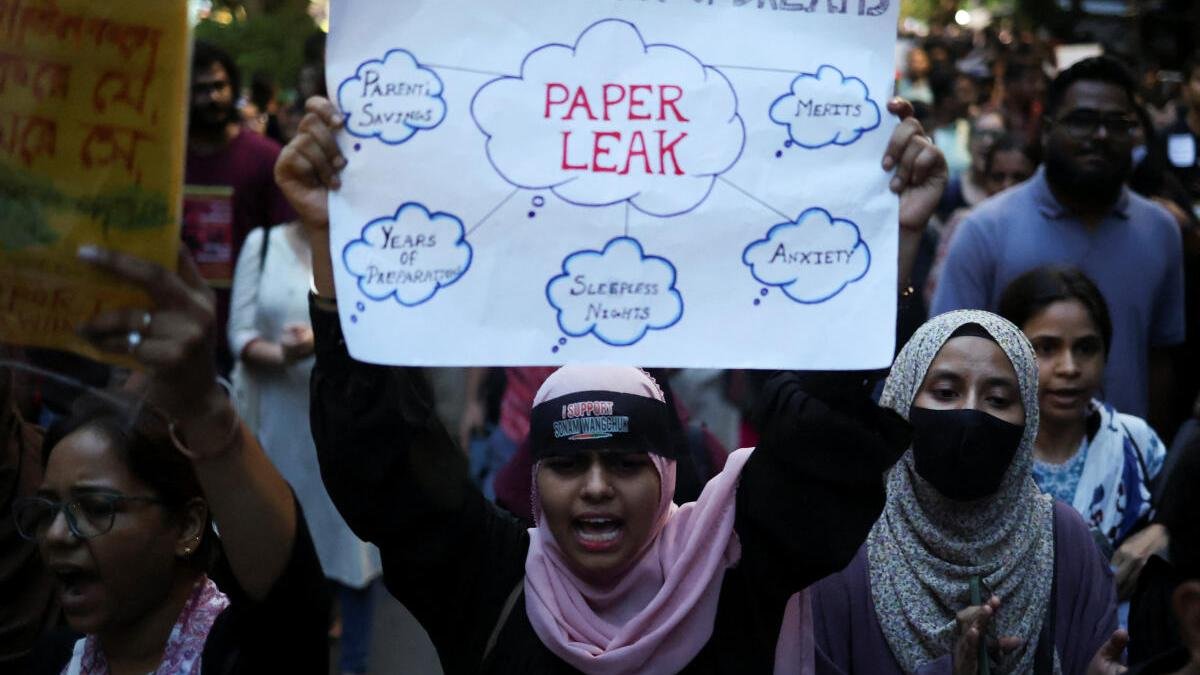
Every few months, the Indian education landscape is shaken by the same recurring headline: a trunk of question papers has gone missing, a network of “solvers” has been apprehended, and an agency is forced to announce a re-test. While these events are often framed as the actions of a few dishonest individuals, the systemic reality is far more concerning. These leaks are not merely security breaches; they are failures of a process that grants a handful of people excessive, unsupervised access to the most sensitive stages of a student’s academic journey.
The Anatomy of a Leak: Why Checkpoints Fail
An examination is not a single event; it is a complex relay involving writers, moderators, printers, transporters, centre staff, and evaluators. The security of the process is only as strong as its weakest link.
The NEET-UG 2024 paper leak serves as a sobering case study. The breach did not occur because of a sophisticated cyberattack or a failure of high-tech encryption. Instead, it occurred because a local city coordinator—who also acted as the centre custodian—allowed an unauthorized individual into a control room to photograph the question papers. By concentrating multiple roles and decision-making powers into a single person or location, the system created a target for bribery and coercion. When one individual holds the keys to the vault and the responsibility for oversight, there is no internal check to prevent exploitation.
Moving from Checkpoints to Architectural Integrity
The immediate reflex following a scandal is often to install more CCTV cameras, add jammers, or heighten physical frisking. While these measures deter amateur cheating, they are ineffective against breaches that happen behind closed doors, long before the student reaches the exam hall. To restore integrity, institutions must shift from a model of “bolt-on” security to an architecture where no single entity controls the entire lifecycle of an exam.
1. Double-Blind Content Creation
The process of creating questions is currently too transparent. When 600 experts, translators, and moderators are known to the testing agency, they become vulnerable. By routing content creation through independent, third-party agencies, the exam body can ensure that no single expert ever sees a complete, exam-ready paper. This “double-blind” approach ensures that the creator doesn’t know when their questions will be used, and the exam authority doesn’t know which specific expert drafted a particular set of questions.
2. Decentralizing Authority
The “Vyapam” scam in Madhya Pradesh remains a stark warning of what happens when human discretion is left unchecked after an exam. From the alteration of admit cards to the rigging of OMR sheets, the post-exam phase—evaluation and normalization—is as vulnerable as the exam day itself. True reform requires the segregation of agencies: one for content creation, another for centre administration, and a third for evaluation. If the institution responsible for the vault is different from the one managing the OMR sheets, the potential for mass-scale manipulation is drastically reduced.
3. Digital Vaults and Ledger Security
Modern technology should be leveraged to provide transparency rather than just surveillance. A blockchain-secured vault would ensure that every interaction with a question paper—access, assembly, or selection—is recorded on a tamper-evident, permanent ledger. This allows auditors to trace exactly who touched the data and when, shifting the response to fraud from a delayed post-mortem investigation to real-time detection.
Policy with Teeth
The implementation of the Public Examinations (Prevention of Unfair Means) Act, 2024, provides a necessary legal framework, imposing heavy fines and potential imprisonment for errant service providers. However, legislation alone is insufficient.
True reform requires examination bodies to move away from outsourcing entire processes to a single vendor. Instead, they must design a multi-layered relay where independent verification is mandatory at every handover. Until testing agencies can definitively answer exactly who had access to the materials at every stage—and prove that someone else independently verified those actions—the cycle of leaks will remain a systemic inevitability rather than an anomaly. The future of India’s competitive meritocracy depends not on more cameras, but on better, more distributed, and more accountable processes.
Disclaimer: This content is auto-generated for informational purposes only.
Source: Read Original News