







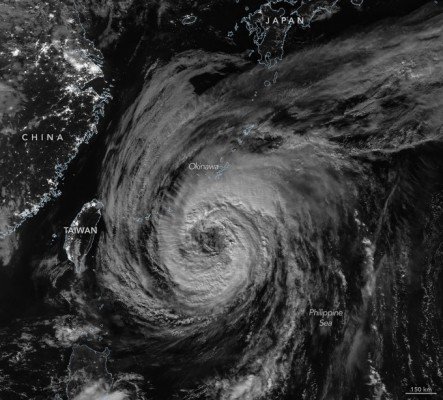
The weakening influence of typhoons passing near the Korean Peninsula has emerged as a significant environmental concern, signaling a shift in the marine ecosystem that threatens the nation’s aquaculture industry. According to data released by the Korea Institute of Ocean Science and Technology (KIOST), the frequency and intensity of storms approaching the region have plummeted over the last three years, creating a precarious “stagnation” in ocean waters.
Between 2024 and 2026, the number of typhoons passing within 200 nautical miles of the Korean coastline averaged 2.33 per year, a 28.6% decline from the climatological average of 3.27 recorded between 1991 and 2020. More striking is the reduction in the duration and power of these storms. The average time typhoons spend within the 200-nautical-mile range has dropped by more than half, from 66.44 hours to 31.26 hours. Furthermore, the Accumulated Cyclone Energy (ACE)—a metric reflecting both storm duration and wind speed—has plummeted by 67.2%, while the mean wind speed of passing typhoons has decreased from 55.71 knots to 45.80 knots.
This decline in typhoon activity removes a critical natural “mixer” for the ocean. Traditionally, typhoons serve an essential role in marine health: their powerful winds churn the ocean, bringing cooler, oxygen-rich deep water to the surface and diluting low-salinity layers caused by heavy rainfall and river runoff.
“While it is increasingly difficult for oxygen in the surface layer to be transported downwards, oxygen consumption from the decomposition of organic matter continues,” said Kim Seonghoon, head of KIOST’s Center for Ocean Climate Prediction. “This raises the possibility that low-oxygen, or hypoxic, conditions in deeper waters will persist and intensify.”
For the aquaculture sector, this creates a triple threat of high temperatures, low oxygen, and prolonged low salinity. Farmed species face increased stress and higher mortality rates, while restricted water exchange in coastal bays exacerbates the degradation of water quality and benthic ecosystems. KIOST researchers emphasize that this lack of mixing must now be recognized as a new, systemic marine environmental issue.
The risk of low-salinity damage remains a particular concern. The Yangtze River typically feeds a plume of low-salinity water toward the Korean coast. While a combination of unique wind patterns and cyclonic currents shifted this plume toward the Yellow Sea this year—sparing the southern coast from significant damage—researchers warn that this was an anomaly. “If mixing opportunities provided by typhoons decrease over the long term, the risk of low-salinity damage will inevitably increase,” noted Senior Researcher Noh Suyeon.
Paradoxically, the lack of typhoons may also set the stage for more dangerous future storms. During extended periods of calm, the upper ocean accumulates significant thermal energy. If a typhoon does eventually strike, it can draw upon this “fuel” of trapped heat, potentially leading to rapid intensification. Kim Gyeongok, head of KIOST’s Ocean Circulation and Climate Research Division, noted that researchers are now evaluating typhoon-free periods as a preparatory phase for storm development.
To address these shifting dynamics, KIOST is expanding its integrated monitoring efforts. By linking open-ocean observations with coastal data on temperature, salinity, and dissolved oxygen, scientists aim to create a comprehensive model of how the ocean and atmosphere interact. This research is vital for the future of the Korean aquaculture industry, providing the necessary insights to predict, and potentially mitigate, the risks posed by a changing climate and the increasingly erratic nature of seasonal storms.
Disclaimer: This content is auto-generated for informational purposes only.
Source: Read Original News