








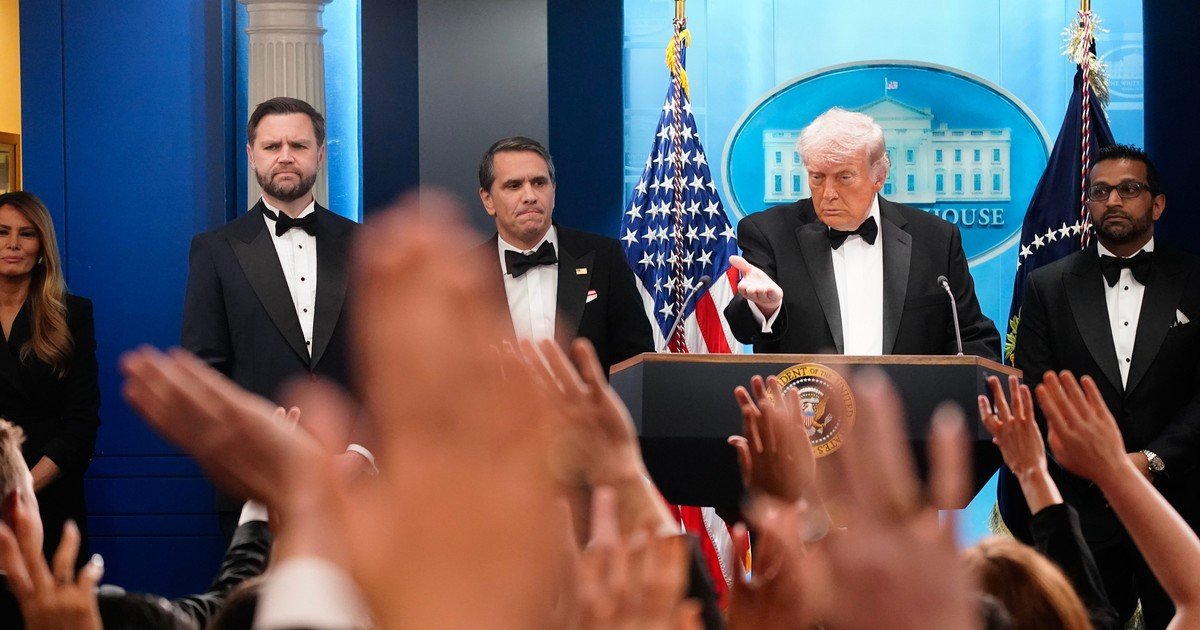
Major television networks—including ABC, CBS, CNN, NBC, and Fox News—have collectively announced a suspension of their White House pool coverage duties for presidential events. The decision comes as a direct response to the administration’s move to block specific news organizations from the White House grounds, sparking a significant conflict over press freedom and access.
The development was confirmed in an email from Fox News Washington bureau chief Bryan Boughton, who stated that the TV pool would no longer fulfill its responsibility to film presidential press conferences or other official pool events. The action represents a unified front among the major broadcasters to protest the administration’s decision to prevent CNN from performing its assigned coverage duties.
## The Breakdown of the White House Press Pool
Under typical operational standards, the White House “pool” functions as a vital mechanism for global news gathering. Network members rotate responsibilities to provide live video feeds and reporting, which are then shared across the industry. These feeds are frequently utilized by newspapers, international agencies, and digital platforms to ensure that citizens worldwide have visual records of government proceedings.
By declining to participate in presidential pool coverage, the networks are effectively cutting off the official video pipeline that the White House relies on to disseminate its messaging. While the networks have committed to continuing their pool responsibilities for non-presidential events, such as those involving Congress, the vacuum created in presidential reporting poses an immediate challenge to traditional news flow.
## Legal Escalation and First Amendment Concerns
The tension reached a breaking point after a social media declaration by President Trump, in which he announced a formal ban on journalists from CNN, MS Now, and Politico. The President cited his dissatisfaction with their reporting, labeling their work as “fiction and lies.”
In response, the affected organizations have filed a lawsuit against the President and several senior administration officials. The legal challenge frames the ban as a “direct assault on the First Amendment,” arguing that the government cannot selectively restrict media access based on an objection to editorial coverage. In a joint statement, members of the press pool reinforced this sentiment, noting that the public possesses a fundamental right to receive independent, accurate information about the actions of their government.
## Technological Implications and the Future of Digital Information
As the dispute intensifies, it highlights the increasing fragility of traditional media gatekeeping in an era dominated by rapid digital distribution and social media platforms like Truth Social. The administration’s move to bypass traditional outlets in favor of direct-to-consumer communication marks a significant shift in how executive branch information is packaged and delivered.
For the tech and media industries, the situation raises critical questions regarding the role of independent, verified journalism versus state-influenced messaging. As this standoff continues, the industry is closely watching how AI-driven news aggregators and social media algorithms will prioritize or de-prioritize information in the absence of traditional, sanctioned press pool feeds. The reliance on independent video journalism is a cornerstone of the modern media landscape; should this access remain blocked, the loss of verified, real-time coverage could fundamentally change how global audiences perceive, consume, and verify information about the United States government.
Legal experts anticipate that the court’s ruling on the First Amendment challenge will serve as a landmark precedent for how future administrations can interact with—or restrict—the press in an increasingly digital political climate.
Disclaimer: This content is auto-generated for informational purposes only.
Source: Read Original News