








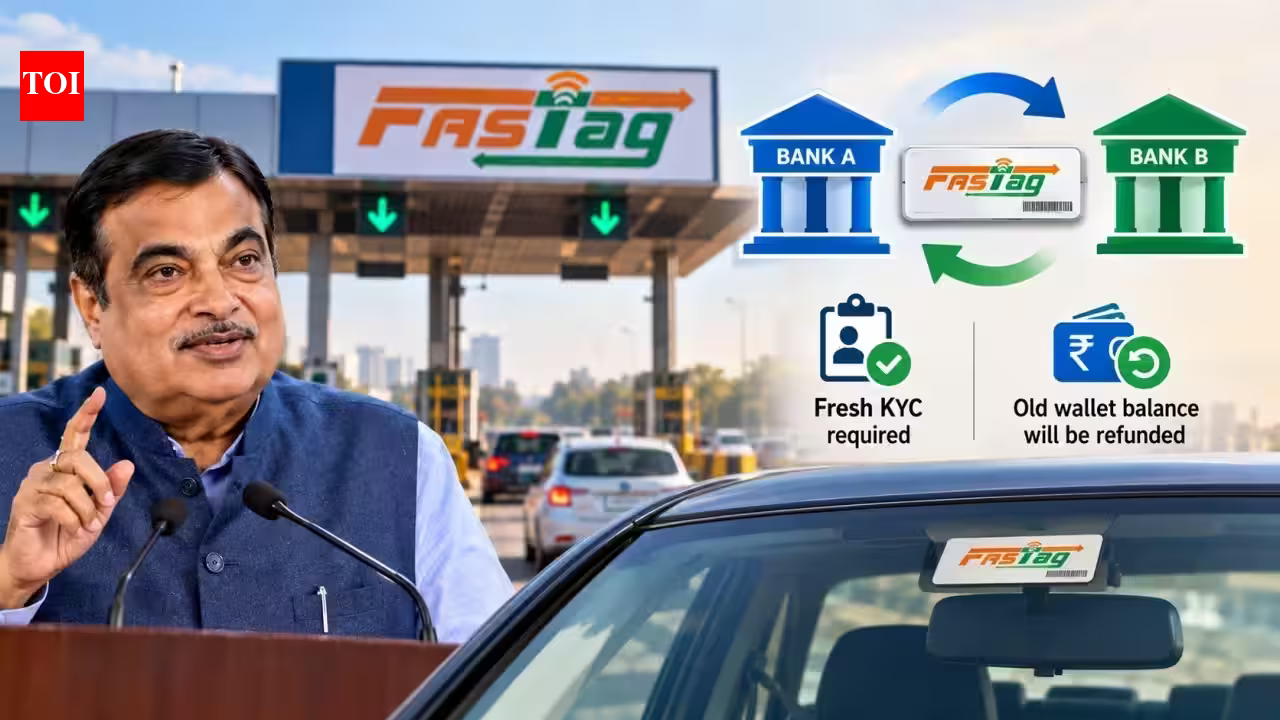
The landscape of digital payments in India has undergone a transformative evolution over the last decade, with the National Electronic Toll Collection (NETC) program standing as one of the most successful infrastructure integration projects. With the recent launch of “OneTag” by the Union Minister for Road Transport and Highways, Nitin Gadkari, at the Global Fintech Fest, the Indian government has signaled a move toward enhancing user autonomy in the electronic toll segment. By introducing portability to FASTags, the authorities are addressing long-standing consumer pain points, particularly the technical and administrative burdens associated with switching financial service providers.
The Mechanics of OneTag Portability
Historically, the FASTag ecosystem operated on a rigid infrastructure model. If a vehicle owner desired to switch from one issuer bank to another—due to service quality issues, superior digital banking integration, or changing personal preferences—they were forced to engage in a cumbersome decommissioning and onboarding process. This involved the manual removal of the existing physical RFID sticker, the formal closure of the associated digital wallet, and the procurement of an entirely new physical tag, which then had to be applied to the windshield.
OneTag fundamentally alters this trajectory. The new facility allows a user to retain their existing physical tag while shifting their service association to a new bank. Under the new protocol, the Tag ID and the vehicle registration number remain anchored to the vehicle, regardless of the underlying financial institution. This decoupling of the physical asset from the banking backend is a significant upgrade in administrative efficiency. By leveraging the National Highways Authority of India’s (NHAI) Rajmargyatra mobile application, the government has centralized the orchestration of these transfers, ensuring that the transition is handled within a controlled, digital-first framework.
Regulatory Compliance and the KYC Imperative
While OneTag offers immense convenience, the government has maintained strict regulatory standards regarding financial security and data integrity. A critical component of the portability process is the requirement for a fresh Know Your Customer (KYC) cycle. Despite the ability to keep the physical tag, the new issuer bank acts as a distinct financial entity under the Reserve Bank of India’s (RBI) guidelines, necessitating a fresh verification of the user’s credentials.
The process is structured to prioritize security. Upon initiating a transfer request via the Rajmargyatra app, the system triggers a Mobile Verification Code (MVC) sent by the existing issuer bank to the registered mobile number. This verification serves as an authorization layer, preventing unauthorized transfers or fraudulent porting requests. Once the user provides consent and the initial issuer authenticates the request, the user enters the onboarding phase with the new issuer. This rigorous adherence to KYC ensures that even though the “user experience” is simplified, the “financial compliance” remains robust, adhering to the overarching digital security standards of the Indian banking sector.
Financial Transition and Wallet Management
A common misconception among users is that a balance carry-over is an automatic feature of portability. It is important to clarify that OneTag is a structural change to the issuer relationship rather than a direct account migration of funds. When a user switches to a new issuer, the previous issuer bank is responsible for the final settlement of the outgoing account. This involves the closure of the existing FASTag wallet and the processing of any remaining balance, which is subsequently refunded to the customer after adjusting for any pending transactions or outstanding dues.
The new bank, meanwhile, initiates its own wallet onboarding process. This separation of duties is standard practice in the Indian financial regulatory space, ensuring that liabilities for pending toll transactions or disputes remain with the bank that processed them originally. For the consumer, this implies a need for a seamless transition where the old wallet is cleared as the new wallet is funded. While this might involve a brief period of parallel management, it removes the complexity of having to physically replace hardware components, effectively turning a previously multi-day manual chore into a streamlined digital procedure.
Strategic Market Implications for Banking Partners
From a market perspective, OneTag introduces a new dynamic of competition among the banks that issue FASTags. Previously, “switching costs”—defined by the effort and time required to remove a tag and install a new one—acted as a barrier that kept consumers tethered to their original issuer, even if they were dissatisfied with the service. With portability, the barriers to exit are significantly lowered. Banks can no longer rely on the technical friction of the process to retain their user base; instead, they must now compete based on the quality of their mobile banking apps, the efficiency of their notification systems, and the value-added services they provide around toll payments.
This shift is likely to accelerate digital innovation. We can expect banking entities to improve their integrated services—such as real-time expense tracking, automated top-ups, and loyalty rewards—to retain their market share. The NHAI’s role as the central facilitator through the Rajmargyatra app further demonstrates a shift toward platform-based governance, where the government provides the infrastructure, and private sector banks are incentivized to provide a superior user interface and support.
Long-term Sustainability and Cooling-off Periods
To prevent administrative abuse of the portability facility, the government has instituted a “cooling-off period” of six months. This means that once a FASTag is successfully ported to a new issuer, it cannot be migrated again for a minimum of 180 days. This policy ensures the stability of the NETC network and prevents volatility in the underlying data infrastructure of the toll collection system.
The move toward interoperability is a critical step in the maturation of India’s digital toll landscape. By aligning the system with the principles of portability that have become common in mobile telecommunications, the NHAI is enhancing the overall reliability of the highway network. For the Indian motorist, this represents a shift toward a more mature, user-centric service model. As the country continues to invest in high-speed expressways and infrastructure, the ability to manage toll payments with minimal friction is essential to ensuring that traffic flow remains fluid at entry and exit points. OneTag stands as a successful example of how government policy can utilize digital platforms to strip away legacy inefficiencies, ultimately fostering a more competitive and responsive financial services environment.
Disclaimer: This content is auto-generated for informational purposes only.
Source: Read Original News