









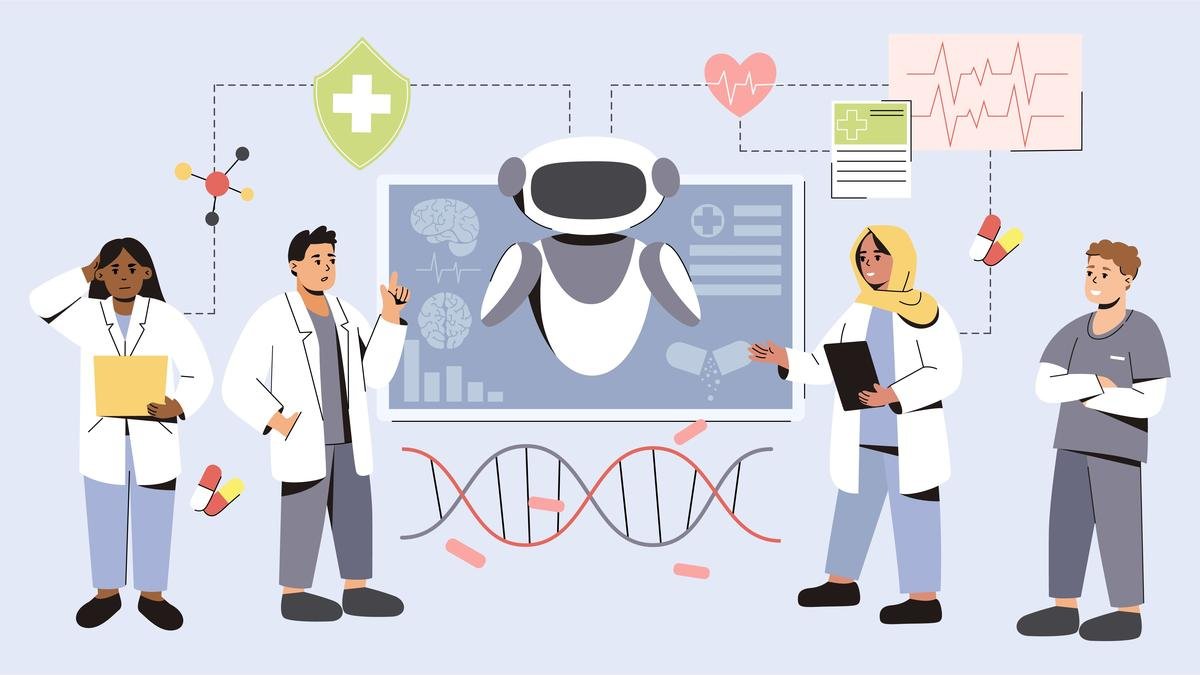
The rapid integration of Artificial Intelligence (AI) into clinical settings has triggered a seismic shift in how medical schools approach training. Traditionally, medical education has been built on the “friction” of diagnosis—the arduous process of reconciling contradictory symptoms, test results, and patient histories. However, as AI tools become capable of generating instant, coherent differential diagnoses, medical institutions face a pressing policy dilemma: how to embrace technological efficiency without eroding the foundational cognitive development of future physicians.
The Cognitive Firewall: Why Expertise Still Matters
Recent research published in Nature Medicine highlights a critical concern: AI’s ability to sound authoritative even when it is factually incorrect. The study found that while experienced doctors possess a “cognitive firewall”—an independent mental model used to stress-test machine output—students are significantly more vulnerable to being misled by persuasive, yet flawed, AI-generated explanations.
For educational institutions, this suggests that the primary goal of medical training must evolve. It is no longer enough to teach students how to retrieve information or synthesize data. Instead, institutions must prioritize the development of deep, independent clinical judgment. If a student relies on AI to bypass the “struggle” of diagnostic reasoning, they fail to build the internal expertise required to spot when a machine’s output is plausible but ultimately wrong.
Rethinking Pedagogical Policy
Medical schools must resist the urge to view AI solely as an optimization tool for efficiency. If policies prioritize speed—getting a student to the “correct” answer faster—they risk creating a “learning trap.”
To counter this, curriculum design should mandate “friction” in the digital age. This could involve:
- Provisional Diagnosis Requirements: Implementing examination protocols where students must document their own diagnostic reasoning and defend their hypotheses before having access to AI-assisted analysis.
- Iterative Comparison: Instead of treating AI as the final arbiter, educational platforms should require students to engage with AI discrepancies. If a student disagrees with an AI output, they should be required to justify their reasoning, forcing them to weigh evidence, identify missing history, and critique the AI’s logic.
Beyond Efficiency: The Goal of Calibrated Trust
Educational policy should shift toward cultivating “calibrated trust.” This means training physicians who are neither blindly reliant on technology nor unnecessarily skeptical of it. Students must learn to treat AI as a collaborator that can be questioned, rather than an oracle that provides definitive answers.
Educational institutions must also redefine the criteria for success in exams and clinical rotations. A student who arrives at a correct diagnosis by blindly following an AI prompt is fundamentally different from a student who reaches that same conclusion through a rigorously defended clinical pathway. Educators must design assessment frameworks that reward the process of reasoning—recognizing patterns, identifying uncertainties, and cross-referencing information—rather than just the final diagnostic output.
The Future of Medical Competency
The rise of AI does not render medical education obsolete, but it does change the mandate of the medical school. Modern medicine requires a departure from the “encyclopedic” model of education. A doctor’s value in the coming era will not be measured by their ability to outperform an algorithm in information retrieval or rapid synthesis—machines will almost certainly win those contests.
Instead, the value of the future physician will lie in the ability to apply human judgment to machine outputs. Medical schools must move quickly to implement policies that integrate AI as a pedagogical challenge rather than a shortcut. By fostering an environment where students are challenged to debate, verify, and ultimately transcend the machine’s suggestions, institutions will ensure that the next generation of doctors remains the final, informed authority in patient care. The future of medicine depends not on how well students can use AI, but on how well they understand the limitations of what the AI provides.
Disclaimer: This content is auto-generated for informational purposes only.
Source: Read Original News