





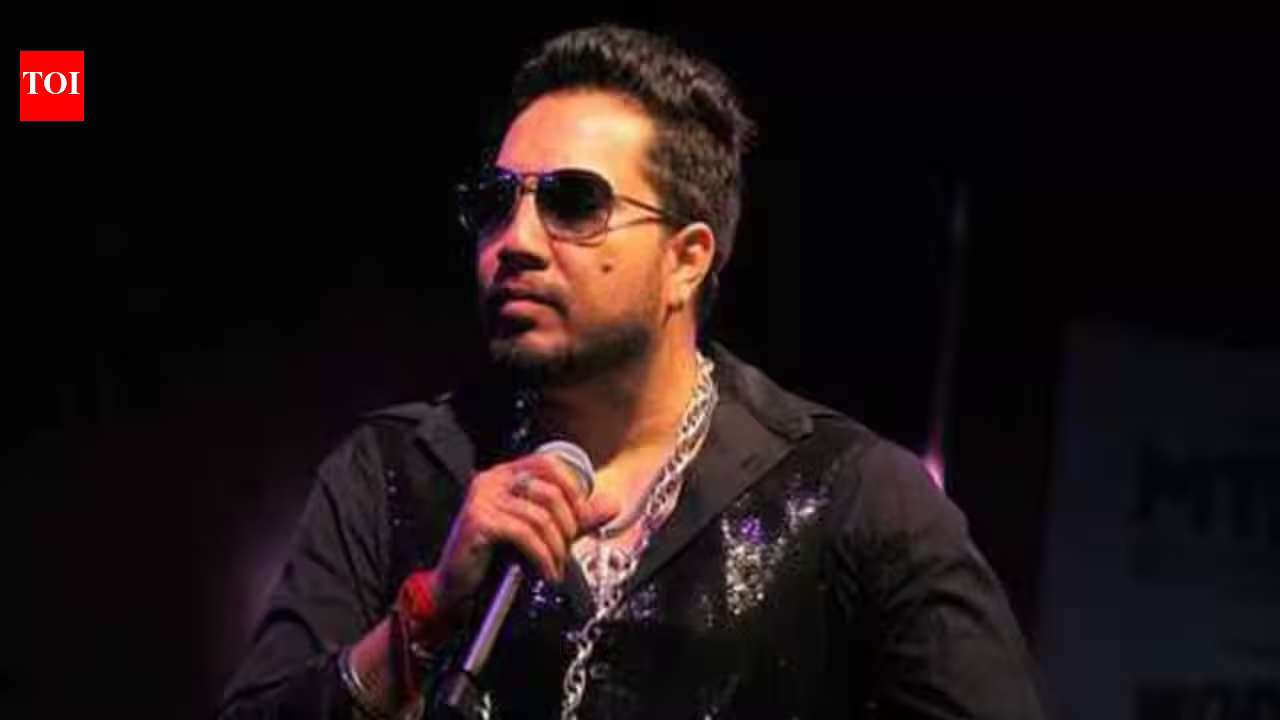
In the cutthroat landscape of Bollywood, where the path to stardom is often paved with humility, desperation, and the silent art of begging for an opportunity, Mika Singh chose a different route. He didn’t just want to be another playback singer waiting for a break; he wanted to command the room before he even opened his mouth. Long before he became the voice behind chart-topping anthems like “Mauja Hi Mauja” and “Dhinka Chika,” Mika was already pulling up to auditions in a Hummer, a move that sent shockwaves through the industry’s unspoken code of conduct.
In a recent, candid conversation with Kapil Sibal on his YouTube channel, the singer peeled back the curtain on his formative years, revealing that his entrance into the Hindi film industry was less about submission and more about brand management. While most aspirants were busy trying to look hungry, Mika was busy looking successful. It was a gamble—one that left his peers, including fellow singer Shaan, bewildered and more than a little worried.
The Hummer Strategy: Perception as Reality
For decades, the standard operating procedure for a struggling Bollywood artist was simple: be available, be humble, and don’t make the music directors feel like you have better places to be. When Mika arrived in Mumbai in 2006, he already had the pedigree of a successful Punjabi artist. His seminal hit, “Sawan Mein Lag Gayi Aag,” had already secured his financial independence, allowing him to command Rs 10,000 per live show—a massive leap from the pittance he earned during his tenure with his brother, Daler Mehndi’s troupe.
Yet, when he began making the rounds of film offices, the advice he received was uniform. Colleagues like Shaan, who had seen enough of the industry to know how the power dynamic functioned, suggested he park his luxury vehicle out of sight.
“Shaan told me, ‘Go in an auto. The producer should not get the impression that you are rich. They should feel like you need the work,’” Mika recalled. It was sound, traditional advice. But Mika, ever the contrarian, rejected the notion that he had to dim his light to fit into the industry’s mold. “I said I won’t do that. I will drive in my Hummer. Someone will spot me.”
Reframing the ‘Struggler’ Narrative
Mika’s perspective on the Hummer was tactical. In an era where singers were shelling out roughly Rs 4 lakh for newspaper advertisements to announce their presence to music labels and composers, Mika viewed his luxury car as a mobile billboard.
“My plan was, I will go around in my Hummer, they will get the impression that he is a big singer, even though I wasn’t [in Bollywood yet],” he explained. By acting like a star, he effectively forced the industry to treat him like one. While others were waiting in long queues to audition, Mika was creating an aura of in-demand success. He understood that in the high-stakes, image-conscious world of Bollywood, perception isn’t just everything—it is the reality that dictates how you are treated.
A Comedy of Errors: Meeting the Music Titans
Perhaps the most charming aspect of Mika’s climb to the top was his complete lack of familiarity with the architects of the industry. He admits to a series of hilarious misunderstandings when he first began meeting music directors.
When he finally secured a meeting with the legendary composer Pritam, Mika walked in with a set of preconceived notions that were entirely wrong. Having listened to Pritam’s infusion of Punjabi folk into Hindi tracks, Mika had convinced himself that “Pritam” must be a turbaned Sikh man named Pritam Singh. Similarly, he spent time assuming that the dynamic duo “Vishal-Shekhar” was actually just one person with a double-barrel name.
These anecdotes aren’t just funny stories; they speak to an outsider’s grit. Mika didn’t care about the prestige or the pedigree of the men he was working with—he cared about the music and the opportunity to make his mark.
Playing Hard to Get: The Art of the ‘No’
Perhaps the peak of Mika’s unconventional strategy came when he actually did land a meeting with Pritam. When the composer asked him to return the following day for a recording session, Mika did something almost no newcomer would dare: he said he was busy.
“I thought if I tell him I am free the next day, he will think I have nothing to do,” he explained. By playing hard to get, he signaled that he was a man of business, a performer with a schedule to keep, not a desperate hopeful sitting by the phone. Pritam agreed to push the meeting to the day after, a decision that led to the recording of “Dil Mein Baji Guitar” for the 2006 film Apna Sapna Money Money.
The song was an instant success, and it served as the catalyst for a decade-long reign. By the time he reunited with Pritam for the iconic “Mauja Hi Mauja” in Jab We Met, the narrative had shifted entirely. No one was asking him to take an auto anymore; they were asking him when he could grace them with his next hit.
The Legacy of a Different Drummer
Mika Singh’s story is a fascinating study in confidence. In an industry defined by survival, he chose to skip the “survival” phase and jump straight into the “stardom” phase, even if he had to fake it until he made it.
While his methods were criticized by peers as reckless, his trajectory proved that there is no single “right” way to break into Bollywood. Sometimes, the bravest thing an artist can do isn’t to blend in with the background of a crowded industry, but to park a Hummer right in the middle of it and refuse to move until the world notices the music. Mika didn’t just sing his way into the industry—he drove there, windows down, with a level of self-assurance that ultimately couldn’t be ignored.
Disclaimer: This content is auto-generated for informational purposes only.
Source: Read Original News