





Aichi-Nagoya beckons, and for the first time in over two decades, the name Saurav Ghosal will be absent from the Indian squash squad’s starting lineup. The legendary campaigner, who anchored the nation’s squash efforts from Busan 2002 through a glittering two-decade career, is adjusting to a new reality. With nine Asian Games medals—including two golds—in his trophy cabinet, Ghosal is watching from the sidelines, though his influence remains deeply embedded in the next generation’s trajectory.
As the countdown to the 2026 Asian Games intensifies, Ghosal has shifted his focus to a mentorship role, specifically nurturing the prodigal talent of 18-year-old Anahat Singh. The stakes for this iteration of the Games are unprecedented, with a direct qualification slot for the 2028 Los Angeles Olympics—where squash will make its historic debut—awaiting the singles champions.
The Shift from Court to Coaching
Reflecting on his transition, the 40-year-old former India No. 1 admits the absence is bittersweet. “I wish I was there. I wish I was still playing. [It was] kind of the best times of your life,” Ghosal said. However, he maintains that the Asian Games represent a unique pinnacle of sportsmanship that transcends the professional PSA tour.
“It’s about having the honour to play for India, win for India, and be proud doing that,” he noted. For the athletes heading to Aichi-Nagoya, the margin for error is razor-thin. Unlike the week-to-week grind of the professional tour, the Asian Games operate on a straight knockout format. “One bad day can destroy the entire event,” Ghosal cautioned, emphasizing the need for athletes to maintain a mental “bubble” to stay insulated from external pressure.
Mentoring Anahat Singh: Clarity Over Change
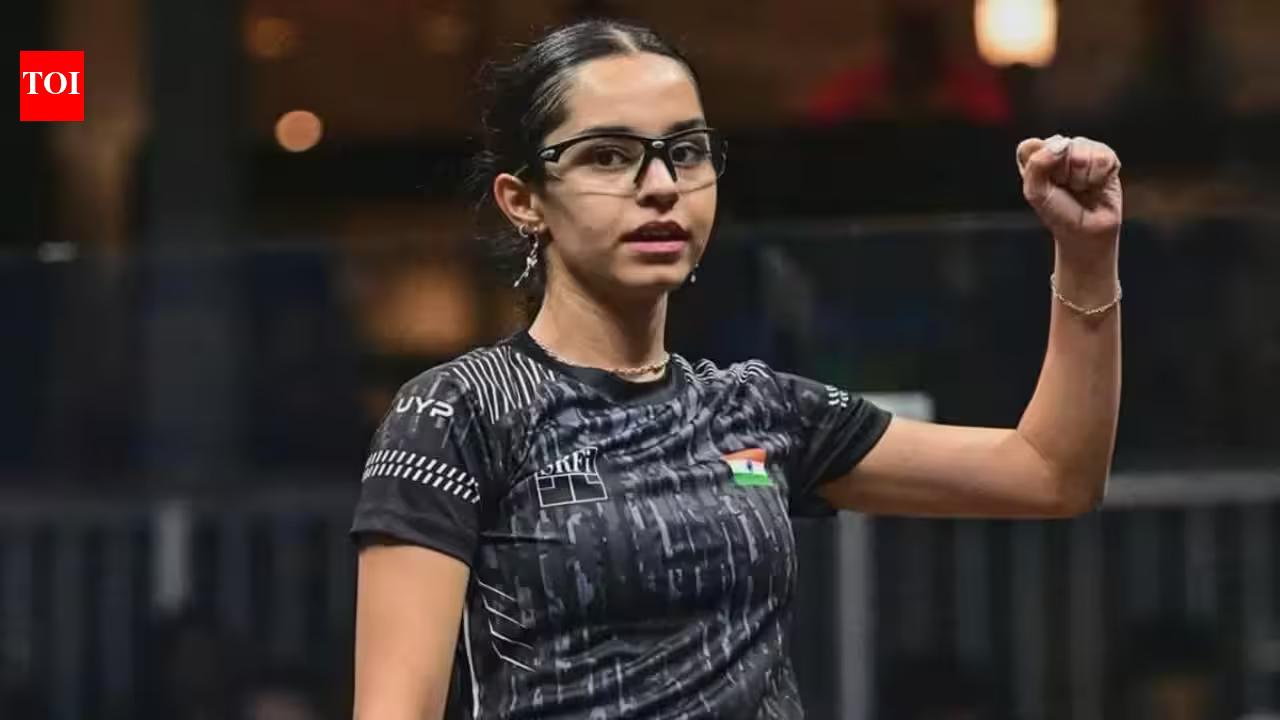
Anahat Singh enters these Games as one of India’s most scrutinized prospects. Rather than overhauling her technical foundations, Ghosal’s mentorship has focused on tactical sharpness.
“She’s a well-rounded player overall,” Ghosal explained. “I think it’s about understanding who you’re playing in this event, what your opposition is going to look like, and trying to get extreme clarity on how you’re going to play them.”
For a teenager carrying the weight of national expectation, the mental game is paramount. Ghosal has encouraged Anahat to lean into her naturally carefree, “happy-go-lucky” demeanor. He believes that pressure is simply a byproduct of perceived potential. “When I was playing, I always thought that if there was expectation, that means people actually believed in me,” he shared. “It’s almost like a re-emphasis of the belief that I had in myself.”
His advice to her is simple yet profound: keep the mind occupied with actionable, on-court tasks to prevent the “idle mind” from fixating on the anxiety of potential defeat.
The Olympic Incentive
While the Olympic qualification spot adds a layer of intensity to the Games, Ghosal insists that it should not distract from the immediate task at hand. The goal is to produce a performance worthy of the podium, regardless of the rewards.
“Obviously, the big prize at these Asian Games is the gold because that gives you the Olympic qualification spot,” he said. “But even if she wins the gold here and gets in the Olympics, it doesn’t stop there. You’re not going to be there just to make up the numbers.”
The journey to Los Angeles 2028 is a long one, and Ghosal is keen to ensure that his proteges view the Asian Games as a stepping stone rather than the final destination.
A Metric for Success: The Gold Standard
India’s performance at the 2022 Hangzhou Games was impressive, yielding five medals and a joint-top position alongside Malaysia. However, looking ahead to Aichi-Nagoya, Ghosal refuses to trade in optimism or “potential.” For him, the barometer for success is cold, hard data.
“Sport is black and white, right? There’s no subjectivity. I think medals are the most objective barometer,” he stated firmly. “We should medal as a bare minimum in every event that we are in—women’s singles, men’s singles, mixed doubles, and both team events.”
He set a bold target for the contingent: three gold medals. While he acknowledged the difficulty of the task, he insists it is a realistic standard for a rising squash powerhouse. “If we’re able to do that, then it’s a cracker of Games for Indian squash. It’s not like we’re being unrealistic, but it’s not easy.”
As the Indian team prepares to compete, the shadow of Ghosal’s legacy looms large, but his transition to mentor suggests that the future of Indian squash remains in capable hands. Whether they can convert that potential into three golds remains to be seen, but the intent—and the tactical discipline—is firmly in place.
Disclaimer: This content is auto-generated for informational purposes only.
Source: Read Original News