









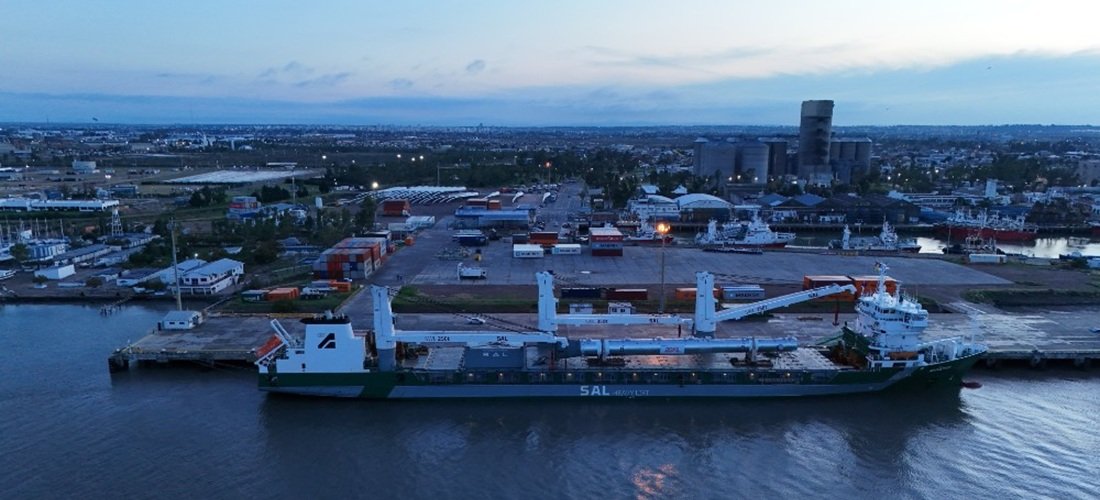
The Bahía Blanca Port Management Consortium (CGPBB) has reached a significant milestone in regional sustainability by publishing its inaugural Port Community Environmental Report. The document represents a collaborative effort to consolidate the environmental performance of the port authority and nine key companies operating within the complex, signaling a new era of transparency and coordinated ecological stewardship.
The report, developed with technical assistance from Fundación Valenciaport—a partnership that began in October 2022—details the environmental strategies, monitoring protocols, and certifications of companies including Profertil, Louis Dreyfus Company, Cargill, ADM Agro, Boortmalt, Compañía Mega, Bunge, Terminal Bahía Blanca, and Puerto Frío. By creating this unified management and communication tool, the CGPBB aims to establish a clear baseline for environmental progress across the industrial cluster.
### The Shift to Renewable Energy
A central theme of the report is the aggressive transition toward renewable energy sources across the port’s various terminals. Profertil has emerged as a leader in this space, reporting that 76% of its electricity consumption in 2024 was derived from renewable sources, with a target of reaching 100% in the near term. Furthermore, through its “La Isla” project, the company successfully reduced its water usage by 6%, electricity consumption by 24%, and natural gas use by 10%.
Other major players are following suit. Compañía Mega now powers all operations through a renewable agreement with YPF Luz, while Bunge has begun integrating wind power from Pampa Energía and YPF Luz into its energy mix. Smaller-scale initiatives are also taking root: Puerto Frío has transitioned to off-grid photovoltaic power for its warehousing and is replacing its diesel-powered fleet with electric forklifts and pallet trucks. Cargill has also contributed to this transition, installing solar panels on its administrative headquarters in late 2024.
### Managing Emissions and Industrial Footprint
Beyond energy transition, the port community is prioritizing the mitigation of grain dust and particulate matter, a persistent challenge in bulk cargo operations. Cargill and Terminal Bahía Blanca have invested heavily in infrastructure upgrades. Specifically, Terminal Bahía Blanca has replaced more than 30 low-efficiency cyclone filters with advanced bag filters, moving closer to its goal of a 10% reduction in its environmental footprint over a decade.
Institutional rigor is bolstered by ISO 14001 certification. The port authority achieved this international environmental management standard in 2019, joining several private operators such as Profertil, Louis Dreyfus Company, and Compañía Mega, who have held the certification for years.
### Protecting the Estuary Ecosystem
The CGPBB maintains a robust Environmental Management Plan, compliant with regulations from the Buenos Aires provincial Environment Ministry. This includes continuous water and sediment monitoring, particularly following dredging operations. The port utilizes a network of environmental buoys to provide real-time, publicly accessible data on parameters like pH, temperature, and dissolved oxygen.
In an effort to go beyond minimum regulatory requirements, the Consortium has expanded its monitoring scope to include the study of biological communities, hydrocarbon levels, and airborne pollen—the latter being a collaborative research project with the Instituto de Alergias del Sur.
### A Roadmap for 2030: ECOBAHÍA-PORT
Looking toward the end of the decade, the report outlines six environmental priorities: emissions reduction, energy transition, sustainable resource management, natural environment protection, innovation, and community engagement.
To ensure these goals are met, the Consortium plans to launch “ECOBAHÍA-PORT,” a working group designed to harmonize the environmental efforts of the entire port community. With continued support from Fundación Valenciaport, this group will focus on circular economy initiatives, the joint measurement of the port’s carbon footprint, and adaptation strategies for climate change. By establishing this formal framework, the Bahía Blanca port complex is positioning itself as a leader in the transition toward a more sustainable and technologically integrated maritime future.
Disclaimer: This content is auto-generated for informational purposes only.
Source: Read Original News