







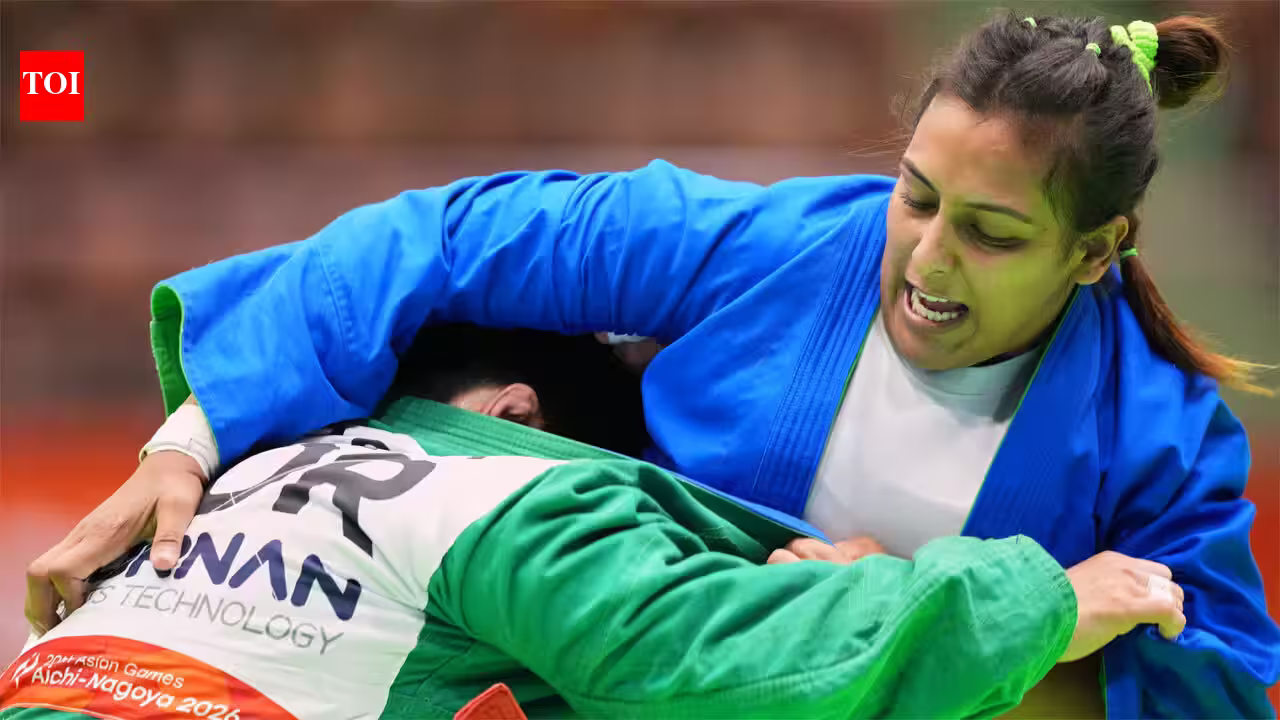
PINCKY BALHARA etched her name into the history books once again on Monday, proving that her resilience and technical prowess remain at the pinnacle of Asian kurash. Competing in the women’s -78kg category at the Asian Games in Aichi-Nagoya, the 27-year-old athlete secured a hard-fought bronze medal, adding a significant chapter to an already illustrious career.
For Balhara, the podium finish represents more than just a piece of hardware; it is a testament to her longevity and adaptability in a sport that demands explosive power and tactical intelligence. Eight years after first stepping onto the Asian Games stage, Balhara remains a formidable force for India, cementing her reputation as a veteran leader in the national squad.
Dominance in the Quarterfinals
Balhara’s path to the semifinals began with a clinical display of control against South Korea’s Garam Lim. From the opening exchanges of the quarterfinal bout, it was clear that the Indian athlete had a distinct tactical edge. Balhara dictated the tempo of the fight, refusing to allow her opponent any breathing room.
The highlight of the match came when Balhara successfully executed a ‘Chala’—a complex scoring maneuver that rewards a throw where the opponent is grounded, even if total control is not maintained until the end of the motion. The maneuver proved decisive, granting her a 3-0 victory. By stifling Lim’s offense entirely, Balhara demonstrated the defensive discipline required to survive high-pressure matches, effectively punching her ticket to the semifinals and guaranteeing her presence in the medal hunt.
A Tactical Battle in the Semifinals
The semifinal showdown against South Korea’s Sumin Mo proved to be a far sterner test. Facing a highly prepared opponent, Balhara found herself in a defensive struggle from the outset. The South Korean athlete displayed superior command of the clinch, eventually securing a 5-0 victory to advance to the gold medal match.
The defining moment of the bout arrived when Mo earned a ‘Yonbosh’ point, a significant score in kurash that put her in the driver’s seat. Compounding the pressure for the Indian was a ‘Dakki’ penalty, which created a deficit that proved too steep to climb within the remaining time. Despite a valiant effort to mount a comeback, Balhara could not dismantle Mo’s defensive setup. While the loss brought an end to her golden aspirations in Aichi-Nagoya, the result secured the bronze medal, a reward for her consistency throughout the tournament.
A Legacy Defined by Persistence
Balhara’s journey at the continental level is nothing short of inspirational. She first burst onto the international scene in 2018 during the Jakarta Games—the inaugural year for kurash at the Asian Games. In that tournament, she defied expectations to capture a silver medal in the -52kg category, signaling to the world that India was ready to compete with the masters of this traditional Uzbek martial art.
The shift from the -52kg category in 2018 to the -78kg division today showcases Balhara’s versatility and her ability to evolve physically to remain competitive. Her latest bronze adds to a prestigious collection, marking India’s third-ever Asian Games medal in the discipline. It is a performance that highlights her role as a cornerstone of the Indian kurash team, providing inspiration for the next generation of grapplers back home.
Boosting the Indian Medal Tally
This podium finish serves as a vital contribution to India’s broader objectives at the Aichi-Nagoya Games. With Balhara’s success, the Indian contingent has bolstered its overall medal count to 39, now consisting of four gold, 17 silver, and 18 bronze medals. As the Games progress, performances like Balhara’s remain instrumental in keeping India within striking distance of its top-tier rivals.
For a sport that is still carving out its footprint in the mainstream Indian sports landscape, Balhara’s continued success is crucial. She has proven that kurash is not merely a passing interest, but a legitimate avenue for Indian athletes to showcase their strength on the world stage. As she reflects on her second Asian Games medal, Balhara’s legacy is clear: she is a fierce competitor who has remained at the top of her game through years of intense training and shifting challenges.
Whether or not she chooses to pursue further glory, Pincky Balhara has already cemented her status as a titan of Indian martial arts. Her bronze medal in Aichi-Nagoya serves as a reminder that excellence is not a single event, but a consistent commitment to being the best version of oneself, time and time again.
Disclaimer: This content is auto-generated for informational purposes only.
Source: Read Original News