







The evolution of artificial intelligence tools requires constant refinement to improve user accessibility and workflow efficiency. Google is currently preparing a significant transition for its Gemini platform, signaling a shift in how users interact with personalized AI configurations. Effective November 17, 2026, the feature known as “Gems”—custom versions of the Gemini model tailored for specific tasks—will be rebranded and migrated to a new framework called “skills.”
This transition marks a departure from the standalone nature of Gems toward a more integrated, command-based interaction model. While both Gems and skills provide users with the capacity to input custom instructions, the underlying architecture and the method of invocation are set to change, prioritizing speed and multifunctionality within the Gemini interface.
The Shift from Gems to Skills
For users who have invested time in building custom AI personas or task-specific assistants, the migration will be handled automatically by Google. The existing Gems manager has begun displaying notices to users, informing them that their configurations will transition seamlessly into the new skills system. The core utility remains consistent: providing the AI with a unique persona, specific knowledge bases, or predefined behavioral guidelines.
However, the change represents a conceptual pivot. Gems were traditionally managed as distinct entities, often requiring users to navigate to a dedicated side panel to launch or configure them. By folding these functionalities into “skills,” Google is moving toward a system where personalized instructions are treated as modular components of the broader Gemini experience rather than isolated tools.
Enhanced Accessibility through Command Integration
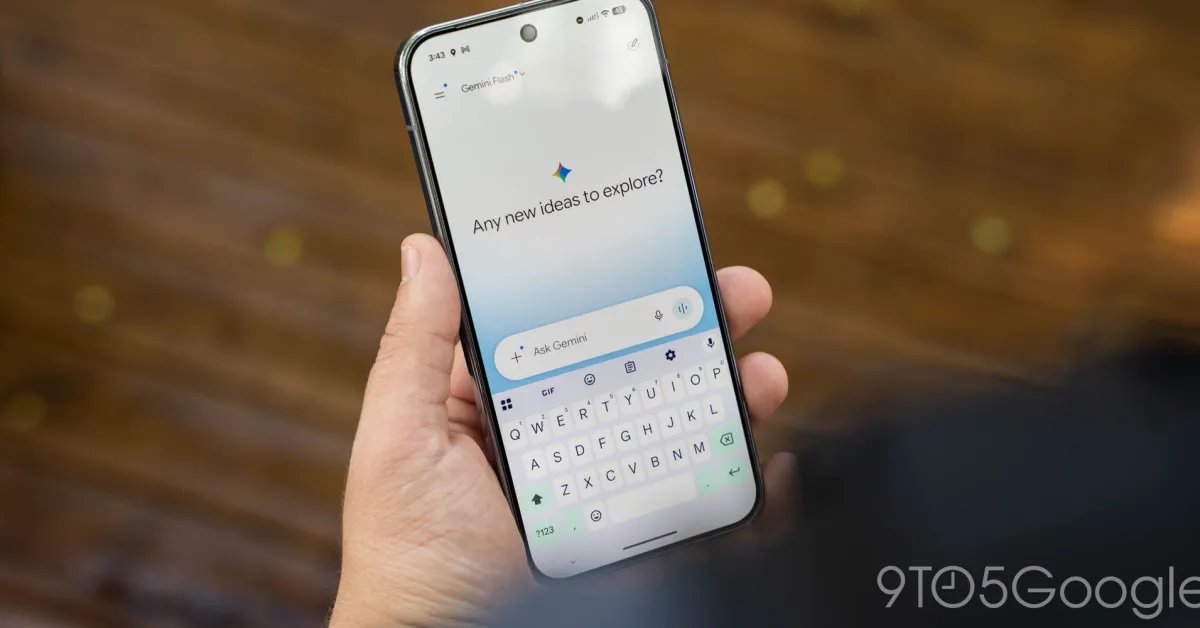
The primary advantage of the transition to skills is the integration of the “slash” command system. In the current interface, invoking a Gem requires manual navigation, which can interrupt a user’s creative flow. Skills are designed to be triggered directly from the main conversational prompt box by typing a forward slash.
This mechanism significantly reduces the latency between intent and execution. By typing a command in the input field, users can quickly select and apply a skill without leaving their current conversation. Furthermore, this system allows for the concatenation of multiple skills within a single session. Users will no longer be limited to the scope of a single Gem; instead, they can combine various skills to address complex, multi-layered tasks. This improvement directly addresses feedback regarding the restrictive nature of managing custom AI instances separately from the primary chat stream.
Technical Implications of the Skills Framework
The skills framework first surfaced alongside Gemini Spark, a specialized version of the platform. By standardizing this interface across the broader Gemini ecosystem, Google is creating a more unified AI experience. Under the hood, this suggests that the instructions defining a “skill” are being optimized for higher retrieval speed within the model’s context window.
While specific documentation on the new architecture is still pending, the ability to invoke multiple skills simultaneously points to a more sophisticated context management system. The platform must now parse several sets of custom instructions concurrently to provide a cohesive output. For power users and developers, this indicates that the system is moving away from static prompt templates toward a more dynamic, instruction-driven architecture that can handle overlapping logic streams.
Strategic Use-Cases and Utility
The transition serves to elevate Gemini from a general-purpose chatbot to a more modular productivity tool. Use-cases for these skills remain broad. For instance, a user might create a skill designed for technical documentation review, which applies specific formatting rules and clarity checks. Another skill might focus on rapid creative brainstorming, defaulting to specific tones or constraints.
Because these skills are easily swappable via the slash command, a user could theoretically initiate a complex task by calling a “Research” skill, then transition to a “Summarization” skill, and finalize with a “Formatting” skill—all within the same thread. This level of fluidity is essential for professional applications where users toggle between distinct phases of project development, such as drafting, editing, and refining code or prose.
Impact on AI Pro and Ultra Subscribers
As this update approaches, subscribers to Google AI Pro and AI Ultra are gaining early access to the transition. For these users, the migration represents an expansion of their workflow toolset. Although some support documentation and interface elements are still undergoing final implementation, the shift signals that future AI development at Google will favor deep integration over external menu-driven management.
While the loss of the “Gems” nomenclature may feel like a change in branding, the underlying technical shift is a response to the need for faster, more integrated AI interaction. By adopting a command-line style interface through slash-triggered skills, Google is aligning its AI platform with the workflow patterns common in professional software development and technical project management. As the November 17, 2026, deadline approaches, users should prepare for a more efficient, command-oriented environment that prioritizes the rapid orchestration of custom AI capabilities.
Disclaimer: This content is auto-generated for informational purposes only.
Source: Read Original News