








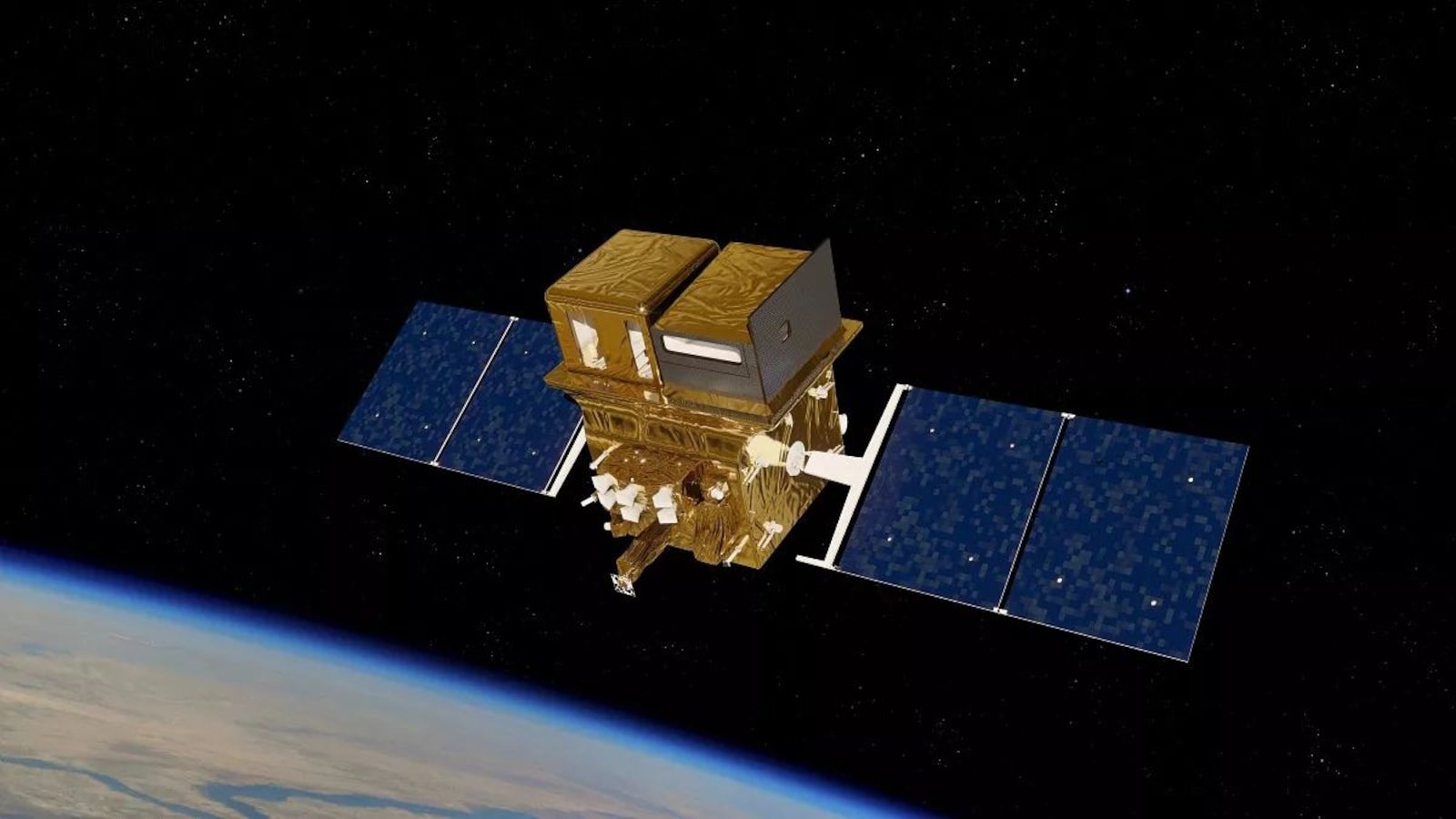
New Delhi: In a landmark demonstration of the enduring scientific bond between India and France, the two nations are gearing up for the 2027 launch of the TRISHNA satellite. Scheduled to lift off from Sriharikota, this mission addresses one of the most pressing crises of our era: the rapid depletion of global water resources due to climate change.
The mission, whose name is derived from the Sanskrit word for “thirst,” represents a significant step forward in monitoring the planet’s hydrologic health. By capturing thermal infrared imagery with unprecedented detail, the satellite aims to provide a diagnostic view of the Earth’s water cycle, offering data that is crucial for agriculture, urban planning, and environmental conservation.
Bridging the Data Gap
The Thermal infraRed Imaging Satellite for High-resolution Natural resource Assessment (TRISHNA) is designed to operate from a Sun-synchronous orbit, roughly 700 kilometres above Earth. Its primary objective is to achieve a resolution finer than 60 metres, with frequent revisits throughout the week.
According to experts, existing space-based assets often force a trade-off between high-frequency observation and high-resolution imaging. TRISHNA aims to resolve this dichotomy. By monitoring surface temperatures, vegetation stress, and evapotranspiration, the satellite will allow scientists to track the precise evolution of water use across forests, glaciers, and agricultural landscapes. For farmers and water resource managers, this translates into actionable insights for optimizing irrigation and predicting drought patterns with greater accuracy.
A Legacy of Collaboration
The partnership behind TRISHNA is rooted in over six decades of collaborative history between the Indian Space Research Organisation (ISRO) and the French space agency, CNES. This deep-seated “French Connection” is perhaps most visible in India’s launch vehicles. The legendary French Viking engine served as the architectural blueprint for the Vikas engine, the workhorse that powers the PSLV, GSLV, and LVM-3 rockets.
TRISHNA is viewed as a natural successor to the highly successful Megha-Tropiques mission launched in 2011. While its predecessor was instrumental in decoding tropical monsoon dynamics and atmospheric water content, TRISHNA focuses on the terrestrial consequences of these patterns—tracking exactly what happens to water once it settles on the surface.
Shared Future and Strategic Flexibility
Prof. Philippe Baptiste, the French Minister for Higher Education, Research, and Space, recently highlighted that the mission is a product of decades of mutual trust. Beyond climate science, the two nations are exploring logistical synergies in space flight. Discussions are currently underway regarding the potential interoperability of launch systems.
The proposal suggests a collaborative framework where launch vehicles—such as Europe’s Ariane 6 and India’s LVM-3—could potentially swap payloads depending on availability and mission requirements. This level of cooperation could provide a robust alternative to current commercial space providers, ensuring greater reliability for global satellite missions.
As India and France commemorate the “Year of Innovation,” the TRISHNA mission stands as a testament to their shared vision. From training astronauts for the Gaganyaan project to monitoring the changing climate, the alliance remains a cornerstone of international scientific cooperation. When TRISHNA finally ascends into orbit, it will do more than just map the Earth—it will serve as a beacon of international cooperation in the face of a warming, thirsty world.
Disclaimer: This content is auto-generated for informational purposes only.
Source: Read Original News