








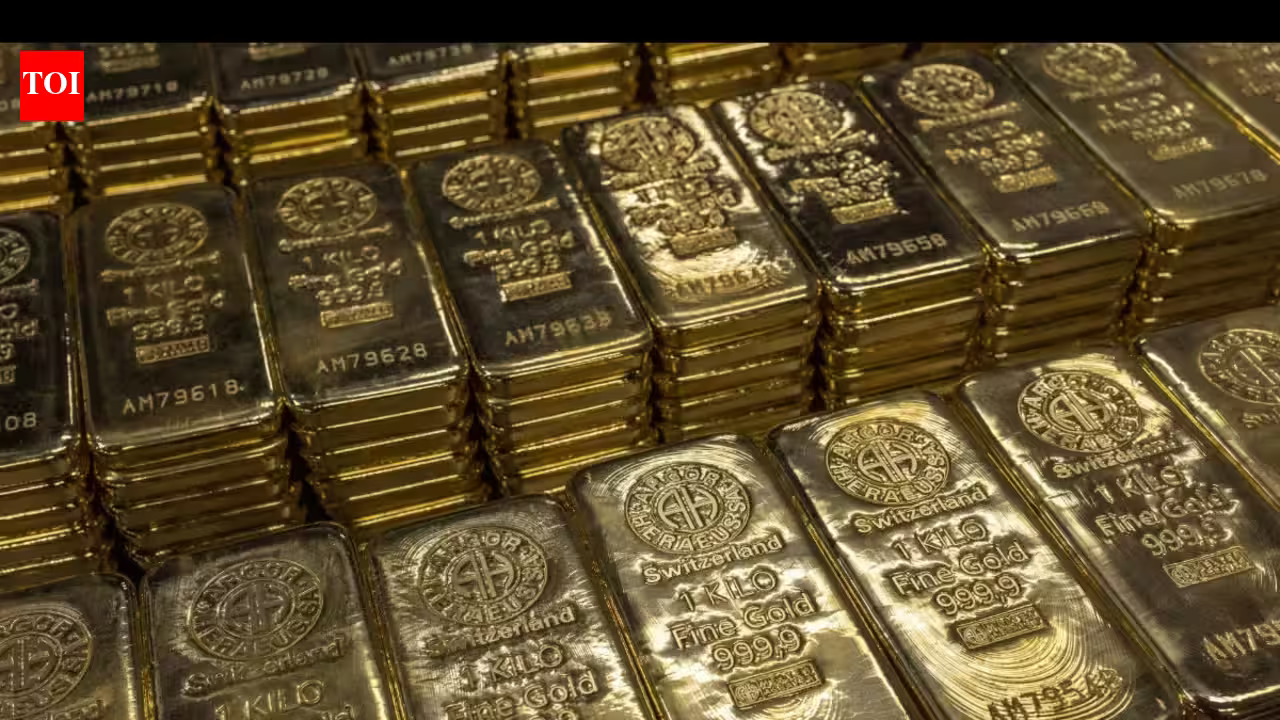
The Macroeconomic Nexus: Analyzing the Gold Price Correction
The recent downturn in gold prices, which saw the metal touch its lowest levels in several weeks, serves as a quintessential case study in macroeconomic interconnectedness. Financial markets rarely operate in silos, and the current volatility in precious metals is a direct consequence of a triad of factors: the surge in global crude oil prices, a strengthening United States dollar, and the shifting expectations regarding Federal Reserve monetary policy. For investors and market analysts, this correction is not merely a dip in asset value but a reflection of how inflationary pressures are recalibrating global risk assessments.
When crude oil edges toward the threshold of $100 per barrel, the implications for global inflation are immediate. Energy prices act as a foundational cost for transportation, manufacturing, and logistics. A spike in oil prices invariably threatens to reverse the disinflationary trends that central banks have fought to establish over the past year. In the United States, the Federal Reserve closely monitors these energy costs as a leading indicator of headline inflation. If energy costs remain elevated, the expectation that the Fed might pivot toward aggressive rate cuts diminishes significantly. Instead, the market begins to price in a “higher-for-longer” interest rate environment, which fundamentally undermines the appeal of non-yielding assets like gold.
The Strength of the Greenback and Treasury Yields
The inverse relationship between the US dollar and gold is a cornerstone of commodities market theory. Because gold is priced in dollars, a stronger currency makes the metal more expensive for holders of other currencies, thereby dampening physical demand. Currently, the dollar is benefiting from its status as a safe-haven asset and from the yields offered by US Treasury bonds. As Treasury yields climb in anticipation of sustained higher interest rates, investors are increasingly drawn to the guaranteed returns of government debt over the capital appreciation potential of gold.
This shift in capital allocation represents a tactical move by institutional investors. When the “risk-free rate” offered by bonds becomes more attractive, the opportunity cost of holding physical gold—which provides no dividends or interest—rises. The convergence of a rising dollar and higher bond yields creates a restrictive environment for bullion, effectively squeezing out speculative positions that were built on the premise of imminent rate cuts. This mechanical sell-off is exacerbated by algorithmic trading models, which trigger liquidations once specific price support levels are breached.
Impact on the Indian Market and Consumer Sentiment
In the context of the Indian economy, the volatility in international gold prices carries profound significance. India remains one of the world’s largest consumers of gold, where the metal serves dual purposes as a cultural essential and a hedge against local currency depreciation. While global prices have softened, the impact on domestic prices is frequently mitigated or amplified by the fluctuations of the Indian Rupee (INR) against the US dollar.
When the dollar strengthens globally, the rupee typically faces downward pressure. This provides a natural cushion for domestic gold prices; even as international prices fall in dollar terms, the cost of importing gold into India remains elevated because the rupee is weaker. Consequently, Indian consumers and jewelers often see a less dramatic price drop compared to their counterparts in other regions. However, the current price trajectory poses a challenge for retail sentiment. Indian buyers are notoriously price-sensitive, often waiting for significant dips to increase their consumption during festival seasons or wedding cycles. If global prices continue to remain volatile, it creates a “wait-and-watch” environment that can temporarily stifle demand, impacting the margins of the broader gems and jewellery industry.
Commodities and the Inflationary Tug-of-War
The current market environment is defined by an ongoing tug-of-war between growth fears and inflation stickiness. For a long time, the investment thesis for gold was centered on the expectation that central banks would be forced to cut rates to stave off a recession. However, the resilience of the global economy and the recent surge in energy prices have challenged that narrative. Markets are now grappling with the reality that inflation may not decline as smoothly as previously anticipated.
For the commodities sector, this means that while precious metals like gold are struggling, the energy sector is benefiting from the very inflationary pressures that are hurting the former. This divergence highlights a rotation of capital within the commodities complex. Investors are moving away from hedge assets in favor of cyclical assets that thrive during inflationary cycles. However, this trend is fragile. Should the surge in crude oil prices lead to a rapid slowing of industrial activity, the market sentiment could pivot again. If recessionary concerns overtake inflation fears, capital will likely flow back into gold as a protective measure, illustrating the cyclical nature of commodity market shifts.
Strategic Outlook for Investors and Institutions
Navigating the current landscape requires an analytical approach that separates short-term price noise from long-term fundamental trends. For institutional investors, the current gold price correction presents a need to re-evaluate the role of precious metals within a diversified portfolio. While gold remains an essential hedge against tail-risk events, its performance is undeniably tied to the real interest rate environment. Until there is greater clarity on the trajectory of US monetary policy, volatility is likely to remain the default state.
For stakeholders in the Indian business landscape, the focus should be on hedging against currency risk. With the rupee experiencing fluctuations due to global dollar strength, companies involved in the import-export of precious metals must employ sophisticated financial instruments to protect their bottom line. The reliance on gold as a traditional store of wealth in India remains unshaken, but the mechanism of entry and exit for investors is becoming more sophisticated. Looking ahead, the interplay between domestic demand, which is currently resilient, and global price dynamics will be the key driver of market health. As the market digests the implications of higher crude prices and the resulting Fed policy expectations, the gold sector will remain under the microscope, serving as a bellwether for global macroeconomic stability. The next several months will be defined by the data—specifically inflation reports and central bank communications—which will determine whether this gold price dip is a structural adjustment or a transitory correction.
Disclaimer: This content is auto-generated for informational purposes only.
Source: Read Original News