









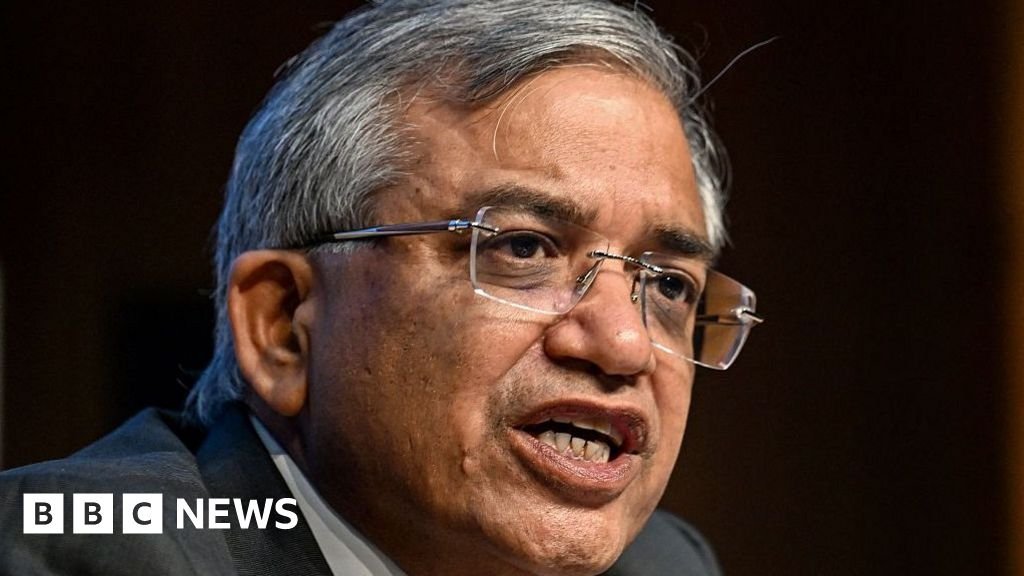
The Quiet Architect of Electoral Reform: Gyanesh Kumar’s Meteoric Rise and Current Scrutiny
In the high-stakes corridors of North Block and the rarefied atmosphere of the Election Commission of India (ECI), few names have commanded as much quiet respect—and now, intense public debate—as Gyanesh Kumar. A retired IAS officer of the 1988 batch, Kumar has long been characterized by his peers as a “no-nonsense” administrator. Yet, today, he stands at the epicenter of a swirling controversy that tests the institutional integrity of India’s democratic machinery.
A Legacy of Administrative Rigor
Before his elevation to the post of Election Commissioner, Kumar’s career was defined by his involvement in some of the most sensitive legislative undertakings of the last decade. A veteran of the Kerala cadre, he played a pivotal role in the Ministry of Home Affairs during the abrogation of Article 370. Those familiar with his working style describe him as a “files-first” bureaucrat—a man who prefers the granular detail of constitutional law over the flamboyance of political discourse.
His reputation as a tough taskmaster was forged in the heat of complex bureaucratic restructuring. Whether it was the implementation of the Citizenship Amendment Act (CAA) rules or the management of internal security dossiers, Kumar operated with a surgical precision that made him a favorite among the political establishment. It was this track record of handling high-pressure assignments that eventually paved his path to the Election Commission.
The Winds of Controversy
However, the transition from a government executive to an election referee has not been seamless. Since his appointment to the poll body, Kumar has found himself caught in the crossfire of an increasingly polarized electoral landscape. The controversy stems primarily from the revised selection process for Election Commissioners, which critics argue diminishes the role of the judiciary and places more power in the hands of the executive.
Opposition parties have voiced concerns that the appointment of former bureaucrats with deep ties to the ruling dispensation compromises the appearance of neutrality. For Kumar, this has manifested in a series of legal challenges and public petitions questioning the timing and the transparency of the ECI’s decisions regarding poll schedules and enforcement of the Model Code of Conduct. The scrutiny is intense: every move he makes is now dissected by legal experts, political analysts, and the restless eyes of a hyper-connected electorate.
Upholding the Constitutional Mandate
Despite the noise, those close to the Election Commissioner insist that his approach remains unchanged. They argue that his background in home affairs gives him a unique logistical advantage in managing an election of India’s staggering scale. For a country that oversees nearly a billion voters, the logistical requirements are essentially an exercise in massive administrative orchestration—a domain where Kumar has historically excelled.
Yet, the challenge for Kumar is no longer just logistical; it is existential. In an era where the fairness of the electoral process is being debated with unprecedented ferocity, he must balance the mandate of a strict administrator with the need for public perception of impartiality. His supporters believe he is a misunderstood technocrat, while his detractors see him as a symbol of institutional capture.
As the nation looks toward future electoral cycles, all eyes remain fixed on the Commission. Whether Gyanesh Kumar is remembered as the architect of a more efficient voting process or as a figurehead of a controversial chapter in Indian democracy remains to be seen. What is certain is that in the world of Indian administration, silence and efficiency are no longer enough—the measure of a man in his position is now judged by the courage to stand apart from the political currents he once served.
Disclaimer: This content is auto-generated for informational purposes only.
Source: Read Original News