









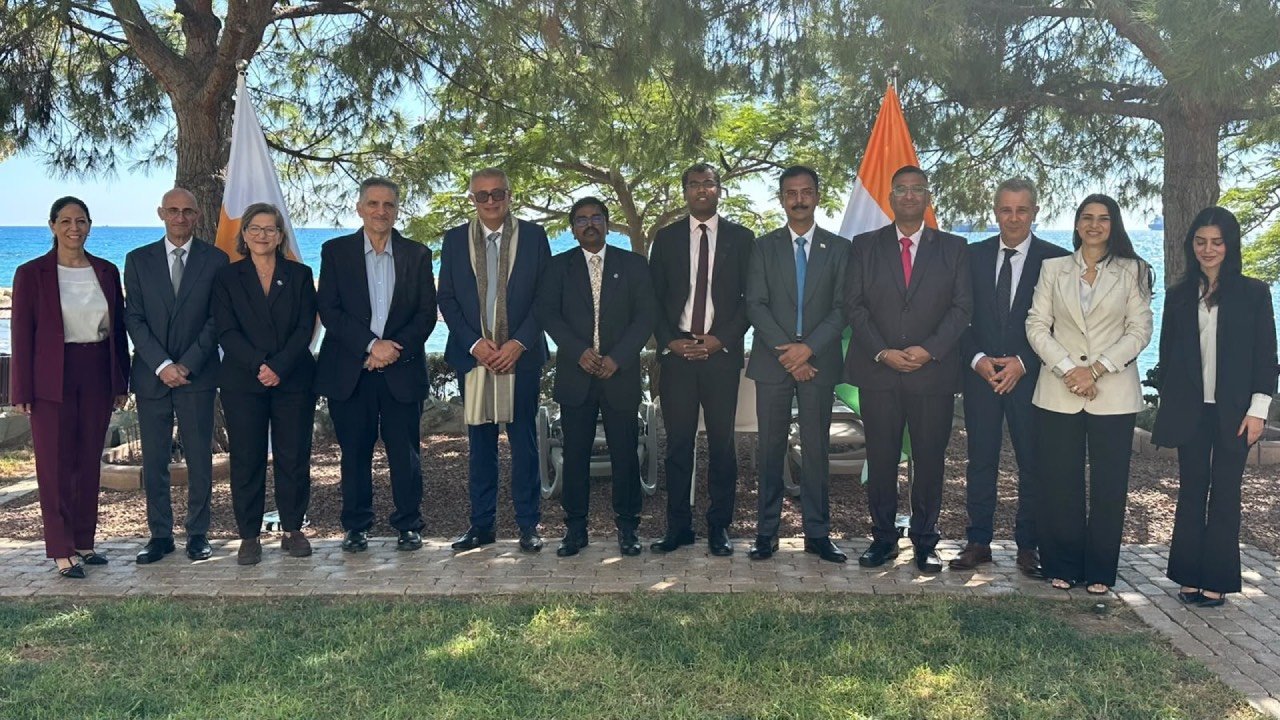
India and Cyprus Forge Closer Maritime Ties with Inaugural Joint Committee Meeting
In a significant step toward bolstering international maritime cooperation, India and Cyprus successfully convened the first meeting of the Joint Maritime Committee (JMC) yesterday in Limassol. The high-level gathering marks a pivotal milestone in the bilateral relationship between the two nations, operating under the formal framework of the Merchant Shipping Agreement signed in 2017.
Strengthening Institutional Cooperation
The establishment of the Joint Maritime Committee serves as a robust institutional mechanism designed to facilitate consistent dialogue and foster deep-rooted collaboration between New Delhi and Nicosia. By creating a dedicated platform for maritime authorities, both countries aim to streamline regulatory processes, exchange technical expertise, and address the evolving challenges of the global shipping industry.
During the session in Limassol, delegates from both sides emphasized the importance of maritime logistics in the modern geopolitical landscape. As India continues to expand its “Blue Economy” initiative and Cyprus solidifies its status as a premier European maritime hub, the collaboration is expected to yield significant economic dividends. The discussions focused on enhancing maritime safety, security, and environmental sustainability, ensuring that shipping lanes remain efficient and resilient against international supply chain disruptions.
Strategic Benefits for Bilateral Trade
Cyprus, strategically positioned at the crossroads of Europe, Asia, and Africa, remains one of the most critical jurisdictions for international shipping operations. For India, the partnership provides a vital gateway into European markets, while Cyprus stands to benefit from India’s growing prowess in maritime technology, shipbuilding, and the provision of skilled seafaring personnel.
The 2017 agreement provided the foundation for this cooperation, but the activation of the Joint Maritime Committee signals a transition from diplomatic framework to active, operational engagement. Both nations noted that this mechanism would allow for the swift resolution of administrative bottlenecks and the harmonization of standards, which is essential for shipowners and logistics firms operating across both regions.
Future Outlook on Global Shipping
The inaugural meeting also touched upon broader global concerns, including the digitization of maritime ports and the transition toward greener shipping fuels. As the international community moves toward decarbonization, India and Cyprus expressed a mutual commitment to supporting research and development in maritime technology.
“This committee is not just a dialogue forum; it is a collaborative engine,” a spokesperson noted following the conclusion of the talks. The meeting concluded with an agreement to establish working groups tasked with monitoring progress on specific technical projects, including crew welfare, maritime education, and joint safety protocols.
A New Chapter in Indo-Cypriot Relations
The success of the Limassol meeting underscores the commitment of both governments to leverage their respective maritime strengths. By institutionalizing their relationship, India and Cyprus have created a predictable and productive environment for future investment.
As the world’s maritime routes become increasingly complex, the synergy between Indian logistical capabilities and the Cypriot shipping industry provides a clear advantage. The Joint Maritime Committee is scheduled to reconvene annually, with plans to alternate hosting duties between India and Cyprus. This ongoing partnership is set to play a fundamental role in maintaining the flow of global trade while strengthening the socio-economic ties that have historically bound the two nations together.
Disclaimer: This content is auto-generated for informational purposes only.
Source: Read Original News