







The Strategic Imperative of the India-US Bilateral Trade Agreement
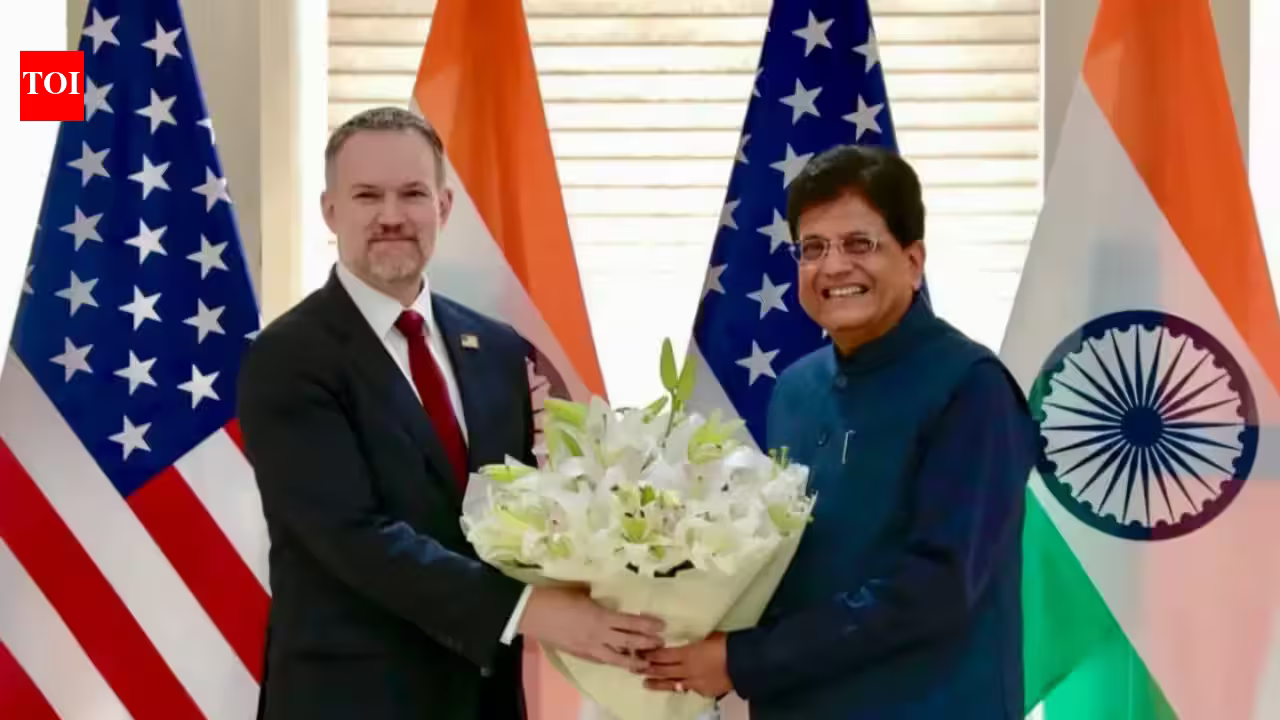
The relationship between India and the United States has evolved into one of the most critical geopolitical and economic partnerships of the 21st century. As both nations seek to realign global supply chains and reduce systemic dependencies, the ongoing negotiations for a Bilateral Trade Agreement (BTA) have taken center stage. Recent discussions held in Milwaukee between Union Minister for Commerce and Industry Piyush Goyal and United States Trade Representative (USTR) Jamieson Greer signify a pivotal phase in these deliberations. While the terminology used by officials suggests that negotiations are in their “short strokes,” the absence of an immediate announcement reflects the complex, multi-layered nature of reconciling two distinct economic philosophies.
For India, the objective is clear: to secure competitive market access that empowers domestic manufacturing, particularly in sectors where it faces stiff competition from ASEAN nations, Bangladesh, and China. For the United States, the focus remains on navigating its shifting tariff landscape while addressing concerns regarding market liberalization and regulatory frameworks. The alignment of these objectives is not merely a matter of bureaucratic process but a core component of the broader economic statecraft pursued by both the Modi and Trump administrations.
Decoding the Status of Interim Negotiations
The roadmap for the current dialogue was largely established by the Joint Statement of February 7, 2026, which provided a framework for an initial phase of the BTA. This document set the ambition for a balanced and mutually beneficial deal. However, the subsequent adjustments in the United States tariff landscape necessitated a recalibration of these terms. When Minister Goyal mentioned in September that the pact was effectively “done and dusted,” he underscored that the technical hurdles were largely resolved, but the political and strategic timing remained contingent on the United States granting India a definitive competitive advantage.
This competitive advantage is the crux of the negotiation. India seeks a “level playing field” that allows its exports—ranging from textiles and pharmaceuticals to engineering goods—to gain a firmer foothold in American retail and industrial markets. The USTR, represented by Jamieson Greer, has acknowledged that the “universe of items” that constitute friction points has been clearly mapped. By isolating these specific sticking points, both nations have moved from abstract dialogue to granular, evidence-based bargaining. The fact that the process is currently in the “short strokes” implies that the foundational architecture of the deal is stable, even if the final signatures are delayed by the necessity of perfect alignment on tariff concessions and regulatory synchronization.
The Role of Political Leadership in Economic Diplomacy
The role of heads of state has been fundamental in accelerating these trade deliberations. The recent telephone conversation between Prime Minister Narendra Modi and President Donald Trump was not merely a diplomatic pleasantry but a targeted intervention to maintain momentum. Trade agreements of this magnitude often require political oversight to resolve impasses that technocrats at the ministerial level cannot bypass. The prospect of further high-level calls suggests that the finalization of the interim deal is being treated as a priority at the highest levels of government.
This top-down approach is essential for navigating the domestic sensitivities inherent in trade liberalization. In the United States, there is a heightened focus on ensuring that trade deals protect local industries and employment. Conversely, in India, the government remains committed to its ‘Make in India’ initiative, ensuring that trade concessions do not undermine the nascent domestic industrial base. The personal rapport between the leadership allows for a “big picture” negotiation where specific trade-offs—such as market access in exchange for investment commitments—can be finalized with an understanding of the long-term strategic benefit to the bilateral relationship.
Supply Chain Realignment and Competitive Positioning
A primary driver of the India-US BTA is the global shift toward “friend-shoring” and the strategic imperative to diversify supply chains away from over-reliance on a single market, specifically China. As global corporations look for alternatives to established manufacturing hubs, India is positioning itself as a primary beneficiary. However, to translate this interest into tangible investment, India requires the security of a stable, long-term trade framework.
The competition for the American market is intense. Bangladesh has historically held a significant share of the apparel sector, while ASEAN countries have dominated electronics and assembly operations. For the Indian industry, the BTA is expected to provide the necessary fiscal and policy leverage to neutralize these competitive disadvantages. The government’s insistence on a “right competitive advantage” indicates that India is not seeking a standard trade deal that focuses solely on duty reductions. Instead, it is looking for a comprehensive arrangement that acknowledges India’s role as an emerging engine of global growth, facilitating technology transfers and lowering barriers for high-value services and critical technologies.
Challenges to Implementation and Future Outlook
Despite the progress, the path to a ratified agreement is not without obstacles. The global economic environment is currently characterized by protectionist sentiments and volatile trade policies. The USTR’s hesitation to call the deal “imminent” reflects the reality of American domestic pressure, where every tariff concession is scrutinized for its impact on local manufacturing interests. On the Indian side, the government must balance the requirements of the BTA with the needs of diverse industrial sectors that are sensitive to competition from imported goods.
The interim deal, once concluded, will likely serve as a foundational building block for a more comprehensive Free Trade Agreement. By resolving initial issues regarding customs, standards, and digital trade, the interim BTA will establish the procedural trust necessary to move forward. The collaborative approach demonstrated in Milwaukee—where trade discussions were conducted alongside G20 deliberations—suggests that both countries view this deal as a prerequisite for deeper cooperation in areas such as defense, energy, and emerging technologies.
As the negotiations enter their final phase, the business community in both nations remains in a state of cautious optimism. The clarity provided by the identification of sticking points is a positive indicator that both sides have reached a point of exhaustion regarding the status quo. If the recent momentum is sustained through the promised high-level communications, the conclusion of the interim deal could serve as a powerful catalyst for increased Foreign Direct Investment (FDI) into India and a more resilient, integrated economic corridor between New Delhi and Washington. For stakeholders, the message is clear: while the finalization may take longer than expected, the strategic necessity of the agreement ensures that it remains firmly on the bilateral agenda, moving steadily toward its realization.
Disclaimer: This content is auto-generated for informational purposes only.
Source: Read Original News