








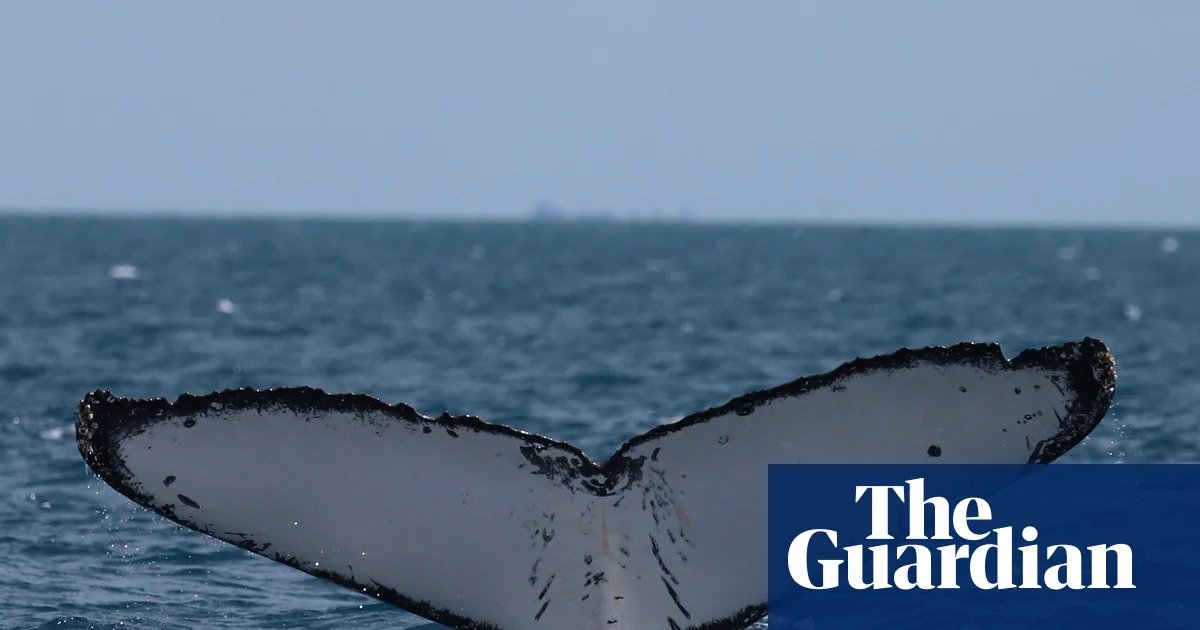
Gruesome imagery of humpback whales along Australia’s east coast—bearing deep, red lacerations and missing tail parts—has unveiled the dark side of a conservation success story. Sixty years after the prohibition of commercial whaling allowed humpback populations to rebound from near-extinction, a rising tide of boat traffic is inflicting a new, mechanical form of violence on these marine giants.
Shared by WWF Australia, the photographs depict adult and juvenile whales scarred by propeller strikes. One particularly alarming image, taken last month in Queensland’s Hervey Bay—a crucial resting ground for migrating mothers and calves—shows a young whale with fresh, wide lacerations across its back. For those on local whale-watching tours, the sight of these injuries is a jarring interruption to the spectacle of natural beauty.
“The others were very surface active and putting on a show, but this other mum and calf were more reserved,” says Isabel Taylor, a senior naturalist with the Pacific Whale Foundation. “Clearly visible on the calf’s back were slash marks from a boat propeller. The mood on the boat changed a bit. We get people from all over the world and some say it’s the best day of their lives. So to have this on the other end of the spectrum was quite profound.”
The injuries are not isolated incidents. Off the coast of Sydney, drone footage from June captured a humpback with flesh exposed by repeated propeller passes. Further south, a whale known as “bladerunner” has become a symbol of this ongoing crisis, carrying distinctive deep gashes sustained more than two decades ago.
Experts suggest that the frequency of these encounters is rising in tandem with the surge in both whale populations and recreational boating. Estimates from the 1960s suggested fewer than 300 humpbacks remained off the east coast of Australia; today, that number has climbed to between 40,000 and 50,000. With over 970,000 registered boats in Australia—the majority concentrated in New South Wales and Queensland—the risk of collision has become acute.
Dr. Raphael Mayaud, a marine ecologist at Griffith University and advisor to the International Whaling Commission (IWC), notes that migrating humpbacks often surface on a predictable schedule, leaving them vulnerable. “When migrating humpbacks travel and surface like clockwork, they don’t seem to be able to change their dive and travel behavior to avoid an intercept pathway,” says Associate Professor Rebecca Dunlop of the University of Queensland. “This could be due to a boat approaching the intercept point at speed where they just don’t have the time to make an avoidance decision.”
The impact of a strike extends far beyond the initial trauma of pain, blood loss, and infection. Experts emphasize that surviving a collision can lead to long-term physical and energetic deficits. A whale missing part of its fluke must exert more energy to swim, which can compromise its ability to migrate, feed, and reproduce effectively.
Addressing this “black hole of information” is now a priority for the IWC, which recently passed a resolution to treat vessel strikes as a global concern. While Australian law mandates the reporting of collisions with protected species, experts acknowledge that the vast majority remain undetected or unreported.
Proposed solutions echo strategies successfully employed elsewhere. In California, shipping companies are incentivized through public scorecards to adhere to speed limits in high-risk zones, while San Francisco Bay has begun trialing AI-assisted whale-spotting cameras to alert captains. For Australian waters, experts advocate for stricter speed restrictions along known migration corridors and increased public awareness regarding the risks posed to whales during peak travel months.
“Humpbacks have been one of the great conservation success stories,” says Chris Johnson, WWF’s global lead on whale protection. “But along Australia’s humpback highway, there’s growing risk for them to be hit by vessels. These images really bring home the physical and direct impact we’re having on these animals.”
Disclaimer: This content is auto-generated for informational purposes only.
Source: Read Original News