






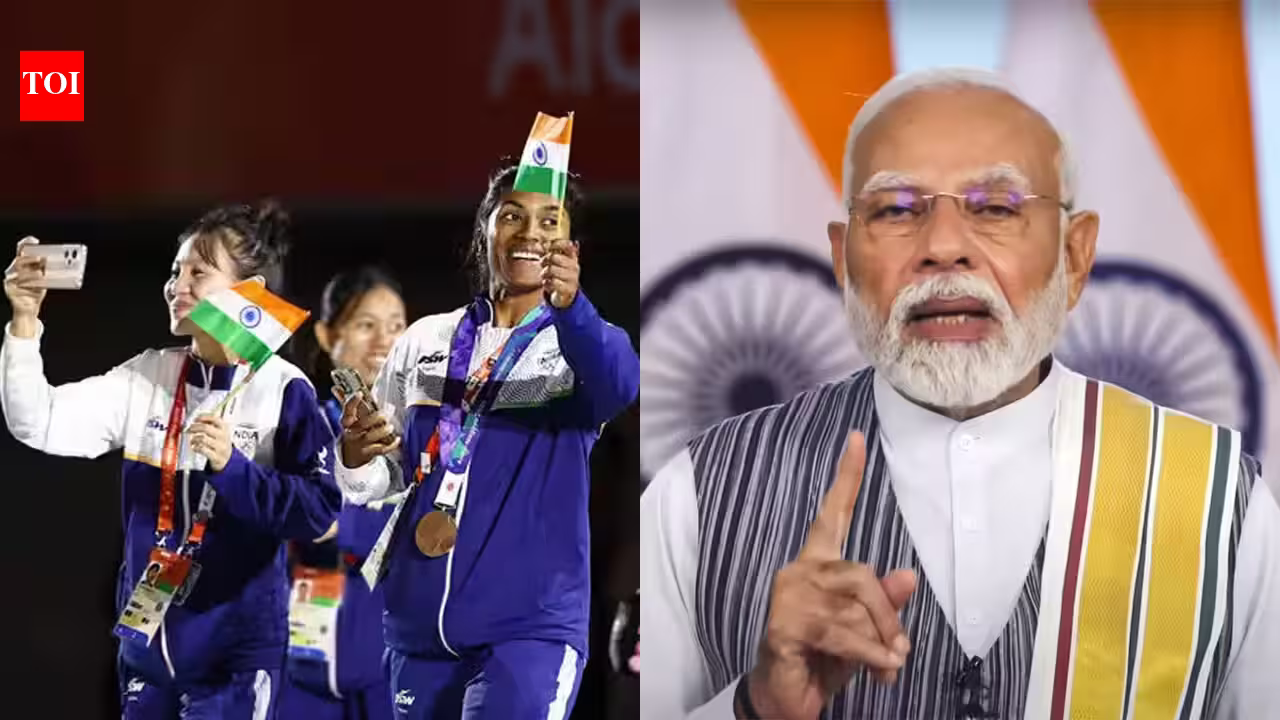
NAGOYA — As the curtain fell on the Aichi-Nagoya Asian Games this Sunday, the Indian contingent returned home not just with a haul of 85 medals, but with the resounding endorsement of the nation’s leadership. Following a grueling two weeks of competition against 45 nations, India secured a fourth-place finish on the overall medal table, anchored by a total of 21 gold, 27 silver, and 37 bronze medals.
Prime Minister Narendra Modi led the tributes, taking to social media to laud the athletes for their unwavering dedication. “As the Asian Games 2026 draw to a close, my compliments to every member of the Indian contingent for representing our nation with determination, passion and remarkable sporting spirit,” the Prime Minister wrote. Highlighting the long-term vision for the country’s athletic infrastructure, he added, “Congratulations to all our medal winners, whose performances have brought immense joy to the nation. May these Games inspire even greater achievements in the years ahead. May they contribute to strengthening sports at the grassroots too.”
A Legacy of Historic Gold and Landmark Victories
The Aichi-Nagoya Games will be remembered as a tournament of high-stakes pressure and historic breakthroughs for India. While the total medal count fell 21 shy of the record-breaking 106-medal haul achieved in Hangzhou in 2023, the 2026 campaign was defined by quality, tactical dominance, and the shattering of long-standing continental ceilings.
In team sports, India asserted its regional dominance. Both the men’s and women’s cricket squads successfully defended their titles, reaffirming India’s stature in the sport. The kabaddi squads mirrored this success, securing gold in both categories. Perhaps most emotional was the performance of the women’s hockey team, which ended a 44-year gold medal drought by edging out China 1-0 in a tense final. On the men’s side, the hockey squad cruised to a dominant 5-1 victory over Malaysia to reclaim their spot atop the podium.
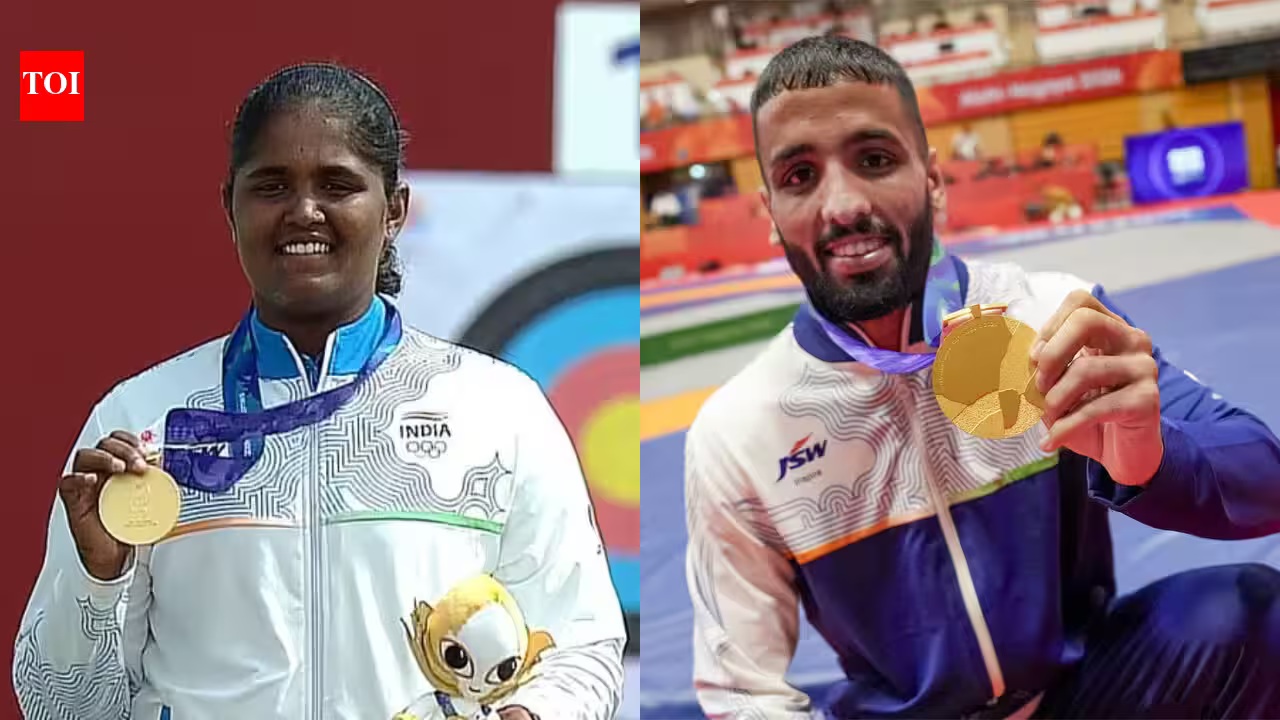
Individual brilliance also took center stage, with several athletes etching their names into the record books. Pranavi Urs made headlines as the first Indian woman to clinch an individual golf gold at the Asian Games. Meanwhile, 17-year-old archer Kumkum Mohod delivered one of the most stunning performances of the tournament, becoming the first Indian woman to secure individual recurve gold. Her brilliance extended to the team event, where she anchored India to a historic victory that snapped South Korea’s seven-edition winning streak.
In the wrestling arena, Sujeet Kalkal provided the drama of the games with a spectacular comeback to claim the men’s 65kg freestyle gold. Adding to the legacy of Indian boxing, Lovlina Borgohain secured a top-podium finish, becoming only the second Indian woman in history—joining the legendary Mary Kom—to win an Asian Games boxing gold.
Statistical Supremacy and the Road to Los Angeles
Beneath the headline-grabbing golds, the underlying statistics paint a picture of a diversifying Indian sports program. Athletics remained the powerhouse, contributing 24 medals, while the shooting squad proved highly efficient with 15 podium finishes. However, it was the archery contingent that demonstrated the highest conversion rate, securing five gold medals to emerge as the most successful discipline in terms of top-tier hardware.
Recognizing the exceptional contributions of the younger generation, Indian Olympic Association (IOA) president PT Usha officially named Kumkum Mohod and Sujeet Kalkal as the inaugural recipients of the Jaspal Rana Award and the Raja Randhir Singh Award, respectively. These honors recognize them as the best female and male performers for India at the Games, signaling a shift in focus toward celebrating individual excellence alongside collective success.
Looking Beyond Nagoya: The 2028 Horizon
With the Aichi-Nagoya Games concluded, the national conversation has already begun to pivot toward the 2028 Los Angeles Olympics. The performances observed in Japan serve as a critical performance indicator for India’s athletic trajectory. The success of young stars like Mohod and Kalkal provides a blueprint for the IOA’s development pipeline, suggesting that the investment in grassroots programs is beginning to bear fruit on the world stage.
As the athletes depart from the Mizuho Park Athletic Stadium, the takeaway from this campaign is clear: India has evolved from a nation that participates in continental events to one that dictates the outcome of them. While the medal tally serves as a proud summary of the past two weeks, the broader impact—the inspiration offered to the next generation of athletes—remains the true yardstick of this Games.
The Prime Minister’s call to action regarding the “strengthening of sports at the grassroots” remains the primary directive for the coming quadrennial. With the momentum generated in Nagoya, the focus now shifts to sustaining this performance level as the Indian sporting ecosystem prepares for the ultimate challenge in Los Angeles. For now, the nation celebrates a campaign of substance, spirit, and spectacular achievement.
Disclaimer: This content is auto-generated for informational purposes only.
Source: Read Original News