







Redefining Daily Carry: The Modular Approach to Mobile Wallets
The evolution of mobile accessories has often been caught between the desire for minimalist convenience and the practical necessity of physical storage. As smartphone dependence grows, the integration of payment methods and identification into a single, compact unit has become a primary engineering challenge. Enter the OhSnap Wallet 2, a device that attempts to solve the limitations of static, one-size-fits-all wallet attachments through an innovative, toolless modular architecture.
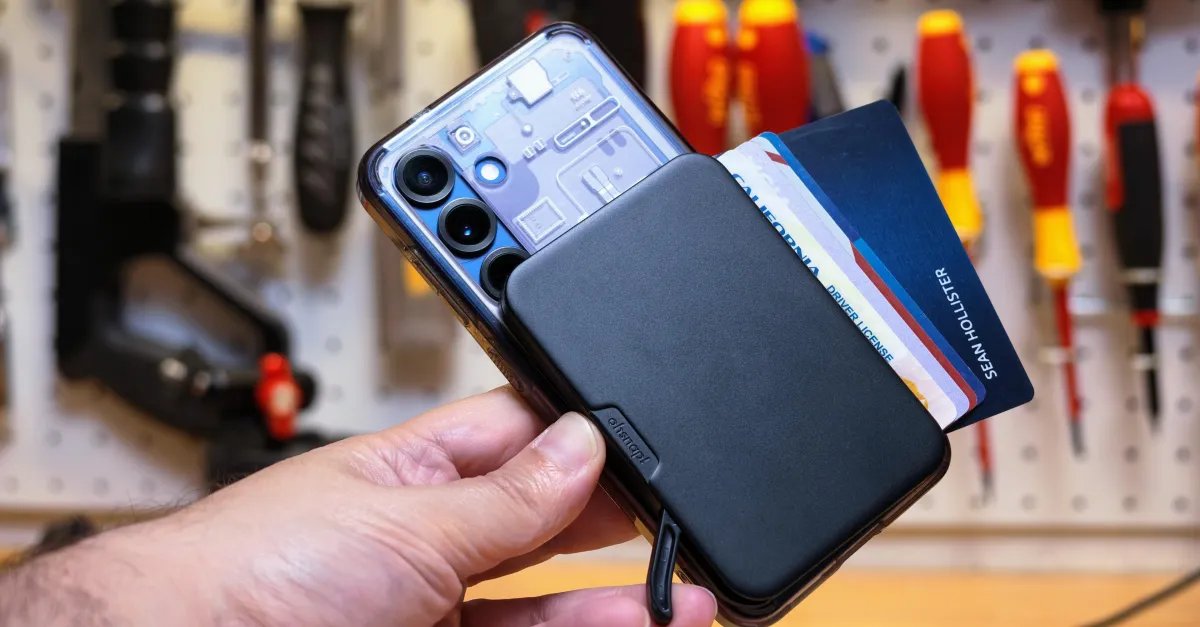
Unlike standard leather or silicone adhesive pouches that are limited by a fixed storage capacity, the OhSnap Wallet 2 utilizes a flexible, hardware-based system. By incorporating an integrated spring-loaded lever mechanism, users can deploy their stored cards in a fanned-out arrangement with a single motion. This departure from traditional “slide-in, slide-out” slots addresses the friction often encountered when retrieving specific cards during checkout or transit.
Engineering Through Compliant Mechanisms
The most technical aspect of this device is its reliance on a compliant mechanism. In mechanical engineering, a compliant mechanism achieves motion through the elastic deformation of its constituent parts rather than through discrete joints or pins. In the context of the OhSnap Wallet 2, the plastic arms of the internal card-carrying core serve as integral springs.
These arms exert outward pressure, engaging a locking interface that secures the modular plates to the core. This design serves a dual purpose: it facilitates the toolless assembly and disassembly of the unit while simultaneously ensuring structural integrity. When cards are inserted into the core, they physically prevent the arms from retracting, effectively locking the assembly into a cohesive state. This design ensures that the wallet remains intact during routine use, relying on the physical presence of the cards to maintain the mechanical lock of the exterior plates.
Modular Customization and Hardware Integration
A defining feature of this product is its high degree of personalization. The system consists of a core module—available in 3, 5, or 7-card capacities—which dictates the overall thickness of the unit. Beyond the core, the user is presented with various swappable exterior plates. These plates allow for the attachment of specialized accessories, including dedicated ID windows, elastic bands for auxiliary storage, and integrated money clips.
For users who prioritize magnetic compatibility, the device supports MagSafe-standard mounting, allowing the wallet to attach securely to the rear of smartphones. However, the system also offers a versatile “stand-alone” mode. By swapping out the magnetic backing plates for ultra-thin aluminum covers, the device transitions from a phone attachment to a traditional standalone wallet, providing flexibility for those who occasionally wish to carry their phone and wallet separately without needing additional gear.
Real-World Performance and Durability Constraints
While the engineering design is sophisticated, practical field testing reveals the trade-offs inherent in modular architecture. Drop tests indicate that while the compliant mechanism provides a secure hold, extreme impacts—such as a direct hit on a hard surface like concrete—can overwhelm the tension of the plastic arms. In high-energy scenarios, the modular nature of the device allows it to dissipate energy through partial disassembly, which prevents the shattering of the core but does result in the scattering of components.
Weight distribution is another technical factor that users must consider. When fully configured with a 7-card capacity and additional magnetic backing, the assembly adds approximately 127 grams to the mobile device. For users sensitive to the ergonomics of their phone, this added mass significantly alters the balance of the handset, potentially leading to increased fatigue during prolonged one-handed operation. The “impossibly thin” marketing claim holds true only for the entry-level 3-card variant; once additional plates and clips are introduced, the profile grows substantially.
Cost Analysis and Market Position
From a market perspective, the OhSnap Wallet 2 occupies a premium tier within the accessory space. The pricing structure—which requires an investment of over $60 during the initial crowdfunding phase and higher retail pricing thereafter—reflects the manufacturing complexity of the multi-component modular system. Furthermore, the reliance on proprietary, specialized plates for added functionality like the money clip or ID cover introduces a “locked-in” ecosystem cost.
While the engineering innovation offers a unique solution for users who require variable storage capacity, the financial barrier to entry is high compared to non-modular alternatives. The device serves as a testament to the intersection of clever mechanical design and consumer desire for modularity. While it may not replace a traditional leather wallet for every user due to its weight and price, its ability to shift from a thin, minimalist carrier to a robust, feature-rich module makes it a significant development in the broader category of modular smartphone peripherals. For those who find value in high-tolerance mechanical design and the ability to frequently reconfigure their carry setup, it represents a new milestone in how we manage daily essentials alongside our mobile technology.
Disclaimer: This content is auto-generated for informational purposes only.
Source: Read Original News