







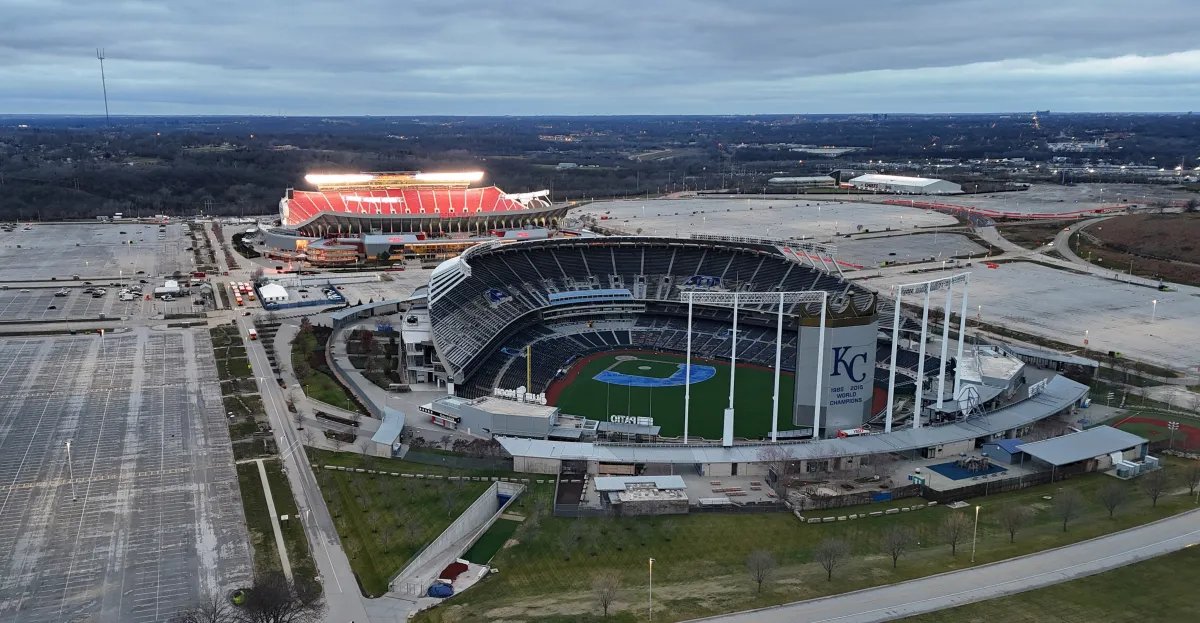
A Kansas City City Council committee has moved forward with a sweeping plan to reshape the urban landscape, officially recommending a massive rezoning initiative and a $600 million public bond issuance to facilitate a proposed $1.9 billion Major League Baseball stadium. The project, which sits at the heart of an ambitious downtown redevelopment strategy, marks a significant moment for the city’s future infrastructure and economic profile.
The committee’s approval covers a 68-acre tract of land bordered by Pershing Road, Gillham Road, East 27th Street, and Main Street. Beyond the physical rezoning, the committee endorsed a new stadium impact area policy, a mechanism designed to capture economic growth to offset the public investment.
## Balancing Financial Risk with Urban Growth
The financial scope of the project is staggering, with the city aiming to issue $600 million in bonds to cover its share of the construction costs. However, this commitment comes with significant long-term fiscal responsibility. Documents presented during the committee meeting indicate that the total debt service over the next 30 years is estimated at nearly $1.4 billion.
Councilman Crispin Rea emphasized the gravity of the decision during Tuesday’s session, noting, “This is a long investment, a large investment, the stakes are very high.” Because of the substantial debt load, city officials are conducting rigorous stress tests on tax revenue projections. The city must be confident that the economic activity generated by the new stadium and the surrounding district will provide sufficient tax revenue to satisfy those long-term financial obligations.
In addition to the public investment, the project features a massive private component. The Kansas City Royals, in partnership with Hallmark Cards, intend to spearhead a $1 billion mixed-use development, including a complete reimagining of the Crown Center district. This infusion of private capital is intended to turn the stadium area into a year-round hub of activity rather than a seasonal venue.
## Integrating Modern Technology and Smart City Infrastructure
As cities across the United States modernize, local officials and developers are increasingly looking at how such large-scale developments can leverage data and AI-driven infrastructure. While the current committee focus remains on zoning and finance, future project iterations are expected to integrate smart city technologies—a growing priority for major metropolitan hubs.
By utilizing platforms like Google Cloud’s urban planning and data analytics tools, cities are now better equipped to simulate the impact of new developments on traffic flow, energy consumption, and public safety. These technologies allow municipalities to visualize how a 68-acre construction site will alter the digital and physical grid. As Kansas City moves closer to finalizing its stadium plans, the integration of advanced geospatial data and AI-based forecasting will likely play a role in optimizing the “stadium impact area” to ensure that the district remains efficient and sustainable for its residents.
## The Digital Future of Venue Experiences
Beyond the concrete and steel, the new stadium will likely serve as a massive testing ground for modern consumer tech. Sports franchises are increasingly moving toward AI-driven personalization to enhance the fan experience. From the use of computer vision for expedited entry and checkout at concessions to predictive AI models that manage crowd flow in real-time, the tech industry is becoming a vital partner in stadium operations.
As Kansas City officials navigate the final hurdles of this bond issuance and development agreement, the intersection of public policy and technological advancement will be critical. The project is not merely a sports venue; it is an attempt to use a high-stakes investment to force a digital and economic transformation of a core city neighborhood, setting the stage for how future American cities might approach massive, mixed-use infrastructure projects in the coming decade.
Disclaimer: This content is auto-generated for informational purposes only.
Source: Read Original News