








The Revenue Discrepancy Between Platforms
When analyzing the performance of modern triple-A gaming titles, the traditional metric of individual unit sales on storefronts like Steam often provides an incomplete picture. The recent launch of Gears of War: E-Day serves as a prime case study in how subscription-based business models fundamentally alter financial reporting. While initial reports highlighted a lukewarm reception on Steam, where the game peaked at roughly 31,500 concurrent players, industry data from Alinea Analytics suggests this represents only a small portion of the total economic footprint.
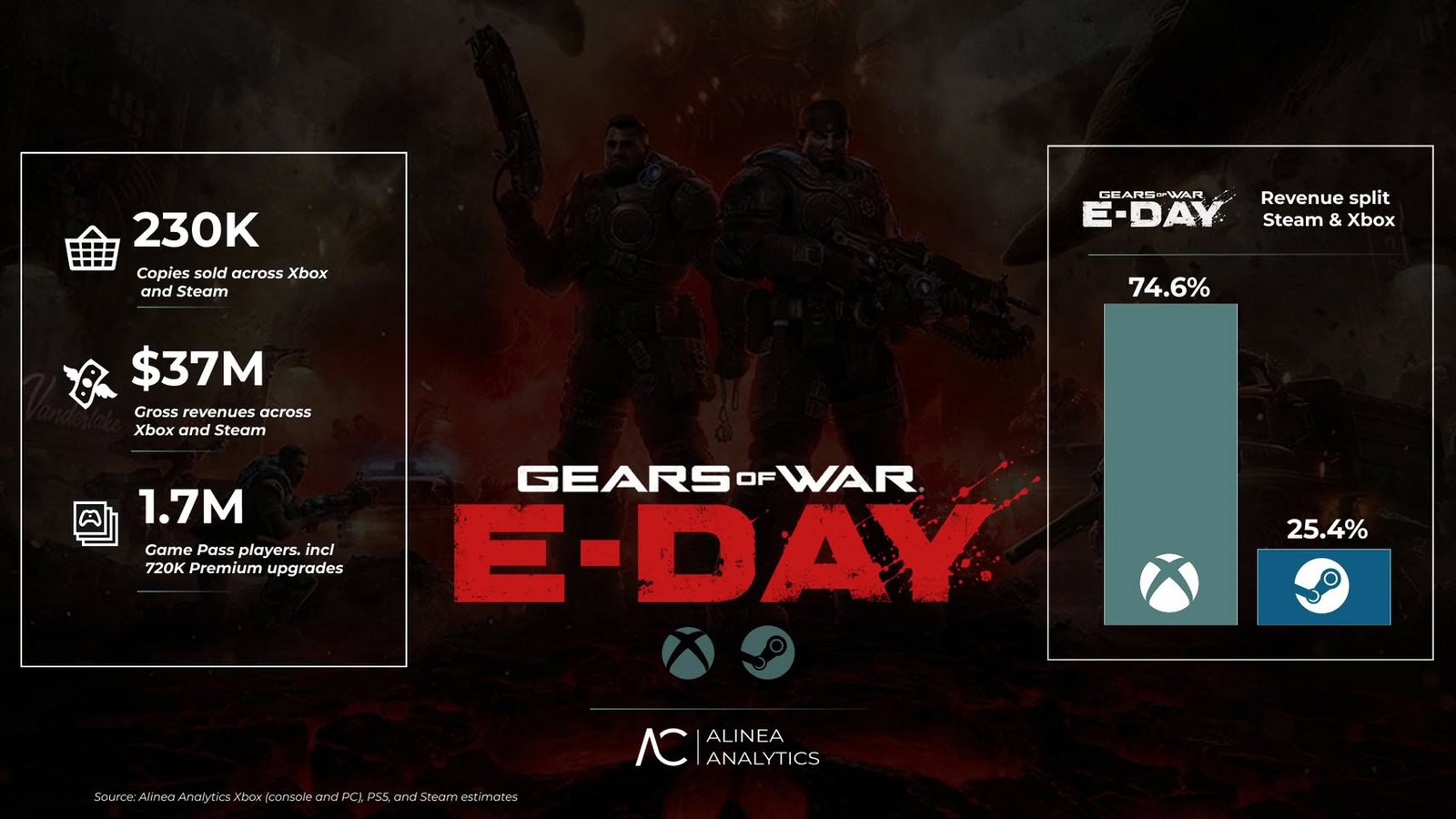
According to data compiled by Rhys Elliott, the estimated 230,000 direct copies sold across all platforms are dwarfed by the massive engagement seen within the Xbox ecosystem. The distribution of these sales shows approximately 168,000 units sold on Steam compared to 62,000 direct sales on the Xbox platform. At first glance, this might suggest that the PC market is significantly more lucrative for the franchise. However, a deeper examination of the revenue stream reveals the opposite trend. Xbox generated an estimated $26 million in revenue, whereas the Steam release accounted for roughly $11 million, demonstrating that the primary driver of value for this release is not individual store purchases, but the integration with the Xbox Game Pass infrastructure.
The Game Pass Economic Model
The substantial revenue gap between Steam and Xbox is largely explained by the influence of Microsoft’s subscription service. Unlike a traditional storefront model, where revenue is derived solely from the upfront cost of the software, Game Pass creates a tiered monetization strategy that maximizes lifetime value from the user base. For Gears of War: E-Day, the platform saw 1.7 million active players engaging with the title through their existing subscriptions. This volume of engagement highlights the platform’s utility as a service-based ecosystem rather than just a retail hub.
A critical component of this revenue generation was the Premium Edition upgrade. While the base game was accessible to millions of subscribers, 722,000 individuals elected to pay an additional $30 for the Premium upgrade. This specific surcharge provided users with early access and additional digital content, effectively transforming a monthly subscription fee into a targeted direct-sale event. By leveraging this model, Microsoft successfully monetized a massive portion of its subscriber base, capturing $26 million in revenue from a platform where, ironically, fewer individual copies were sold compared to the PC market.
Shifting Metrics in the Gaming Industry
The disparity between Steam’s sales figures and the total revenue produced by Xbox illustrates the growing divide between traditional retail metrics and subscription-based performance indicators. For years, the gaming industry relied heavily on “units moved” as the primary yardstick for success. This methodology, however, is increasingly obsolete in an era where titles are delivered as a service. When a game is available via a subscription, the number of people who own the game as a distinct digital asset becomes less important than the number of active users who interact with the ecosystem.
For developers and publishers, the implication is a shift in how they prioritize resource allocation for different platforms. On Steam, the revenue model is straightforward: the publisher earns a percentage of each individual transaction. On Xbox, the publisher is incentivized to maximize the number of subscribers who keep their accounts active, as well as the number of users who convert to premium service tiers. This creates a multi-layered financial framework where a lower “sales” count can still lead to higher overall earnings if the subscription and value-add components are sufficiently robust.
Impact on Future Development Cycles
The financial success of Gears of War: E-Day under the current subscription model provides a roadmap for future development cycles. By utilizing early access as a premium tier, publishers can generate significant capital before the global launch of a product. This practice allows companies to test server stability and gather player data while simultaneously securing revenue from their most dedicated fans. As industry trends favor the “game as a service” framework, we can expect to see more titles designed specifically around these conversion funnels.
However, this strategy also places increased pressure on the quality of the service provided to subscribers. To maintain the subscription base, platforms must ensure a steady cadence of high-quality content. If the value proposition for the premium upgrade is not perceived as substantial, users are less likely to transition from the base tier to the higher-cost bracket. Consequently, the development process must now balance the technical requirements of the game with the operational requirements of a service-oriented platform, ensuring that infrastructure remains stable enough to support millions of concurrent users during high-demand windows.
Technological Implications for Platform Parity
From a technical perspective, the success of Gears of War: E-Day highlights the complexity of maintaining platform parity when business models diverge. Developing for a platform that utilizes a subscription-first approach requires a different set of priorities than one focused on direct storefront sales. On platforms like Xbox, the priority is optimization for a massive, varied user base that accesses the title through an existing network. On Steam, the priority remains the traditional, high-fidelity experience that individual purchasers expect from a full-priced release.
The data provided by Alinea Analytics underscores the reality that developers must look beyond Steam charts to determine the true health of a project. As the industry continues to integrate subscription services into its core architecture, players and investors should focus on active user counts, subscriber conversion rates, and premium service uptakes. These indicators provide a more accurate reflection of a game’s total economic impact than simple unit sales alone. Moving forward, the industry will likely see a continued separation between store-based sales and service-based engagement, with the latter increasingly dictating the long-term financial viability of major titles.
Disclaimer: This content is auto-generated for informational purposes only.
Source: Read Original News