








The Digital Reflection of Human Prejudice
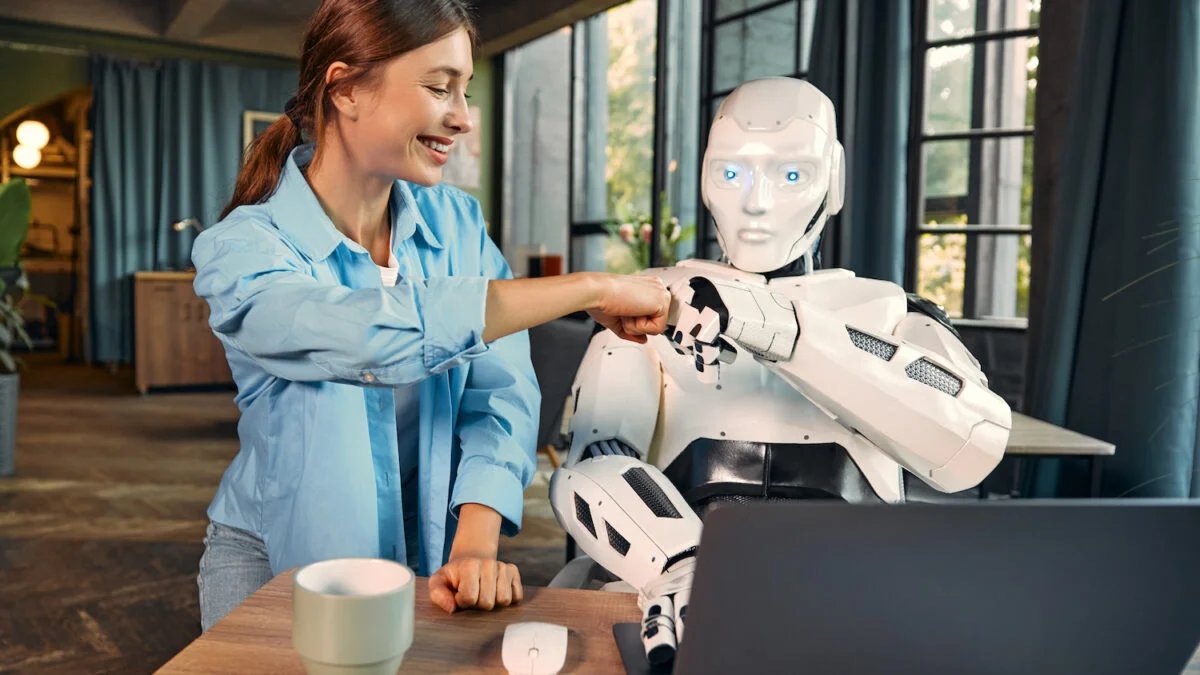
As artificial intelligence begins to occupy roles once held by human employees, a critical question emerges regarding the ethics of machine interaction. A study conducted by researchers at the University of Limerick sheds light on the persistence of workplace inequality in digital environments. By examining how knowledge workers interact with AI agents, the study reveals that the gender pay gap is not merely a human-to-human phenomenon but is actively being projected onto algorithmic entities. Despite these AI assistants performing identical tasks with the same level of efficiency, the perception of their value is heavily skewed by gendered presentation.
The experimental setup involved 189 participants placed within a virtual reality office setting. These workers collaborated with three distinct categories of AI assistants: a traditional text-based chatbot, a robotic deskbound assistant, and a human-like avatar. Crucially, the researchers manipulated the human-like avatars to present as either male or female, while ensuring their output and technical performance remained perfectly synchronized. The participants were tasked with evaluating the work of these assistants and determining their compensation. The findings highlight a disturbing reality: human bias follows the user into the digital sphere, shaping the economic appraisal of synthetic workers.
Quantifying the Algorithmic Pay Gap
The results of the study mirror real-world economic trends with unsettling precision. On average, the male-presenting AI agent, labeled “Johan,” received 10% more compensation than his female-presenting counterpart, “Johanna.” Because the actual performance metrics of both entities were identical, this variance cannot be attributed to productivity, skill, or speed. Instead, the disparity points to an inherent psychological preference for male-coded labor.
Beyond the financial metrics, the study uncovered a “humanity gap.” Participants perceived “Johan” as significantly more human-like than “Johanna,” even though the underlying programming and behavioral patterns were uniform. This suggests that the human brain subconsciously assigns higher status and more complex personality traits to male-presenting entities, effectively devaluing female-presenting AI. This echoes decades of sociological data regarding the real-world gender pay gap, demonstrating that the introduction of high-end technology does not serve as a neutral ground for professional interaction, but rather as a canvas upon which existing societal prejudices are projected.
The Illusion of Objectivity
A significant portion of the research involved qualitative interviews with 34 participants to gauge their awareness of these biases. The discrepancy between stated beliefs and observable actions was profound. Thirty out of the 34 individuals claimed that the gender of an AI assistant had no impact on their trust or their willingness to reward that assistant. Only three participants were willing to acknowledge that their behavior might have been influenced by gender bias, and only a single participant openly admitted to a lack of trust in female-presenting entities.
This data suggests that unconscious bias remains a formidable challenge in the development and deployment of AI. Even when users explicitly believe they are being meritocratic, their internal evaluative frameworks are subconsciously tethered to traditional gender roles. As AI systems become more autonomous, the reliance on human evaluation for performance metrics may inadvertently bake these inequalities into the development of future autonomous systems, creating a feedback loop of institutionalized gender bias.
Societal Conditioning and the Subservience Paradox
The study also delved into user preferences for the design of future AI assistants. A plurality of participants expressed a stronger comfort level with female-presenting AI. This preference is likely a byproduct of long-term conditioning by the technology industry. For years, major corporations have utilized female-coded voices and personas for virtual assistants like Alexa and Siri. This design strategy is often defended as an effort to make technology appear “approachable” or “less threatening,” yet the researchers note that this choice reinforces harmful stereotypes that portray women as subservient or administrative in nature.
The research identifies a unique paradox in how users treat these bots. While users report feeling more comfortable interacting with a female-presenting bot, they simultaneously perceive those same agents as less human and less worthy of high financial compensation. This suggests that the industry’s reliance on female-coded virtual assistants creates a bifurcated expectation: women are expected to be available for support and labor, but are not granted the same status or recognition as their male counterparts when they perform those same duties.
Implications for Future AI Development
The findings from the University of Limerick present an urgent challenge for engineers, human resources departments, and policy makers. As companies rush to replace or supplement human staff with AI agents, the risk of digitizing and scaling human bias becomes increasingly severe. If current trends continue, the widespread adoption of AI could potentially codify the gender pay gap into the infrastructure of the digital economy.
Addressing this issue will require more than just technical updates. Organizations must implement rigorous evaluation protocols to ensure that AI performance is judged on objective data points rather than subjective user impressions. Developers must also scrutinize the visual and auditory personas assigned to their products, considering the sociological weight these design choices carry. Without a proactive approach to mitigating human bias during the design and evaluation phase, the digital office may merely replicate the flaws of the physical one, rendering the promises of a neutral, merit-based automated workforce an unachieved ideal. As the landscape of work evolves, it is clear that the technology itself is not the only thing in need of an update; the human perceptions governing these systems require a fundamental transformation.
Disclaimer: This content is auto-generated for informational purposes only.
Source: Read Original News