








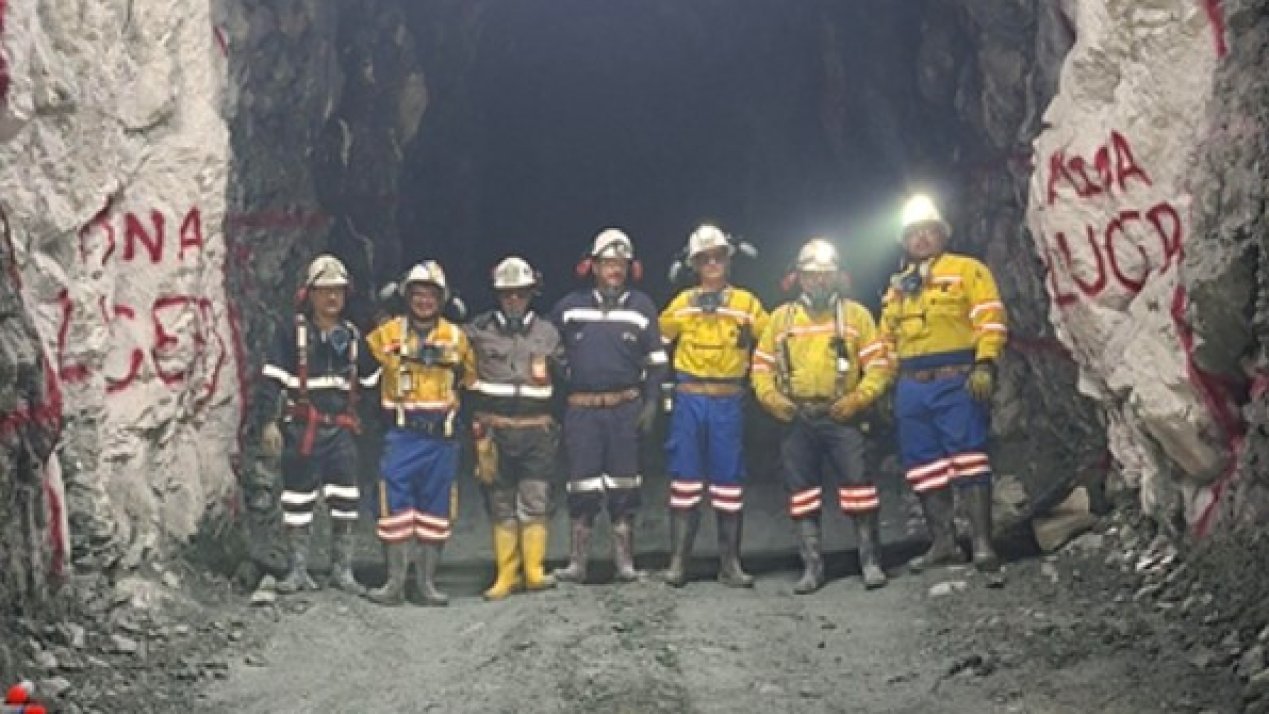
Guanajuato Silver has officially reached a key operational milestone, announcing the successful completion of a 267-meter underground production ramp that bridges its San Ignacio mine to the Bolanitos processing complex in Mexico. This infrastructure development, finished ahead of its original timeline, serves as a template for how modern mining companies are leveraging engineering ingenuity and data-driven logistical planning to maximize the life and efficiency of precious metal assets.
By establishing this direct subterranean link, the company has effectively eliminated the “friction” often associated with surface-level logistics. The new ramp—measuring 4 meters by 4.5 meters—not only facilitates faster transport times for mineralized material but also creates a more unified ventilation circuit. This integration is expected to lower unit haulage costs significantly while allowing for the deployment of larger, more efficient mining equipment that was previously constrained by surface transit limitations.
Data Integration and the Future of Mine Planning
The physical connection is merely the first phase of a broader digital and operational consolidation. As mining operators increasingly move toward “smart mine” environments, Guanajuato Silver is prioritizing the synchronization of its geological data sets. Rick Trotman, Senior Vice-President of Mining Operations, emphasized that the company is currently working toward a fully unified property-wide strategy.
This involves harmonizing geological naming conventions, updating core resource and reserve models, and establishing comprehensive exploration plans for 2027. By integrating these satellite deposits into a central hub, the firm can utilize unified software platforms to run more accurate life-of-mine forecasts. In an era where AI and predictive analytics are transforming the mining sector, the ability to aggregate data from multiple points into a single “source of truth” allows managers to make real-time decisions that optimize mill throughput and improve overall mineral recovery rates.
Technological Synergies in Modern Mining
The approach adopted by Guanajuato Silver reflects a wider industry trend where connectivity replaces traditional, siloed extraction methods. By bypassing complex topography and reducing reliance on surface haulage, companies significantly lower their carbon footprints—an increasingly vital metric for stakeholders and ESG-focused investors.
The project also yielded immediate exploration dividends. During the construction of the ramp, developers intercepted new mineralized structures within the Cecilia vein system, including high-grade gold and silver samples. These results are now being fed into the company’s exploration pipeline to refine future drilling targets. This illustrates a recurring theme in modern operations: using infrastructure projects not just as a means to move ore, but as a window into the subsurface environment.
Optimizing Capital Efficiency
The reliance on centralized processing hubs is proving to be a highly effective model for capital efficiency in the precious metals sector. Similar to the logic seen in other large-scale projects—such as the Guajes Tunnel construction or subterranean expansions by firms like Minera Frisco—the goal is to transform separate underground assets into a single, cohesive industrial engine.
For investors and industry observers, the move by Guanajuato Silver highlights the importance of asset connectivity in mitigating operational risk. By standardizing the workflow between San Ignacio and Bolanitos, the company reduces the margin for error and creates a scalable infrastructure model. As the sector continues to evolve, the integration of physical underground ramps with advanced geological modeling software will remain a cornerstone strategy for producers looking to extend the commercial viability of their mining assets while maintaining high levels of throughput and profitability.
Disclaimer: This content is auto-generated for informational purposes only.
Source: Read Original News