







The Strategic Shift Toward Safari Optimization
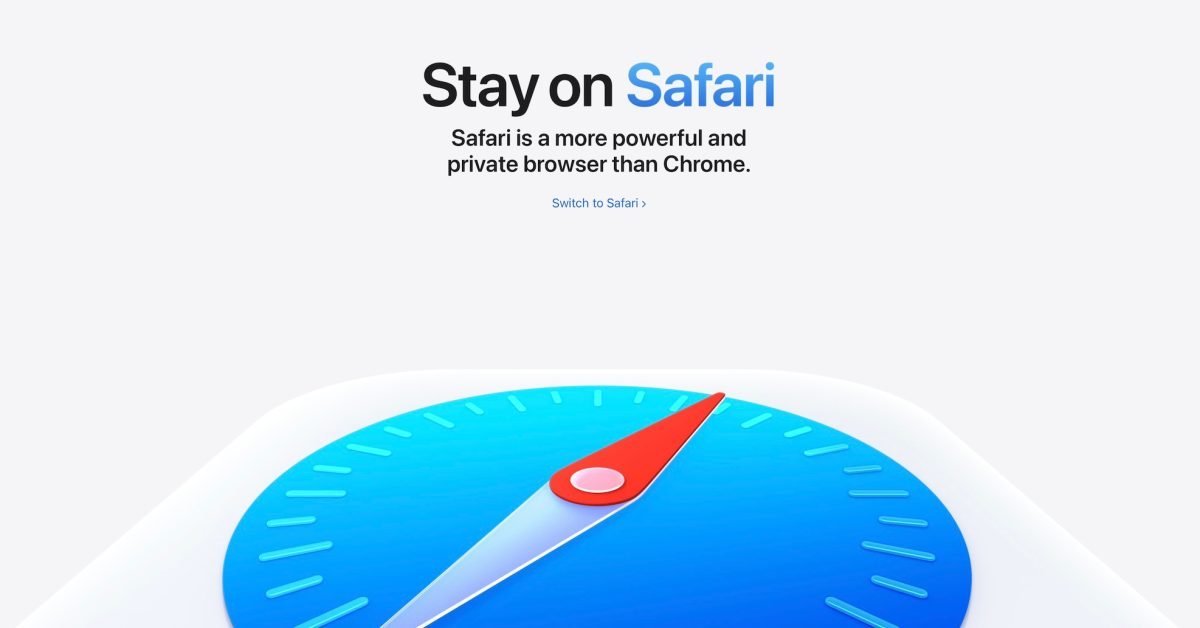
Apple has initiated a targeted campaign aimed at migrating users from Google Chrome to its own proprietary web browser, Safari. By launching a comprehensive landing page and a series of technical demonstrations, Apple is positioning Safari not merely as a default utility, but as a superior engineering achievement built for performance and security within the Apple ecosystem. This initiative underscores a long-standing divergence in browser philosophy: while Chrome emphasizes cross-platform ubiquity and a massive extension library, Apple focuses on deep hardware integration and privacy-centric architecture.
The technical justification for this campaign rests on measurable metrics regarding power management and page rendering efficiency. Apple’s internal testing suggests that Safari maintains a significant advantage in hardware resource utilization, a critical factor for laptop users concerned with battery longevity. By strictly optimizing the browser to communicate directly with the macOS kernel and metal graphics framework, Apple achieves performance benchmarks that third-party browsers often fail to replicate without secondary optimization layers.
Power Efficiency and Hardware Integration
One of the central arguments presented in Apple’s campaign is the tangible improvement in battery life. The company asserts that Safari enables up to five hours of additional video streaming compared to Chrome on modern Mac devices. This disparity is rooted in how Safari handles media decoding and background processes. Because Apple maintains full control over both the hardware and the software stack, Safari can offload intensive decoding tasks to dedicated silicon rather than relying on generalized software-based processing.
For professional users and students who rely on extended battery endurance throughout the workday, this technical efficiency is a compelling proposition. Chrome, while versatile, is frequently cited for higher CPU and memory overhead, which translates into increased heat generation and faster battery depletion. Safari’s integration with macOS power management policies ensures that idle tabs are throttled effectively and background tasks are minimized, allowing the hardware to remain in low-power states more consistently.
Privacy Architecture and Intelligent Tracking
Beyond hardware metrics, Apple is doubling down on its privacy-first value proposition. The campaign highlights Intelligent Tracking Prevention (ITP) as a foundational feature that distinguishes Safari from its primary competitor. While many browsers include some form of basic anti-tracking, Safari utilizes on-device machine learning to identify and block third-party trackers that attempt to follow user behavior across distinct web domains.
The contrast drawn by Apple is clear: Chrome operates within an advertising-supported ecosystem, which inherently creates a tension between user privacy and data collection for ad revenue. Safari, conversely, is engineered without an advertising conflict of interest. Features like advanced fingerprinting protection ensure that the unique configuration of a user’s browser—including fonts, system versions, and plugins—is masked or normalized. This approach makes it substantially more difficult for data brokers to create persistent profiles of individuals as they navigate the web.
Performance and User-Facing Features
Speed remains the primary metric by which browsers are judged, and Apple’s latest testing claims that Safari is up to 35% faster than Chrome when loading frequently visited sites. This performance gain is realized through aggressive caching strategies and a lean rendering engine that prioritizes essential content delivery. Furthermore, the browser has introduced specialized tools like Distraction Control, which allows users to remove persistent elements like sign-in banners, newsletter pop-ups, and cookie consent overlays that clutter the screen.
The inclusion of Profiles and the new “Notify Me” feature reflects a move toward browser productivity. Profiles allow users to segregate their web footprint into distinct silos—such as work, personal, and travel—ensuring that cookies, history, and extensions do not leak between contexts. The “Notify Me” feature further enhances this by providing users with granular control over incoming web notifications, preventing the common issue of unwanted pings from news outlets or social media platforms. These features are designed to create a cleaner, more focused digital environment compared to the cluttered experience often found in standard Chrome sessions.
Market Impact and Future Outlook
This campaign arrives at a period of intense scrutiny regarding browser dominance and data privacy. By explicitly contrasting Safari with Chrome, Apple is aiming to reclaim market share by appealing to the growing demographic of users who prioritize privacy as a fundamental digital right. The shift is not merely about aesthetic preference; it is about the transition toward a web browsing model that is increasingly integrated with device security features.
The broader implication for web developers is significant. As Safari continues to gain traction through these aggressive promotion strategies, the pressure on developers to ensure full compatibility with WebKit—the engine powering Safari—will increase. This serves to bolster the dominance of standard-compliant web development, as developers must ensure that their websites perform flawlessly within the privacy constraints set by Apple. Whether users will migrate in significant numbers remains to be seen, but the clear delineation between Chrome’s ecosystem-heavy approach and Safari’s hardware-optimized privacy model provides a distinct choice for consumers navigating an increasingly data-dense internet.
Disclaimer: This content is auto-generated for informational purposes only.
Source: Read Original News