







The Staged Rollout of the Next-Generation Health Experience
Apple has momentarily hit the brakes on its most significant Health app overhaul in recent memory. While initial developer and public betas of iOS 27.2 introduced a suite of transformative features, the latest build—beta 4—has stripped away these updates, reverting the application to its previous version. This strategic retraction suggests that the development team is prioritizing system stability and data integrity before pushing these advanced diagnostics to the general public.
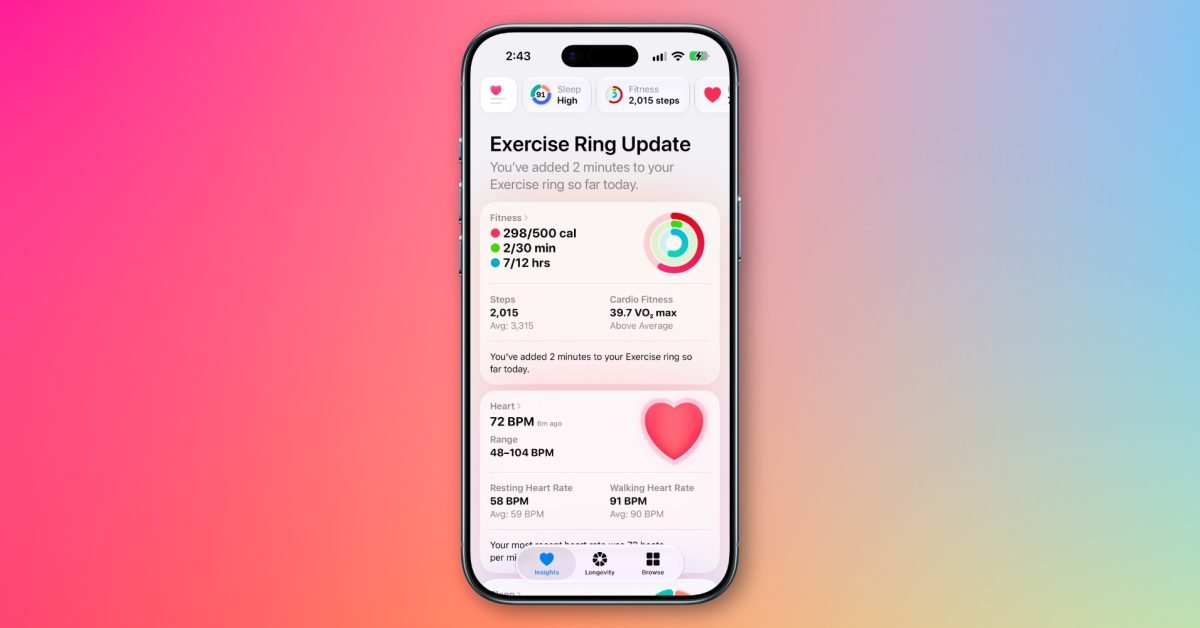
The transition back to the older interface is not a cancellation but rather a recalibration. Apple has explicitly confirmed that the comprehensive health update remains on track for a rollout before the conclusion of the calendar year. This development cycle indicates that the company is likely segregating the Health app improvements into a separate, more robust release path, possibly arriving alongside iOS 27.3. For current testers, the immediate consequence is the removal of the specialized “Longevity” tab, which is being replaced by the familiar data-sharing modules that users have utilized for years.
New Metrics and Diagnostic Integration
The upcoming overhaul represents a shift from passive data tracking to active health management. One of the most anticipated features is the introduction of “Health Age,” a complex metric designed to synthesize various biometric inputs into a singular, understandable summary of a user’s physiological status. By aggregating cardiovascular data, metabolic activity, and historical trends, the app aims to provide a more holistic representation of wellness than simple step counting or heart rate monitoring.
Furthermore, the integration with Quest Diagnostics marks a functional leap in how patients interact with clinical services. Rather than relying on external portals or disparate communication methods, users gain the ability to schedule lab work directly through the iOS interface. This integration streamlines the workflow from detecting a potential health anomaly to securing the necessary professional testing. It transforms the smartphone from a mere display device for raw health data into a centralized hub for medical coordination.
Managing Data During the Beta Transition
For users who have already populated the new Health app with sensitive information during the testing phase, the reversion to the previous version raises valid concerns regarding data persistence. Apple has addressed these anxieties by clarifying that any data captured or processed through the new, advanced algorithms will remain intact. Although the interface may appear reverted, the underlying database continues to preserve these specialized entries, allowing them to be viewed within the main system settings.
This compartmentalized storage approach ensures that when the final version of the revamped app is officially released, the continuity of health records remains unbroken. The decision to retain this data in the background signifies a sophisticated backend architecture capable of handling version transitions without triggering loss of personal medical documentation. This level of technical oversight is essential for maintaining trust in a platform that functions as a repository for highly sensitive biometric information.
Impact on Clinical Connectivity and User Health
The broader implication of these changes lies in the bridge between digital tracking and clinical healthcare. Historically, consumer-facing health apps have struggled to interface effectively with professional medical systems. By integrating lab scheduling and professional diagnostic oversight, Apple is positioning its ecosystem as an extension of the medical clinic. The goal is to reduce the friction that prevents users from seeking professional advice when trends in their health data suggest a potential underlying issue.
This architecture serves to empower individuals to take a more proactive approach toward their health. Instead of viewing raw data in isolation, users will eventually be guided by clearer, health-age-based metrics that suggest specific follow-up actions. The delay in the release, while notable, highlights the complexities involved in integrating third-party clinical services into a consumer-grade user experience. The extra time spent refining the application will likely focus on optimizing the security protocols required to transmit clinical requests between the user’s phone and independent diagnostic facilities.
Looking Toward the Future Release
As the industry looks toward late October and November, the expectation is that the next iteration of the iOS beta cycle will reintroduce these features with increased stability. The current hiatus in the iOS 27.2 cycle serves as a reminder that the development of complex health-tracking software involves strict performance requirements. Ensuring that lab data flows correctly and that health-age calculations remain consistent across varying hardware profiles is a task that necessitates extensive regression testing.
Ultimately, the revamped Apple Health experience aims to provide a sophisticated toolset that bridges the gap between daily lifestyle tracking and professional medical health. By moving carefully through this testing period, the company is ensuring that when the update finally goes live, it will provide a stable, reliable foundation for long-term health management. Users who are currently testing the features should remain patient, as the return to the familiar interface is only a temporary measure until the final, polished release is ready for global deployment.
Disclaimer: This content is auto-generated for informational purposes only.
Source: Read Original News