





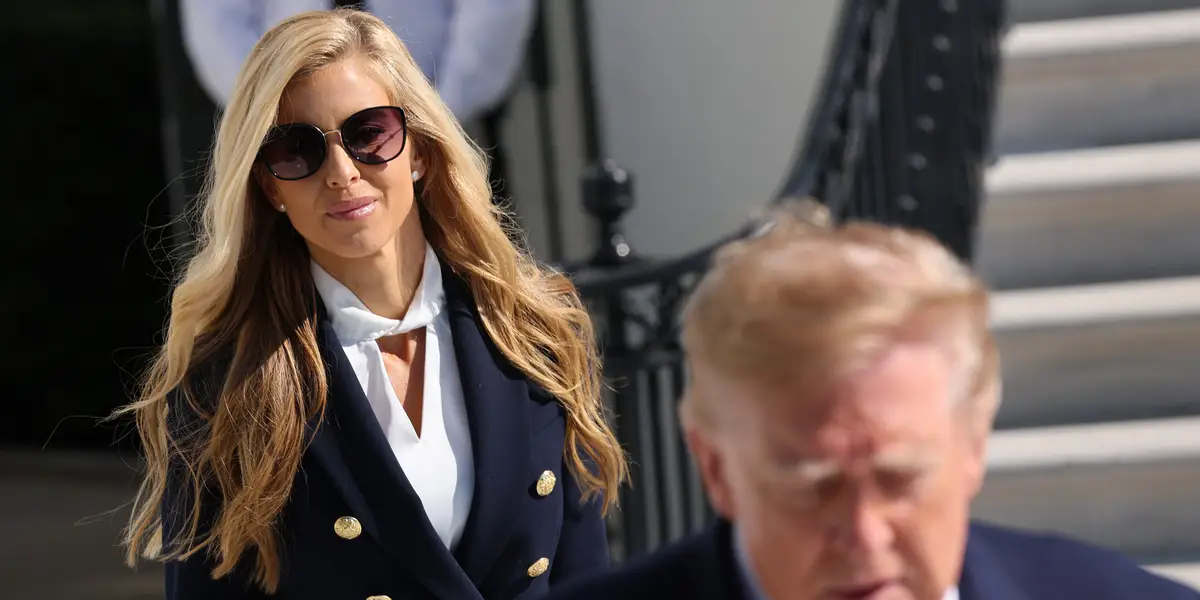
Newly appointed White House press secretary Katie Zacharia is facing a wave of scrutiny regarding her professional credentials following a contentious exchange with the media during her inaugural briefing. Questions concerning her qualifications as an attorney have intensified after she and President Donald Trump were unable to identify a jurisdiction where she is licensed to practice law.
The controversy began when a reporter pressed the administration on Zacharia’s background. After the President was asked specifically which state bar exam she had passed, he directed the question to his new press secretary. Zacharia responded, “When I moved to China,” a reply that offered no clarity on her legal standing in the United States, where state bar admissions are strictly regulated.
Investigating the Legal Credentials
Zacharia’s professional history shows that she holds a law degree from Pepperdine University’s Caruso School of Law, which she earned in 2011. While her background includes a stint at the Beijing-based Zhong Lun Law Firm and a recent role as general counsel for the nonprofit organization Fix California, critics point out that holding a law degree is distinct from being a licensed attorney.
Independent investigations, including a comprehensive search conducted by the publication Popular Information, have reportedly combed through records across all 50 states and the District of Columbia. These findings indicate that there is no record of Zacharia being admitted to any state bar association in the U.S. This lack of documentation has fueled speculation about the accuracy of her self-identification as an attorney. In response to the growing inquiry, Zacharia stated that she “practiced international transaction law, with all the appropriate credentials,” though she stopped short of confirming a bar license in any specific jurisdiction.
White House Stance and Public Scrutiny
Despite the confusion surrounding her qualifications, the White House has stood firmly behind its new appointee. White House communications director Steven Cheung praised Zacharia, describing her as “uniquely qualified” and “whip smart.” He dismissed the concerns as irrelevant to her primary task of conveying the administration’s message to the American public. President Trump has similarly lauded her, expressing satisfaction with her performance during her first days on the job and maintaining confidence in her appointment.
The debate highlights the increasing role of online verification tools and public records access in vetting government officials. As news outlets and digital investigators leverage modern search algorithms to confirm the backgrounds of public figures, the gap between traditional professional titles and verified legal standing has become a focal point of transparency discussions.
The Role of Digital Verification in Modern Politics
In the digital age, journalists and the public have more access than ever to professional databases and verification tools. Many are utilizing these resources—and the data transparency provided by state bar websites—to hold administration officials to higher levels of accountability. This incident serves as a reminder of how quickly “fact-checking” has evolved, with open-source records and social media platforms allowing for real-time verification of claims made by high-level political figures.
While the White House continues to characterize the issue as a non-event, the persistent questioning regarding Zacharia’s licensure underscores the tension between the administration’s narrative and the factual scrutiny applied by the modern press. As the situation develops, the focus remains on whether the White House will provide definitive proof of her legal standing or if the administration will continue to sidestep the request for documentation.
Disclaimer: This content is auto-generated for informational purposes only.
Source: Read Original News