









The Clock Stops: Imran Khan Wins Reprieve in High-Stakes Residency Battle
The corridors of the Bombay High Court were buzzing on Tuesday as actor Imran Khan stepped into a legal storm that threatens to uproot his life in India. For a man who has spent the better part of his adult life as a household name in Bollywood, the past few weeks have felt more like a Kafkaesque thriller than a cinematic script. With an ominous “Leave India” notice hanging over his head and an October 28 deadline looming, the actor’s legal team pulled off a critical maneuver this week, securing a temporary stay that grants him at least a few more days of breathing room.
The legal drama reached a fever pitch as a division bench, led by Chief Justice Mahesh Chandra Tripathi and Justice Advait Sethna, stepped in to pause the clock. While the Centre requested more time to articulate its position, the court’s decision to keep the FRRO’s directive in abeyance until the next hearing on November 2 is a significant victory for the actor. It effectively pushes back the threat of forced departure, allowing the legal battle to play out in a courtroom rather than being dictated by a bureaucratic ultimatum.
From Protest to Prosecution: The Genesis of the Notice
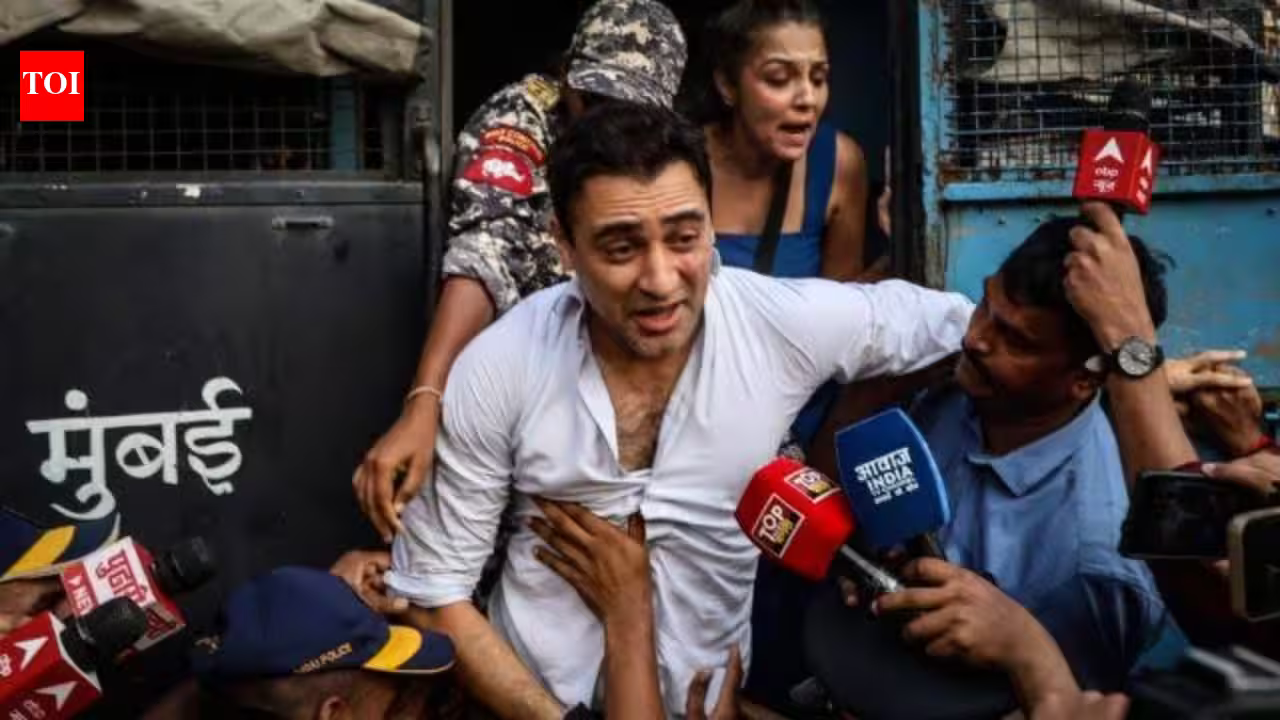
To understand why a mainstream actor is suddenly fighting for his right to remain in the country, one must look back to October 10. What started as a public appearance near Mumbai’s August Kranti Maidan rapidly devolved into a confrontation with law enforcement. Imran, accompanied by his partner Lekha Washington and cousin Zayn Marie Khan, found themselves detained by Mumbai Police.
The gathering was centered on demands for the resignation of Chief Election Commissioner Gyanesh Kumar, specifically regarding the contentious Special Intensive Revision of electoral rolls. While the police viewed their presence as a transgression, Imran’s legal team paints a drastically different picture. The petition filed before the Bombay High Court claims the actor was not even participating in an active demonstration when he reached the vicinity. For the actor, the subsequent legal blow—a Leave India Notice (LIN) served just four days after his detention—feels like an extreme, politically charged overreaction.
The “Arbitrary” Argument: Challenging the Legal Basis
At the heart of Imran’s petition, Imran Khan Pal v. Union of India & Ors., is a scathing indictment of the Foreigners Regional Registration Office (FRRO). The notice served to the actor invokes Sections 7(2)(C) and 29 of the Immigration and Foreigners Act, 2025. However, the actor’s legal counsel—led by senior advocate Venkatesh Dhond—argues that these provisions were weaponized without a shred of transparency.
The petition labels the directive “arbitrary, illegal, perverse, and drastic.” It isn’t just a plea for more time; it is a fundamental challenge to the process itself. The core of the grievance is that the government acted without the basic hallmarks of due process: no inquiry, no show-cause notice, and absolutely no opportunity for the actor to explain his side of the story. By stripping away his right to be heard, the petition argues, the authorities haven’t just targeted an individual—they have undermined the very principles of natural justice.
The Human Element: When Bureaucracy Meets Reality
During the hearing, the tension was palpable. As the Centre’s counsel, Additional Solicitor General Anil Singh, requested to push the proceedings to November 2, the human stakes became painfully clear. Venkatesh Dhond didn’t mince words, highlighting that his client was under the gun to be out of the country by the end of the week.
“Lordship may keep it on Monday,” the ASG suggested, seemingly unbothered by the ticking clock. But the urgency was visceral. When the court finally intervened to ensure that no action would be taken against the actor before the next hearing, it provided more than just legal cover; it provided human relief. The Centre’s oral assurance that no “immediate action” would be taken against Imran serves as a vital safeguard, ensuring that the actor isn’t forcibly whisked away while the judiciary is still weighing the merits of his case.
What Lies Ahead: A Legal Precedent in the Making?
As we look toward the next hearing on November 2, the industry is watching closely. This isn’t just about a celebrity and his visa status; it is about the power of the state to issue life-altering directives with zero disclosure or justification. By characterizing the FRRO’s actions as a “patent non-application of mind,” Imran Khan has elevated this case from a personal residency dispute to a broader conversation about administrative overreach.
The actor’s stance is firm: he believes he is being targeted for his perceived political associations, and he isn’t backing down. With his team—Zulfiquar Memon, Parvez Memon, and Kunal Vajani—ready to dissect the legality of the notice, the courtroom on November 2 promises to be a theater of high-stakes legal maneuvering.
Whether this ends in a victory for the actor or a reinforcement of the government’s absolute authority remains to be seen. But for now, the message from the Bombay High Court is clear: the law moves at its own pace, and for the next few days, Imran Khan is allowed to stay exactly where he is. The question remains, however, once the ink dries on the final court order, will the curtains close on this chapter, or is this just the beginning of a much longer, more grueling legal battle? Only time—and the judges—will tell.
Disclaimer: This content is auto-generated for informational purposes only.
Source: Read Original News