






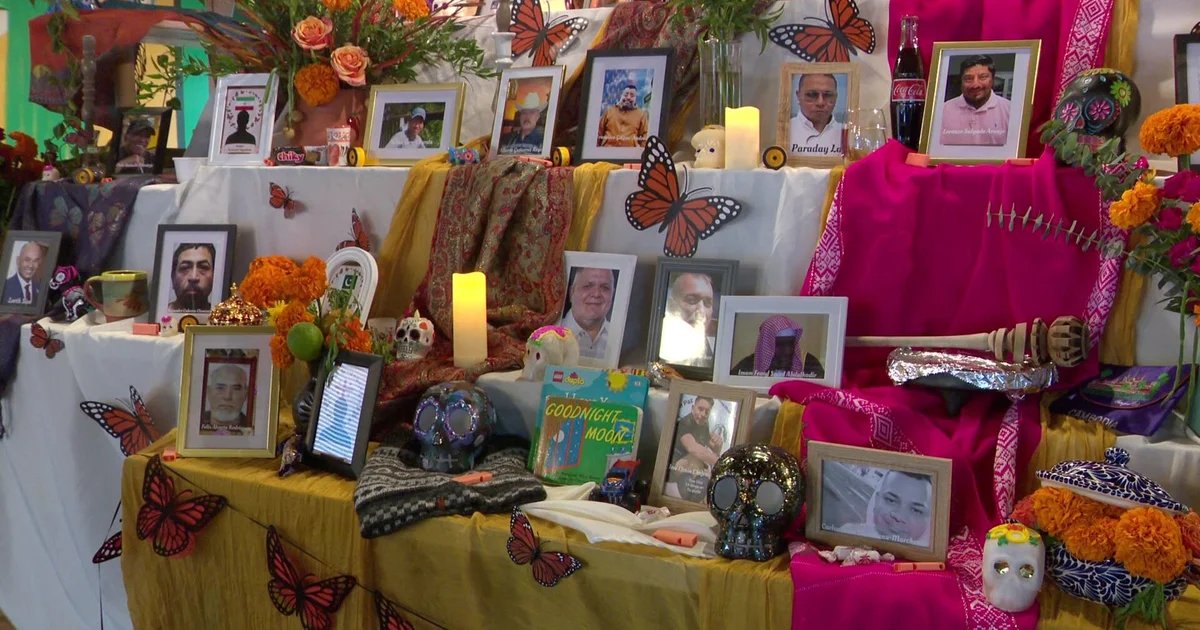
MINNEAPOLIS — A beloved local eatery has transformed its traditional Día de los Muertos observance into a poignant site of community healing this year. At Lito’s Burritos, owner Miguel Hernandez has constructed an ofrenda—a traditional altar—that serves not only as a tribute to ancestors but as a stark reflection of the trauma inflicted on local immigrant families following the enforcement actions of “Operation Metro Surge.”
While the holiday typically focuses on honoring departed loved ones with marigolds and photographs, Hernandez says the current climate in Minneapolis demands a space for collective mourning. For the business owner, the altar provides a rare, necessary moment of stillness in an otherwise relentless period of political and social upheaval.
## A New Design for a Challenging Era
Stepping away from the conventional star-shaped altar, Hernandez opted for a layout that mirrors the ongoing struggle of Minnesota’s immigrant communities. The display is carefully curated, featuring individual favorites—from Mexican Coke to specific brands of Ecuadorian soda—meant to emphasize that those caught in the crosshairs of immigration enforcement are human beings, not data points.
“I think it’s of the utmost importance to see people for who they are, not just a statistic,” Hernandez explained. The altar acknowledges the pervasive fear that has settled over local families, highlighting that the emotional toll of recent ICE interventions has left deep, unhealed wounds. By creating this space, Hernandez is attempting to bridge a gap in the community, providing a platform for those who feel they have been denied the space to properly process their grief.
## Technology and the Modern Legacy of Mourning
In an era where digital archives and social media often dictate how we remember the departed, the physical, tactile nature of this altar stands in stark contrast. Modern tools, including AI-driven genealogy platforms and cloud-based photo storage, have fundamentally changed how families compile memories. Today, Google Photos and similar digital suites allow families to instantly assemble slideshows and memorial videos, often used to populate the screens that sit alongside traditional offerings on altars.
As communities grapple with crises, the intersection of technology and tradition becomes increasingly visible. Whether it is through organizing community support networks on Google Workspace or using real-time maps to monitor safety alerts in the city, digital tools are playing a silent but significant role in how Minneapolis residents organize, mourn, and mobilize in response to civic challenges.
## A Call for Collective Healing
The exhibition at Lito’s Burritos is meant to be a starting point for dialogue. Hernandez stresses that the ripple effects of recent federal operations have touched residents well beyond the immigrant community, creating a shared burden of anxiety. By inviting the public to view the ofrenda, he hopes to foster a sense of solidarity.
“We’ve been through a lot,” said Hernandez. “If we come together to acknowledge what we’ve lost, I think we can continue to fight together. Just as we came together to advocate for our rights, we should come together to heal.”
The ofrenda is open for public viewing at Lito’s Burritos throughout the week. For those visiting, the display acts as a poignant reminder that while policies may shift, the human need to memorialize and support one another remains a constant. As the city observes the Day of the Dead, this Minneapolis small business is proving that a restaurant can be more than a place to eat—it can be a vital hub for memory, resistance, and grace.
Disclaimer: This content is auto-generated for informational purposes only.
Source: Read Original News