








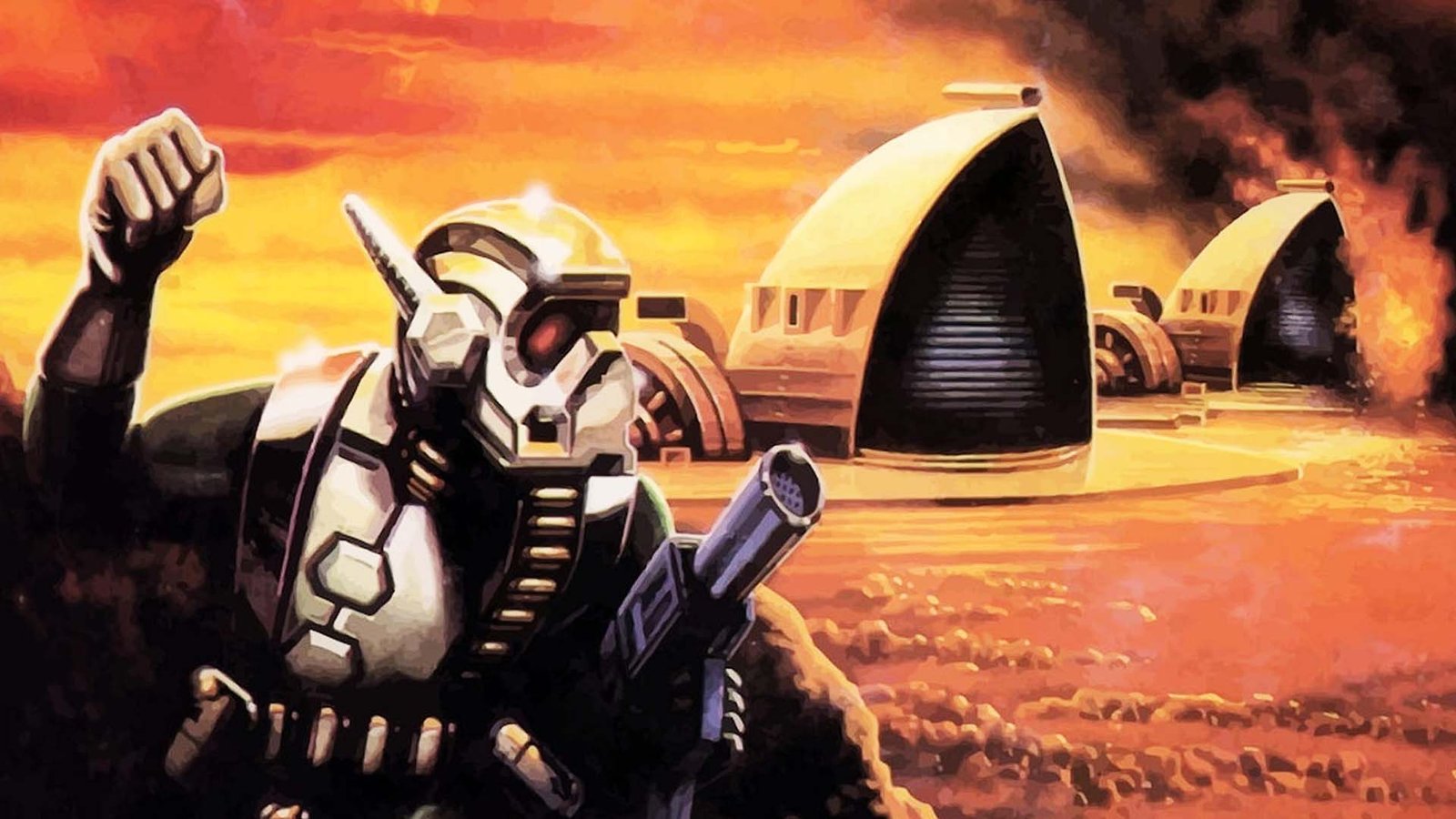
The Foundational Legacy of Dune 2
Released in 1992 by Westwood Studios, Dune 2: The Building of a Dynasty is widely recognized by historians and developers as the progenitor of the modern real-time strategy (RTS) genre. While earlier titles flirted with real-time mechanics, Dune 2 codified the core loop that would define the next three decades of strategy gaming. It established the standard control scheme of selecting units with a mouse, the necessity of resource gathering—specifically harvesting the fictional Spice Melange—and the requirement for base building to unlock advanced technology trees.
The influence of this title is difficult to overstate. It provided the structural blueprint that enabled the rapid growth of the RTS genre, directly informing the development of iconic franchises like Warcraft and Command & Conquer. Without the systems engineered for Arrakis, the competitive gaming landscape of the late 90s and early 2000s would have looked drastically different. Despite this historical significance, the software remains trapped in a complex web of legal ownership, rendering it largely inaccessible to contemporary audiences through official digital storefronts.
Anatomy of a Licensing Deadlock
The inability to re-release Dune 2 stems from a phenomenon often described in the software industry as licensing fragmentation. Unlike titles owned entirely by a single entity, the rights to Dune 2 are distributed across multiple stakeholders, each with competing interests or historical claims. According to Marcin Paczynski, a senior representative at the game preservation-focused storefront GOG, the complication begins with the fact that the game was not based on Frank Herbert’s seminal novels, but specifically on the 1984 film adaptation directed by David Lynch.
The rights to that film are not held by the Herbert estate. Instead, they are tied to a complex arrangement involving Universal Pictures and the estate of producer Dino De Laurentiis. Because the game code and technical assets are owned by Electronic Arts—which acquired Westwood Studios—but the intellectual property governing the thematic elements is tied to the film rights, an impasse is created. Even if Electronic Arts wished to distribute the game, they lack the legal authority to clear the intellectual property rights, while the IP holders lack the underlying game code and development assets to initiate a new release on their own.
The Impact of Modern Exclusive Agreements
The complexity is further compounded by the contemporary state of the Dune franchise. Legendary Pictures, which produces the modern iterations of the Dune films, has solidified a high-profile partnership with Funcom for the development of Dune Awakening, an open-world survival game. According to insights provided by GOG, this deal may include exclusivity clauses that complicate the status of legacy software.
Even if the primary hurdles involving the 1984 film rights could be cleared, any new agreement would likely need to contend with these modern exclusivity arrangements. The legal friction creates a situation where the cost of negotiating a resolution—requiring multiple parties, estate representatives, and legal teams to reach a consensus—far exceeds the projected commercial viability of re-releasing a 1992 title. Consequently, for the corporations involved, the most pragmatic path is to let the software remain in a state of suspended animation, effectively preventing public access.
The Necessity of Digital Preservation
The predicament facing Dune 2 serves as a stark illustration of the vulnerability inherent in digital software history. Software is not merely a collection of data; it is an artifact of cultural and technical progress. When proprietary software is removed from the market and access is restricted by legal barriers, the public loses the ability to study and experience the evolution of interactive design.
Preservation efforts, such as those championed by platforms like GOG, often focus on optimizing legacy code for modern operating systems and hardware architectures. This process involves ensuring that vintage software can run in high-resolution environments, support modern input devices, and maintain stability on contemporary operating systems. When licensing issues prevent these updates, the software risks becoming abandonware, eventually rendered unplayable as the hardware it was designed for disappears from common use.
The Role of Fan-Led Solutions
In the absence of official commercial support, the burden of preservation often shifts to the gaming community. Enthusiast developers and modders frequently create community patches, source ports, and emulators that allow these titles to function on current systems. Unlike commercial storefronts, which must obtain explicit legal permission to distribute or modify intellectual property, fan projects often exist in a decentralized space where individual users can modify their own copies of the software to ensure compatibility.
These community-driven solutions represent a vital safeguard for gaming history. By reverse-engineering internal mechanics or developing wrappers that bridge the gap between legacy API calls and modern drivers, fans ensure that the architectural innovations of early RTS games are not permanently lost. However, these solutions are rarely a substitute for an official, easy-to-access release that provides a seamless experience for a wider, less technical audience. The frustration voiced by industry professionals at GOG reflects a broader desire for a model where historical significance is prioritized alongside proprietary control, ensuring that the origins of influential genres remain available to future generations.
Disclaimer: This content is auto-generated for informational purposes only.
Source: Read Original News