








The arrival of Call of Duty: Warzone Season 1 on November 6 marks a significant structural shift for the battle royale experience. Launching at midnight ET, this update brings a technical overhaul that integrates Modern Warfare 4 content, introduces two distinct maps, and refreshes the core movement and progression systems. The integration also signals a platform expansion, as Warzone debuts on the Nintendo Switch 2, bringing the high-fidelity tactical shooter to a new mobile-hybrid hardware ecosystem.
The Geography of Warfare: Hajin and Zodiac
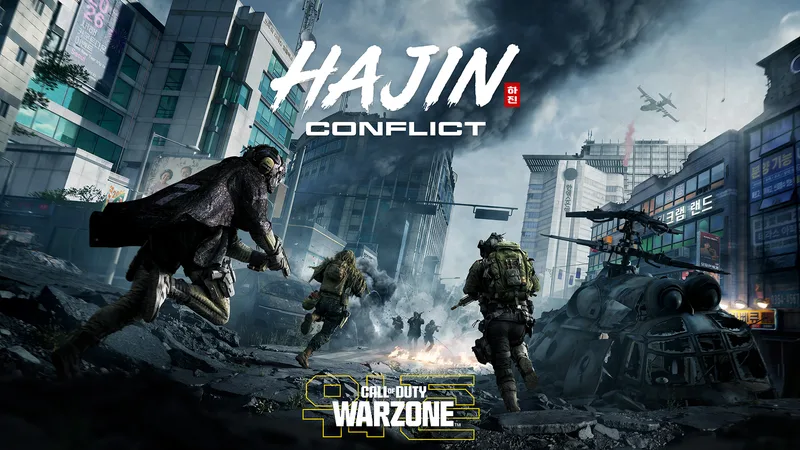
The centerpiece of this update is the introduction of the Hajin map. This large-scale Battle Royale environment spans the Korean Peninsula, featuring a diverse array of terrain types that mandate flexible loadouts. Players will encounter the dense urban architecture of Hajin City, which favors close-quarters combat, contrasted against the expansive Imjin Farmland, a theater designed for long-range engagements. The map incorporates a dynamic weather system, shifting from clear visibility to fog and rain, which directly influences tactical reconnaissance. Furthermore, the inclusion of two distinct Gulag variants adds a layer of unpredictability to redeployment mechanics.
Complementing the large-scale map is Zodiac, a compact Resurgence map built by Beenox and Infinity Ward. Centered on the DRC Advanced Systems drone factory, Zodiac focuses on verticality and subterranean navigation. With ten unique points of interest, including the high-traffic Trackline and the industrial Furnace zone, the map encourages rapid traversal via a dual railway system and interconnected underground tunnels. These maps represent a departure from previous designs, placing a heavier emphasis on industrial layouts and multi-layered elevation.
Advancements in Field Gear and Tactical Mechanics
Warzone Season 1 introduces several technological additions to the player’s arsenal, most notably the Zipline Launcher. This Field Upgrade allows for the deployment of a traversal line that serves both as an escape route and an offensive tool. Crucially, the system supports squad-wide use and permits players to engage in sidearm fire while moving along the line. To balance this mobility, the zipline remains accessible to opponents, necessitating a strategic approach to its placement.
The update also integrates the Grabber Drone, a utility device designed for recovery and logistics. Capable of lifting loot, volatile fuel barrels, and downed teammates, the drone introduces a high-stakes support mechanic that is balanced by a limited battery capacity. To further refine combat consistency, developers have implemented Weapon Augments via Fly Buy Buy Stations. These temporary buffs—CQC, Marksman, and Handling—allow players to modify specific weapon traits like recoil stabilization and reload speed on the fly, providing a competitive edge tailored to the requirements of a specific match.
The Integration of Modern Warfare 4 Systems
Season 1 marks the full integration of Modern Warfare 4, bringing 33 new base weapons into the fold. These weapons support full Gunsmith functionality, including Weapon Prestige and advanced Mastery Camos. To maintain game balance while managing the massive library of legacy content, the developer has introduced a Legacy tab. Weapons from Modern Warfare II through Black Ops 7 reside here, maintaining their historical performance stats but losing the ability to be modified in the Gunsmith. These legacy items function as fixed-kit assets with five pre-determined attachments, ensuring that players have immediate access to classic weapons without requiring complex customization for obsolete platforms.
The progression system has also undergone a hard reset. Player levels will return to base, with a shared Prestige system spanning Multiplayer, DMZ, and Warzone. This synchronization ensures that experience point accumulation remains uniform across different game modes, rewarding consistent play across the entire ecosystem.
Refining Movement and Perk Utility
The shift in mechanical philosophy is perhaps best represented by the adjustments to player mobility. Tactical Sprint is now a default movement state, no longer requiring a dedicated Perk slot for activation. While the duration of the sprint has been shortened to compensate for its ubiquity, this change prioritizes fluidity in movement for all players. Complementing this is the introduction of a manual revive-drag mechanic, allowing players to relocate a downed teammate to cover while initiating a revive.
Perk utility has also been expanded through the introduction of Elite Perks. Found during active matches, these allow for a fourth Perk slot, providing access to tactical advantages such as Athleticism, Phantom, and Fieldcraft. These additions incentivize map exploration and resource gathering, as the perks are not part of the standard pre-match loadout but must be scavenged within the operational area.
Modes and Mid-Season Roadmap
The mode rotation at launch offers a variety of playstyles. Standard Battle Royale and Resurgence variants serve as the foundation, while limited-time modes provide specific training and high-intensity scenarios. Rally Point stands out as a unique entry; it functions as a training ground for 20 players without a shrinking circle, focused on movement mastery and earning cosmetic rewards. For those seeking faster pacing, Massive Resurgence supports up to 120 players on the Hajin map, while Loaded Resurgence permits players to deploy with their custom loadout already equipped.
Looking ahead, the mid-season update promises to introduce Extreme Resurgence and a Rockets and Snipers mode, which will further test the mechanical skill of the community. By combining a fresh map pool, a refined progression structure, and an expanded suite of mobility tools, the Season 1 update aims to standardize the Warzone experience across both traditional consoles and the newly supported Nintendo Switch 2.
Disclaimer: This content is auto-generated for informational purposes only.
Source: Read Original News