









Indian Garment Exporters Pivot Away from US Market Amid Tariff Pressure
India’s prominent garment manufacturing sector is undergoing a strategic transformation as companies rapidly reduce their reliance on the United States. Faced with a volatile trade environment marked by soaring tariffs and aggressive pricing demands from American buyers, Indian exporters are pivoting toward the United Kingdom, Europe, and the robust domestic market to secure their future growth.
The Breaking Point: Tariff Volatility
The catalyst for this shift arrived in April 2025, when a sudden hike in US tariffs sent shockwaves through the industry. For many manufacturers, the impact was immediate and punishing. US buyers began cancelling existing orders or demanding significant discounts, at times pressuring suppliers to absorb up to 25% of the duty—an impossible request given that standard industry profit margins typically hover below 10%.
With US tariffs on Indian goods climbing to as high as 50% last year—incorporating Section 301 duties alongside base rates—the financial viability of the American route has diminished. Orient Craft, a notable example of this trend, saw its US sales exposure drop from a staggering 84% to less than 10% in a remarkably short window. Founder Sudhir Dhingra highlighted that the unsustainable pressure from American retail partners made the market-diversification strategy an existential necessity.
A Strategic Pivot to Europe and the UK
As doors close in the West, they are opening elsewhere. Major exporters like Gokaldas Exports, which supports a workforce of over 53,000, are recalibrating their global footprint. The company plans to scale its European revenue share from its current 15–16% to nearly 30% over the next few years, while simultaneously trimming its US-bound shipments.
The attractiveness of these new markets is further bolstered by favorable trade policy. A recent trade agreement with the UK has provided Indian clothing manufacturers with duty-free access, creating a clear competitive advantage. Furthermore, ongoing negotiations with the European Union hold the promise of eliminating current tariffs of 12–17%, which would provide an additional boost to Indian exports. Data from the Global Trade Research Institute validates this shift; while Indian textile exports to the US fell by 9.8% between April and August, shipments to alternative global markets grew by 3.7%, reaching $15.2 billion.
Operational Efficiency and Domestic Growth
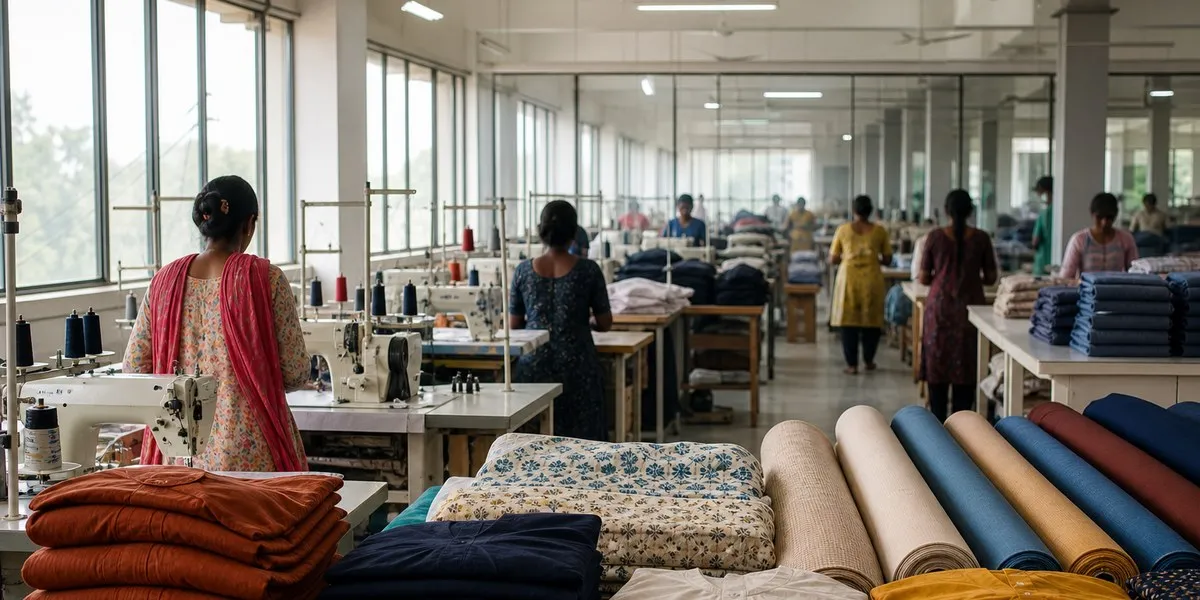
Beyond regional shifts, manufacturers are optimizing internal operations to combat rising transportation and production costs. The state of Jharkhand has emerged as a new hub for this evolution, offering garment factories attractive subsidies, streamlined land acquisition processes, and access to a reliable, skilled workforce. This regional growth is reflected in the bustling factory floors where workers are now producing apparel for iconic British retailers like Next and Marks & Spencer.
Simultaneously, the domestic market is acting as a crucial buffer. India’s own clothing sector, valued at approximately $150 billion, is expanding at a steady clip of 7–8% annually. By balancing export-oriented manufacturing with this growing domestic demand, Indian garment makers are building a more resilient, multi-pronged business model that is no longer held hostage by the policy whims of a single trade partner. As the industry moves forward, this diversification is expected to stabilize revenues and provide a sustainable path for long-term growth.
Disclaimer: This content is auto-generated for informational purposes only.
Source: Read Original News