








Trump Cites India’s Economic Model in Scathing Critique of US Federal Reserve
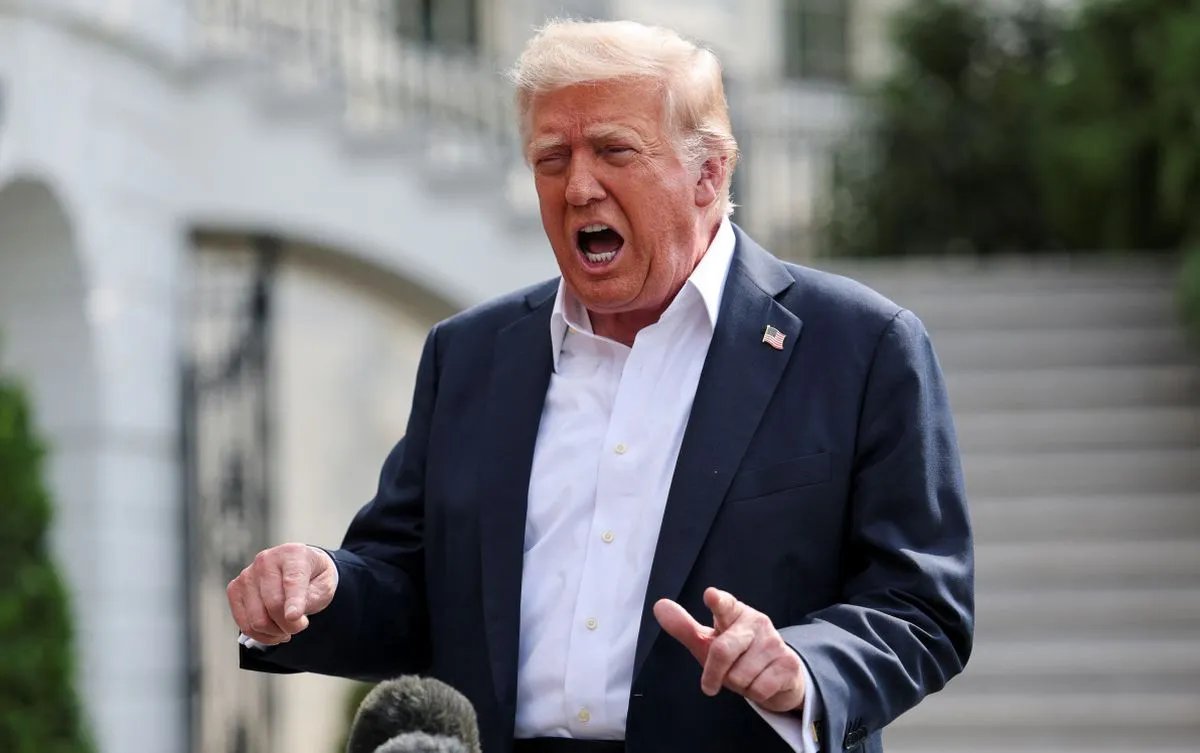
In a pointed critique of domestic monetary policy, former US President Donald Trump has drawn an unconventional comparison between the American economy and India’s robust financial trajectory. Speaking to reporters at the White House, Trump leveraged India’s current 7 percent GDP growth rate as a benchmark, arguing that the US Federal Reserve’s insistence on maintaining elevated interest rates is actively stifling the nation’s economic potential.
Trump’s remarks focused on the premise that a country demonstrating strong economic performance should be rewarded with lower borrowing costs, rather than the restrictive environment currently maintained by the US central bank. By contrast, he pointed to India’s performance as evidence that growth can thrive in a more accommodative interest rate climate.
Accusations of Political Interference
The former President did not mince words when addressing the leadership of the Federal Reserve, labeling the institution as “very political.” According to Trump, the Fed’s decision-making process appears to be disconnected from the actual needs of the economy, particularly in its timing. He alleged that whenever the US economy releases positive employment or manufacturing data, the Fed reflexively increases interest rates, a move he believes is intended to dampen momentum rather than nurture it.
“Whenever we announce good numbers, they raise the interest rates,” Trump stated. “They do that for a reason. It should be the opposite.”
Trump contended that the Fed’s current strategy serves as an unnecessary anchor on the American economy. He argued that when a country demonstrates improved creditworthiness through strong fiscal performance, it should be able to leverage that strength by lowering the cost of capital. He maintained that the current approach is effectively “reversing” the natural benefits of economic expansion.
A Vision for Double-Digit Growth
Perhaps the most striking element of Trump’s commentary was his ambitious projection for American growth. He claimed that if the Federal Reserve were to pivot toward a lower interest rate environment, the US could realistically achieve a GDP growth rate of 15 to 20 percent. This assertion, which drastically exceeds current US projections, highlights his frustration with the central bank’s conservative approach to monetary policy.
Trump emphasized that higher growth rates would be transformative for the nation’s fiscal health, suggesting that such an economic boom would allow the US to “pay off the debt very rapidly.” He lamented that the current strategy—which he characterized as being designed “to destroy the country”—prevents this potential from being realized.
The Global Context
While the Federal Reserve operates as an independent body to manage inflation and stabilize the economy, Trump’s comments reflect a long-standing tension between his administration’s growth-oriented objectives and the central bank’s mandate to prevent economic overheating.
By holding up India—a major emerging economy currently boasting one of the highest growth rates globally—as a model, Trump is framing the debate as one of “growth versus restriction.” As the US continues to navigate a complex global financial landscape, his invocation of the Indian economic model suggests that the debate over interest rates and their impact on long-term prosperity will remain a central theme in the upcoming political discourse.
Disclaimer: This content is auto-generated for informational purposes only.
Source: Read Original News