









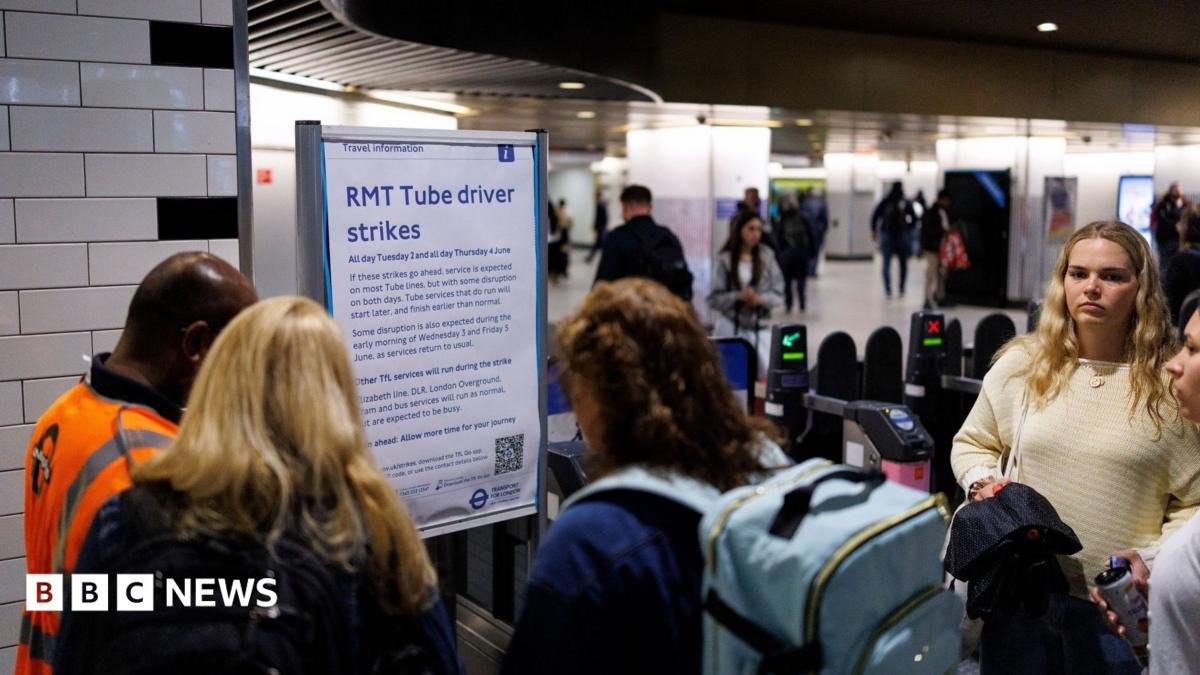
London Underground faces a winter of travel chaos as the RMT union prepares for a series of high-stakes strikes, with last-ditch negotiations scheduled to take place at the conciliation service Acas this Tuesday.
The dispute centres on Transport for London’s (TfL) proposed move toward a four-day working week. While the initiative has received backing from the Aslef union, the RMT remains staunchly opposed, arguing that the changes are a thinly veiled attack on existing working conditions.
The first of the planned industrial actions is set to begin at noon this Thursday, with a 24-hour walkout. If a breakthrough is not reached during Tuesday’s summit, the strike action is set to continue well into the new year, with further dates pencilled in for December 17 and 19, January 4 and 6, and February 17, 23, and 25.
RMT general secretary Eddie Dempsey has been vocal in his condemnation of the proposals. “London Underground is attempting to dress up a wholesale attack on drivers’ working conditions as a voluntary four-day week,” he said. The union claims that the move would force members to accept longer, more unpredictable shifts and require them to surrender long-standing, hard-won workplace protections. Mr. Dempsey added that there is “nothing voluntary” about the plans, insisting that drivers are being pushed into a regime that prioritizes efficiency over their wellbeing.
However, TfL has firmly rejected these claims, arguing that the proposed changes are designed to reduce driver fatigue and foster a better work-life balance. Nick Dent, TfL’s director of customer operations, stressed that the new model is optional and that staff members are not being coerced into the new format.
“These plans would give our drivers a real, meaningful choice over their working patterns,” Mr. Dent stated. He emphasized that the proposal allows staff to either transition to the four-day week or continue on their current five-day schedule without any change to their depot location. Mr. Dent also noted that discussions with various unions have already led to significant modifications to the original proposal in an effort to address staff concerns.
As the deadline for Thursday’s midday strike looms, commuters are braced for major disruption across the network. The outcome of the Acas talks on Tuesday will be the final opportunity for both parties to bridge their deep-seated divide before the scheduled shutdowns begin. With the RMT determined to defend what they describe as years of negotiated agreements, and TfL insistent that their proposal is a progressive step forward, the capital faces the prospect of months of significant transport upheaval. Passengers are being advised to check local travel updates closely as the situation develops.
Disclaimer: This content is auto-generated for informational purposes only.
Source: Read Original News