






BRUSSELS — As of November 21, 2026, the European Union has implemented a landmark ban on the export of plastic waste to non-OECD countries, a move hailed by environmental organizations as a significant victory against the systemic practice of “waste colonialism.” Under the new Waste Shipment Regulation, the export of plastic waste to these nations is prohibited for an initial period of two and a half years, marking a potential turning point for global waste management.
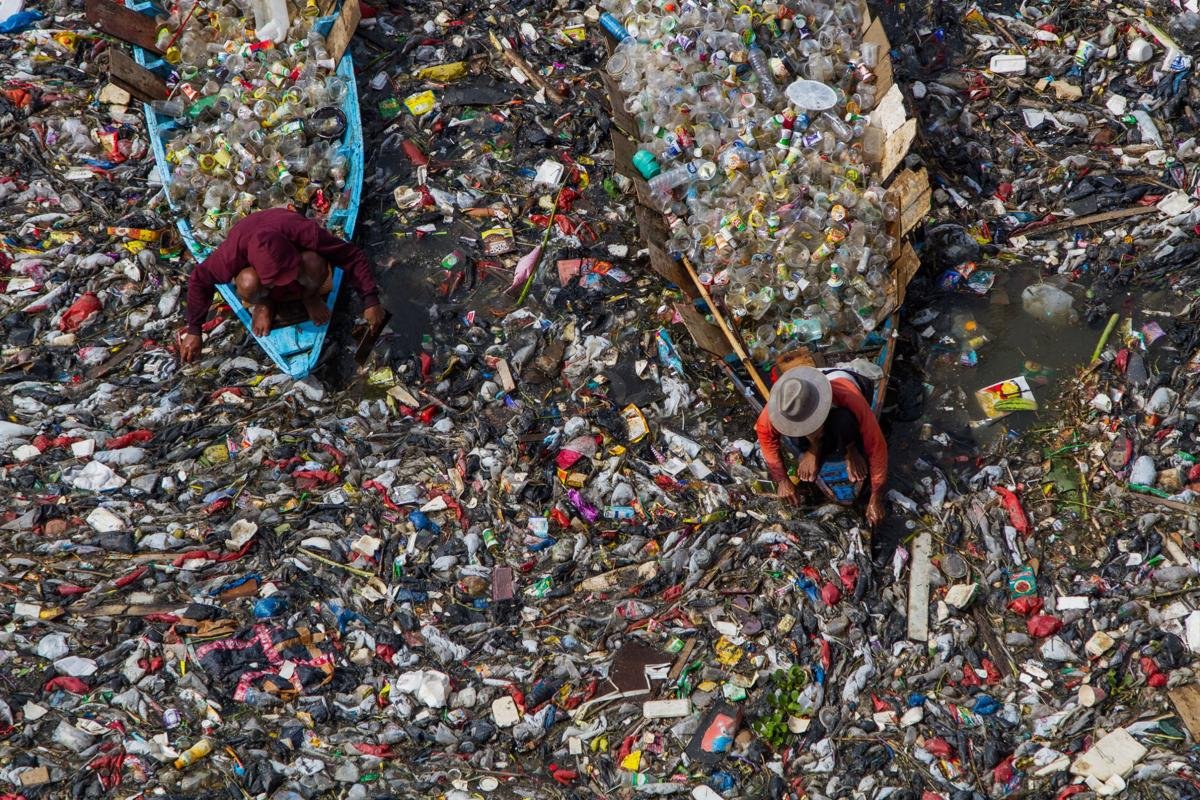
The EU remains the world’s largest exporter of plastic waste, having shipped 1.5 million tonnes in 2025 alone. Historically, nearly half of this volume was directed toward non-OECD nations, including Malaysia, Vietnam, and Indonesia. In these regions, the arrival of European waste has frequently overwhelmed local infrastructure, leading to severe environmental degradation, including contaminated water supplies, blighted soil, and the toxic byproduct of open-air burning.
While the Break Free From Plastic (BFFP) movement and the Rethink Plastic Alliance (RPA) have praised the ban as a necessary step toward holding the EU accountable for its own consumption, they are raising urgent alarms regarding the regulation’s major oversight: its continued allowance of plastic waste exports to OECD countries, most notably Türkiye.
In 2025, Türkiye received 510,000 tonnes of plastic waste from the EU, accounting for 36% of the bloc’s total exports. Despite clear documentation of environmental and human health harms, the European Commission recently concluded that shipments to Turkey should continue. Critics argue this decision ignores evidence of illicit dumping, particularly in the Adana region, where processed European plastic has been linked to toxic air pollution and dangerous accumulations of microplastics.
“The EU’s failure to restrict shipments to its OECD partners while closing export routes to non-OECD countries will create a massive diversion effect,” said Dr. Sedat Gündoğdu, a professor at Cukurova University and head of the institution’s Microplastic Research Group. He noted that the Commission’s reliance on the technicality of OECD membership as a proxy for “environmentally sound management” disregards the reality on the ground. “Türkiye’s local infrastructure is already overburdened by the waste it generates. This effectively turns OECD membership into a license to pollute.”
The concern among researchers is that, with routes to non-OECD countries now closed, Türkiye will inevitably be forced to absorb even larger volumes of European waste, further straining its capacity to process domestic plastics and exacerbating illegal disposal practices.
For many, the current policy falls short of the rigorous oversight required by the Waste Shipment Regulation. The legislation provides the Commission with the power to suspend exports if a recipient country cannot prove its management systems are sound. However, campaigners claim that this evidentiary threshold has been inconsistently applied.
Lauren Weir, a senior ocean campaigner at the Environmental Investigation Agency, emphasized that the EU must not merely shift the burden of its waste crisis. “Where there is insufficient evidence that exported waste can be managed in an environmentally sound manner, shipments must be suspended,” Weir said. “The responsibility lies with the EU to ensure its waste is not causing harm beyond its borders.”
As the ban takes effect, pressure is mounting on the European Commission to revisit its assessments regarding Turkey and to adopt a stricter, more uniform standard for all waste shipments, regardless of a nation’s OECD status. Advocacy groups maintain that the only long-term solution to the global waste crisis is for the EU to drastically reduce its plastic production at the source, rather than continuing the cycle of exporting the consequences of its own consumption.
Disclaimer: This content is auto-generated for informational purposes only.
Source: Read Original News