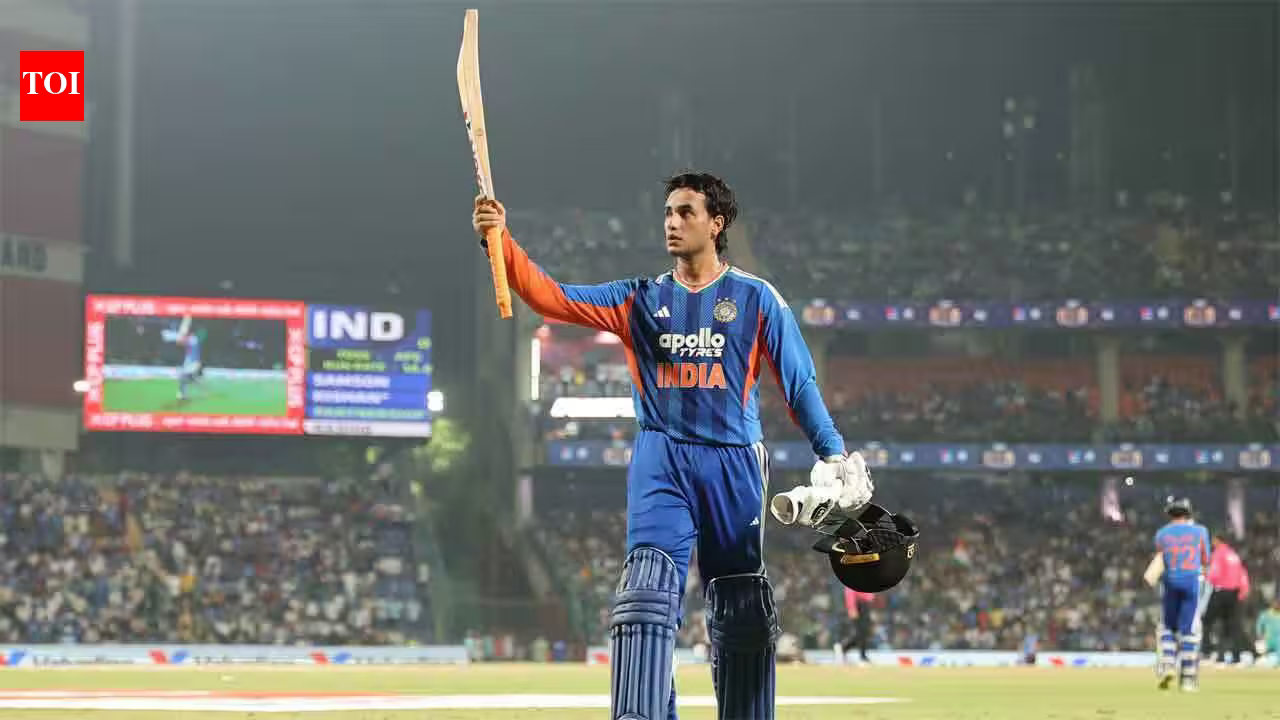









ARUN JAITLEY STADIUM roared with a thunderous intensity on Thursday evening as Abhishek Sharma carved his name into the history books, producing a display of batting pyrotechnics that will be discussed for years to come. In the third and final T20 International against Afghanistan, the young left-handed opener didn’t just play an innings; he authored a masterclass in aggression, dismantling the opposition bowling attack to register the fastest T20I century by an Indian.
Reaching the magical three-figure mark in a staggering 30 balls, Sharma eclipsed the previous Indian record of 35 balls, a benchmark long held by the legendary Rohit Sharma since his clinical dismantling of Sri Lanka in 2017. As the ball soared into the Delhi night sky—clearing the ropes ten times alongside nine precision-placed fours—the spectators witnessed the dawn of a new era in Indian white-ball cricket.
A Record-Breaking Rampage
The atmosphere at the Arun Jaitley Stadium was electric from the first over, but few could have predicted the sheer speed at which Sharma would reach his milestone. With a calculated blend of audacity and technical prowess, he dismantled the Afghan bowlers with clinical efficiency.
By the time he brought up his century with a composed single in the ninth over, the stadium was in a state of euphoric disbelief. This wasn’t merely a record for India; Sharma’s 30-ball blitz established a new global standard for the fastest century against a Test-playing nation, surpassing the efforts of luminaries like David Miller and Finn Allen.
This performance represents the third century of Sharma’s short-format career—an impressive statistic augmented by his 12 half-centuries. The fluidity with which he moved from the crease, combined with his ability to pick length early, highlighted why he is currently considered one of the most exciting prospects in global cricket.
Strategic Context and Series Dynamics
The match began with Afghanistan winning the toss and electing to field, a decision they likely regretted within the first powerplay. Under the captaincy of Shreyas Iyer, India entered the contest with the comfort of having already secured the series with an unassailable 2-0 lead. Despite having the trophy firmly in their grasp, the Indian squad showed no signs of complacency, opting instead to play with the kind of high-octane intent that defines the modern game.
For Afghanistan, the objective was clear: secure a consolation victory and regain some pride after a difficult series. However, they were met with a batting onslaught that neutralized their tactical preparations almost immediately. The Indian side, buoyed by the aggressive leadership of Iyer and the sheer momentum generated by Sharma at the top of the order, demonstrated the clinical mindset required to complete a series clean sweep.
The Rise of a New T20 Force
The statistical comparison tells only part of the story. While the record books will reflect a 30-ball century, those present at the ground will remember the poise of a player who refused to be stifled by pressure. Following in the footsteps of greats like Rohit Sharma, Abhishek has signaled that he is not just a participant in the current Indian setup, but a pivotal figure around which the future of the T20 batting order may be built.
As the series concludes, the focus now shifts toward the consistency of this young batting unit. While the “Fastest Century” crown is a heavy one to wear, Sharma’s demeanor suggests he is focused on the next challenge. With thousands of fans currently debating the hierarchy of India’s top T20 talent, one thing is certain: Abhishek Sharma has firmly entrenched himself in that conversation.
As the dust settles on this historic night in Delhi, Indian cricket finds itself with another weapon in its arsenal—a batter capable of changing the trajectory of a game before the fielding side has had the chance to blink. The quest for a 3-0 sweep continues, but the story of the night remains the 30-ball assault that redefined the standard for Indian T20 batting.
Disclaimer: This content is auto-generated for informational purposes only.
Source: Read Original News