






IIMC Amravati Axes Hindi Journalism Program Amidst Zero Enrollments and Broader Enrollment Challenges
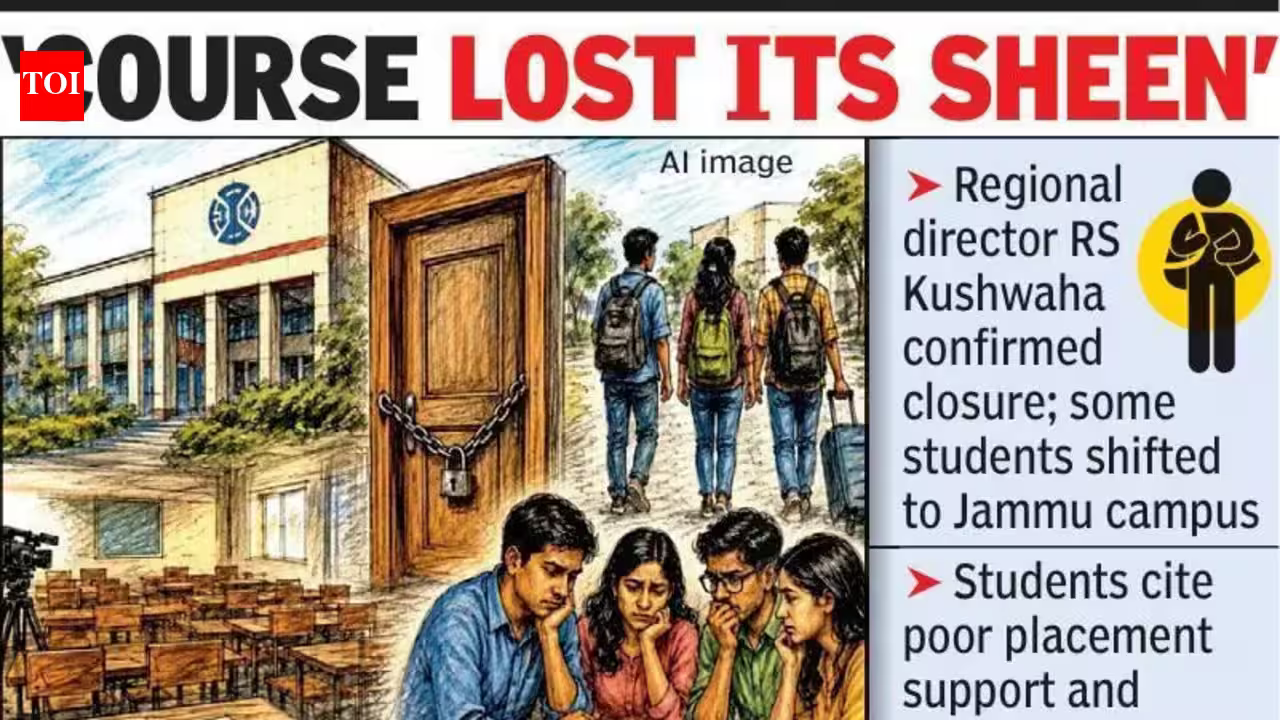
Amravati, India – The Indian Institute of Mass Communication (IIMC) campus in Amravati has discontinued its Hindi Journalism program after failing to attract a single student this academic year, four years after its inception. The move highlights broader enrollment struggles at the regional center, which is operating significantly below its sanctioned capacity across all its journalism offerings.
The Hindi program, initially designed for an intake of 30 students, recorded zero admissions for the current academic year, leading to its immediate cessation. This decision was confirmed by IIMC-Amravati regional director Raj Singh Kushwaha, who stated, "The minimum requirement is for at least ten students. A few students who took admission at Amravati agreed to shift to our Jammu campus."
The enrollment crisis extends beyond the Hindi program. The center’s two other journalism courses, English Journalism and Marathi Journalism, are also struggling to fill their ranks. Both programs have a sanctioned capacity of 30 students each, but currently enroll only nine students in English Journalism and ten in Marathi Journalism. The English program’s current strength of 11 includes two students who were reportedly admitted from outside the center.
Mr. Kushwaha maintained that the center had actively sought to attract students through various publicity efforts. He explained that admissions for the English and Hindi programs are based on the CUET (Common University Entrance Test) exam for postgraduate courses, while Marathi Journalism students are selected locally.
However, students and former students have voiced significant concerns regarding the quality of education and, more critically, the career prospects offered by IIMC-Amravati. Marathi Journalism students, in particular, allege that while prospective students are drawn in by promises of employment, the institute provides inadequate placement support. This often leaves graduates to secure jobs through their own personal networks, rather than through institutional assistance.
Another significant point of contention revolves around faculty availability. Students claim that one assistant professor position each in Hindi and English Journalism remained vacant throughout the current academic year, impacting the quality of instruction. Regional director Kushwaha, however, refuted these allegations, asserting that the center maintains four faculty members, which he stated aligns with University Grants Commission (UGC) norms.
Adding to the discontent, English Journalism students have reported a peculiar issue from the previous academic year: despite being enrolled in an English-medium program, they were allegedly taught journalism in Hindi. This raises questions about the curriculum delivery and adherence to program specifications.
The Amravati center of IIMC was established with the noble objective of expanding professional journalism education in the Vidarbha region, a brainchild of former President Pratibha Patil. However, the current enrollment figures paint a stark picture: with the Hindi program now closed and only 19 students collectively enrolled across the two remaining programs against a total of 60 sanctioned seats, the institute faces significant challenges in fulfilling its initial mandate. The lack of student interest and the reported operational issues suggest a need for a comprehensive review of the center’s strategy and offerings to ensure its viability and effectiveness in the long term.
For more details on this development, readers can refer to the original report.