








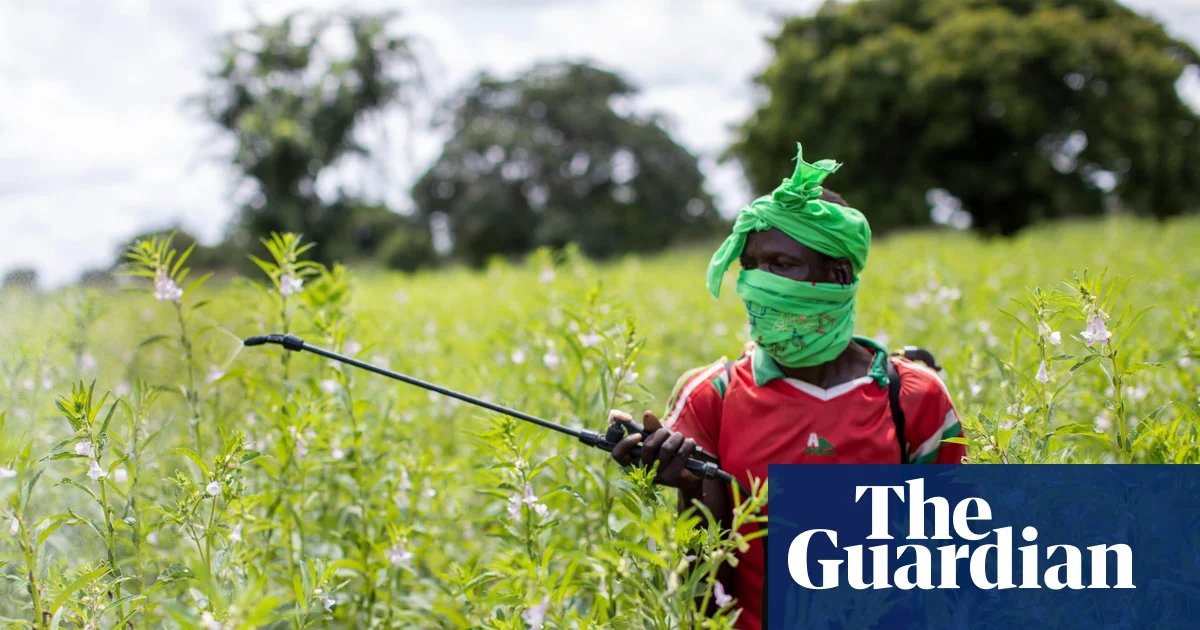
Global Crisis: Nearly Half of the World’s Farmers Suffer Pesticide Poisoning Annually
A staggering 46% of the world’s farming population is suffering from unintentional acute pesticide poisoning every year, according to a landmark study that highlights a growing public health catastrophe.
The report, published in the journal Frontiers in Public Health, analyzed global data from 2006 to 2023. Commissioned by the Pesticide Action Network, the research estimates that between 402 million and 433 million cases of acute pesticide poisoning occur annually among the global workforce of 934 million farmers and agricultural laborers.
A Disproportionate Burden
The data reveals a stark geographical divide in the impact of these chemicals. Southern Asia, south-east Asia, and east Africa recorded the highest estimated numbers of poisoning cases. Nationally, Burkina Faso faced the most alarming figures, with nearly 84% of its agricultural workforce reported to have experienced poisoning symptoms.
The study also attributes 11,000 deaths annually to direct pesticide exposure, with India accounting for nearly 60% of those fatalities. Jayakumar Chelaton, executive director of the Pesticide Action Network India, characterized the findings as a “crisis that can no longer be ignored.”
Escalating Chemical Use
Despite decades of international advocacy aimed at reducing chemical reliance in agriculture, the trend remains headed in the wrong direction. Global pesticide consumption has doubled since 1990, reaching 3.8 million tonnes in 2023.
Experts are now calling for immediate regulatory intervention, specifically the implementation of UN recommendations to phase out highly hazardous pesticides. Dr. Sheila Willis, head of international programmes at Pesticide Action Network UK, stressed that the industry must pivot: “Now that the scale of suffering has been revealed, farmers must be supported to access safer alternatives to protect their health and that of their families.”
The Hidden Long-Term Risks
While the study focused on “acute” poisoning—defined as illnesses occurring shortly after exposure—advocates warn that these numbers represent only the tip of the iceberg. The research did not account for the long-term, chronic health impacts of cumulative exposure, nor did it include the estimated 84 million children currently employed in the agricultural sector.
Mounting research is also drawing links between chronic pesticide exposure and neurological disorders, most notably Parkinson’s disease. Hélène Nicora, director general of Parkinson’s Europe, noted that there is “overwhelming evidence” suggesting Parkinson’s is often environmentally driven. Several nations, including France, Germany, and Italy, have already taken the step of officially recognizing Parkinson’s as an occupational disease for farmers.
A Call for Global Accountability
The report underscores that, despite its scope, current global data collection remains inadequate. Authors are calling for standardized international surveillance and reporting protocols to ensure that poisoning incidents are tracked accurately and transparently.
For many, the findings validate years of personal struggle. Rendert Algra, a Dutch farmer who developed Parkinson’s after years of spraying crops on his family farm, recently spoke out about his experience, noting that his role as the eldest son necessitated consistent, direct contact with chemical sprays for years.
As researchers highlight that almost half of the world’s farmers are suffering, the pressure is mounting on global regulators to shift agricultural policy away from hazardous chemicals toward safer, sustainable practices.