







Asian markets faced a wave of selling pressure on Tuesday as investors exercised caution, looking past a tech-driven rally on Wall Street to focus on mounting economic headwinds. While artificial intelligence stocks continue to show resilience, the broader market remains gripped by concerns over rising borrowing costs and stubborn energy prices.
## AI Resilience Meets Market Skepticism
The technology sector, led primarily by the artificial intelligence boom, provided a brief respite for investors on Monday. Nvidia played a pivotal role in keeping the S&P 500 afloat, with a 1.4% gain that underscored its status as a heavyweight engine for market performance. Similarly, shares in SpaceX saw a modest uptick, drawing attention following founder Elon Musk’s recent high-profile pledge to distribute company stock to children across the United States.
However, this enthusiasm for AI does not necessarily signal a healthy market-wide recovery. Analysts point out that much of the massive capital expenditure currently fueling data centers and advanced chip development is leveraged through debt. As Treasury yields climb—with the 10-year note recently hitting 5.14%—the cost of financing these AI ambitions is becoming significantly more expensive, prompting investors to pull back from non-tech sectors that lack the same perceived growth trajectory.
## The Regional Cooling in Asian Markets
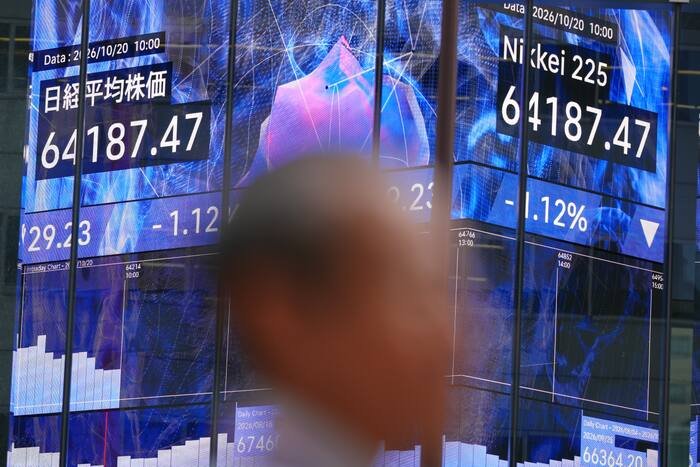
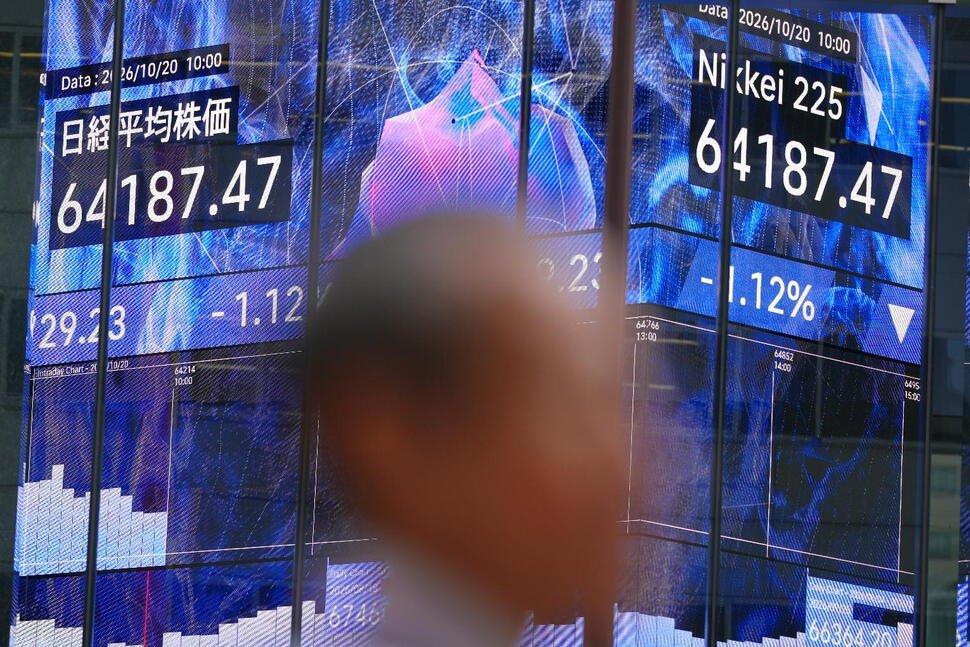
The mood in Asia was largely pessimistic during early Tuesday trading. Japan’s Nikkei 225 fell 0.6%, while Australia’s S&P/ASX 200 dropped 0.8%. South Korea’s Kospi experienced a sharper decline of 2.8%, and Hong Kong’s Hang Seng retreated by nearly 1%.
This regional malaise is largely attributed to a “wait-and-see” approach. Investors are currently holding their breath as they await a dense schedule of quarterly earnings reports. These disclosures are expected to provide a clearer picture of whether corporate profit margins can withstand the combined pressure of high interest rates and global instability. Without positive catalysts, markets have been hesitant to commit to new positions, leaving indices shaky and vulnerable to negative sentiment.
## Energy Volatility and Macro Uncertainty
Beyond the balance sheets of tech giants, the global energy market remains a major source of anxiety. U.S. crude and Brent crude oil prices have remained elevated, hovering near $103 and $109 per barrel, respectively. This persistence in pricing is largely driven by geopolitical friction, specifically the ongoing conflict involving Iran, which has kept the global energy supply chain in a state of high alert.
The lack of a foreseeable resolution to the conflict suggests that energy costs are unlikely to soften in the near term. For a global economy already struggling with high inflation and elevated bond yields, persistent energy costs act as a drag on discretionary spending and corporate expansion.
As traders navigate these choppy waters, the U.S. dollar has remained relatively stable against the Japanese yen and the euro. With the macroeconomic landscape clouded by bond market volatility and international conflict, market participants are bracing for potential turbulence in the weeks ahead. While AI remains the primary focal point for growth-oriented capital, the reliance on borrowed money to sustain these tech-heavy gains remains a lingering risk factor that observers are watching closely as the next round of earnings reports looms on the horizon.
Disclaimer: This content is auto-generated for informational purposes only.
Source: Read Original News