







U.S. Launches “Economic Onslaught” Against Iran, Targeting Global Financial Networks
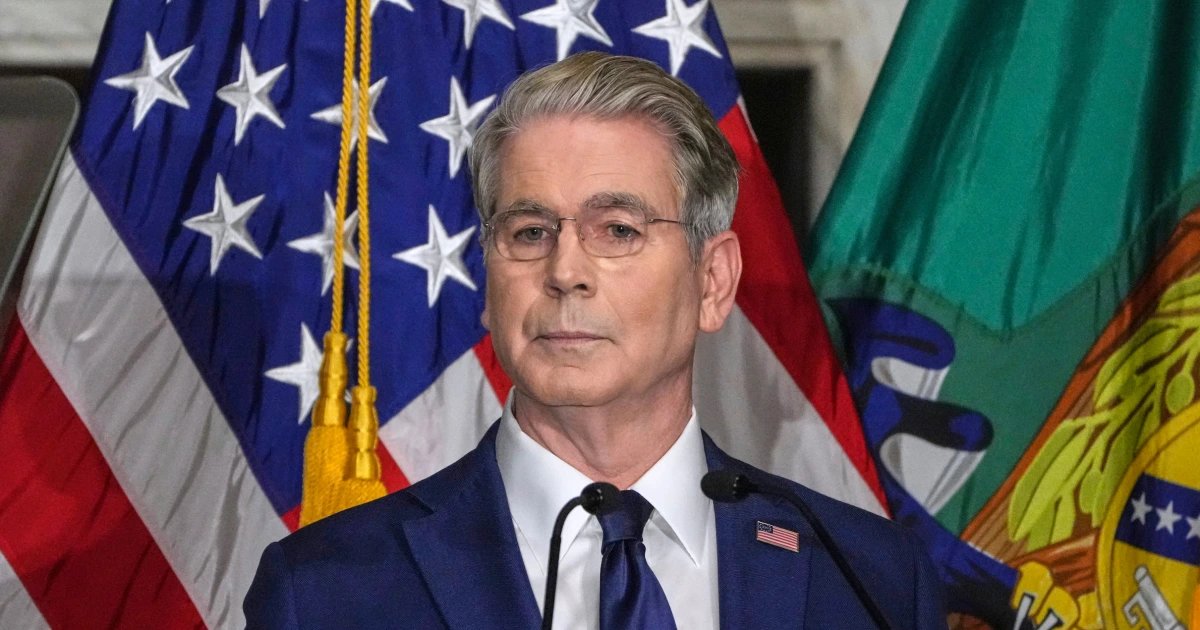
WASHINGTON — Treasury Secretary Scott Bessent announced a sweeping wave of new sanctions on Monday, signaling what the administration terms an “economic D-Day” intended to isolate the Iranian regime. The move aims to sever every remaining financial pipeline sustaining Tehran, marking a significant escalation in the ongoing pressure campaign against the Islamic Republic.
The new measures target nearly 60 corporations, individuals, and vessels across multiple international jurisdictions. The Treasury Department is focusing its efforts on entities involved in facilitating Iranian trade in sectors ranging from oil and shipping to aviation, gold, and cryptocurrency.
“Our objective is to sever every economic lifeline that sustains the tyrannical regime until Tehran stands alone,” Bessent wrote in a weekend op-ed for the Financial Times. He reiterated on Monday that the U.S. is launching an “economic onslaught” and warned that any entity found facilitating money laundering for Iran would be stripped of access to the U.S. dollar system.
Diplomatic Pressure and Global Reach
As part of the strategy, President Donald Trump is reportedly conducting direct outreach to world leaders, issuing “specific requests” for countries to cease all trade with the Iranian government. The effort, which Bessent describes as “quiet diplomacy,” includes a warning to international partners that they face a “cure period” to wind down relations with Tehran before risking secondary sanctions.
Among the entities targeted are several Chinese nationals, a move that places the U.S. in direct diplomatic friction with Beijing, which has previously maintained that unilateral American sanctions are illegal for its citizens to follow.
The announcement follows the United Arab Emirates’ recent decision to end all trade relations with Iran, providing a rare win for the administration’s strategy. However, experts warn that the campaign’s success is far from guaranteed.
“If you’re a country like Russia or China, you see Iran as an ally, and you’re not just going to suddenly stop trading with them,” said Andrew Gawthrope, a specialist in U.S. foreign policy at the University of Leiden. “There’s just not much the U.S. can do to these countries to make them go along with this.”
Domestic Pressures and Market Reaction
The announcement comes at a volatile time for the White House. Six months into a conflict that began with a U.S.-led push to neutralize Iran’s nuclear ambitions, the war has become a heavy political and economic burden. Defense Secretary Pete Hegseth recently disclosed that the conflict has cost the U.S. at least $37.5 billion, with broader economic impacts—including spikes in energy and grocery costs—estimated at upwards of $150 billion.
The economic strain has contributed to plummeting approval ratings for President Trump ahead of the midterm elections, further complicated by turmoil in the bond market. Markets remained largely unmoved by Monday’s announcement, reflecting skepticism over whether the new sanctions will significantly alter the status quo.
Defiance in Tehran
Iranian officials dismissed the rhetoric as “bombast.” Mohammad Bagher Ghalibaf, speaker of the Iranian Parliament, mocked the announcement on social media, stating that the U.S. lacks the economic leverage to enforce such restrictions.
Similarly, the head of Iran’s Central Bank, Abdolnaser Hemmati, noted that the country had been preparing for “difficult conditions” for months by stockpiling foreign currency, asserting that the new sanctions introduced no meaningful changes to the current environment.
While the regime appears to have tightened its grip under the leadership of Mojtaba Khamenei—who assumed power following the death of his father, Supreme Leader Ayatollah Ali Khamenei—signs of domestic strain are mounting. Reports from Tehran’s Grand Bazaar suggest growing public frustration over inflation and the weakening Rial, with police forces on high alert to prevent the sort of widespread civil unrest that left thousands dead in January.
As the administration moves forward with its economic D-Day strategy, the ultimate test will be whether it can force a shift in the calculus of Iran’s primary trading partners, or whether the regime will successfully weather the latest push for total isolation.