








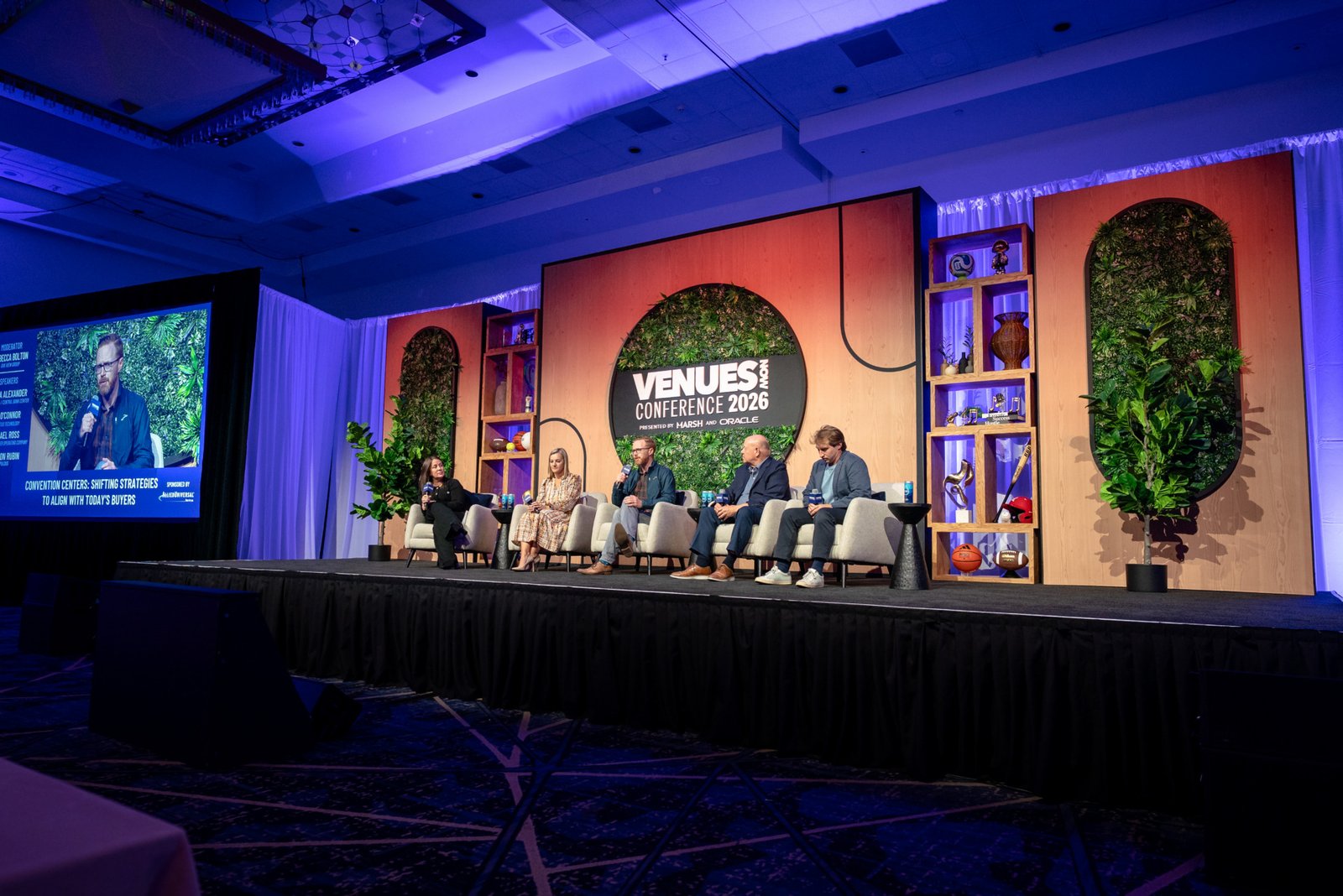
The modern convention center is undergoing a radical metamorphosis, shedding its reputation as a sterile, suburban box in favor of becoming a high-energy centerpiece of urban life. At the recent VenuesNow Conference in Seattle, industry leaders gathered to address how these sprawling facilities are pivoting from being mere utility spaces for out-of-town business travelers to becoming vibrant, integrated hubs that anchor local economies and cultural life.
## The End of the “Square Footage” Arms Race
For decades, the standard strategy for venue growth was simple: keep building more square footage to attract bigger shows. However, that era has officially come to a close. During the panel, “Convention Centers: Shifting Strategies to Align with Today’s Buyers,” architect and Populous Senior Associate Greyson Rubin noted that the “arms race” for physical size has hit a ceiling.
Instead of expanding footprints, modern design is shifting toward “activated” spaces. The goal is no longer to be the largest facility in the region, but to provide an environment that is architecturally engaging, hospitable, and deeply connected to the local community. By designing spaces that allow staff to interact more fluidly with guests, centers are prioritizing the user experience over raw capacity, proving that a thoughtfully designed smaller venue can outperform a cavernous, empty hall.
## AI and Data: Moving Beyond the Hype
Technology remains a primary driver in this evolution, though experts are increasingly skeptical of “tech for tech’s sake.” Rather than treating Artificial Intelligence as a buzzword or a magic solution, the industry is focusing on utilizing AI as a practical tool for operational efficiency.
Tim O’Connor, Vice President of Product Management at Momentous Technology, emphasized that AI’s real value lies in its ability to synthesize historical venue data and analytics. By using these tools to score leads and align proposals with specific organizational goals, sales teams can stop wasting time on low-probability events. This allows staff to redirect their energy toward high-impact, face-to-face engagement. By integrating OKRs (Objectives and Key Results) and KPIs (Key Performance Indicators) into daily workflows, centers are transforming from reactive facilities into data-driven organizations that can predict success rather than just documenting it.
## The Human Element in a Digital World
Despite the surge in advanced software, the panel members—which included leaders from the Rupp Arena/Central Bank Center and the Pasadena Center Operating Company—stressed that the human element remains the most significant competitive advantage. In a market where physical amenities are increasingly commodified, service is the primary differentiator.
“Nothing is really replacing that service,” explained Laura Alexander, Assistant General Manager of the Rupp Arena/Central Bank Center. This sentiment was echoed by Michael Ross, CEO of the Pasadena Center Operating Company, who noted that while every city has a building with a certain amount of square footage, the “above and beyond” service levels are what secure long-term loyalty and repeat business.
The consensus from the Seattle conference is clear: the future of the convention industry lies in a delicate balance between high-tech efficiency and high-touch hospitality. By aligning their missions with local tourism bureaus, utilizing AI to handle the heavy lifting of lead qualification, and prioritizing experiential architecture, convention centers are successfully embedding themselves into the heartbeat of their cities. As the industry moves forward, those that thrive will be the ones that view their buildings not as static warehouses for meetings, but as dynamic destinations that foster authentic, human-centered connections.
Disclaimer: This content is auto-generated for informational purposes only.
Source: Read Original News