


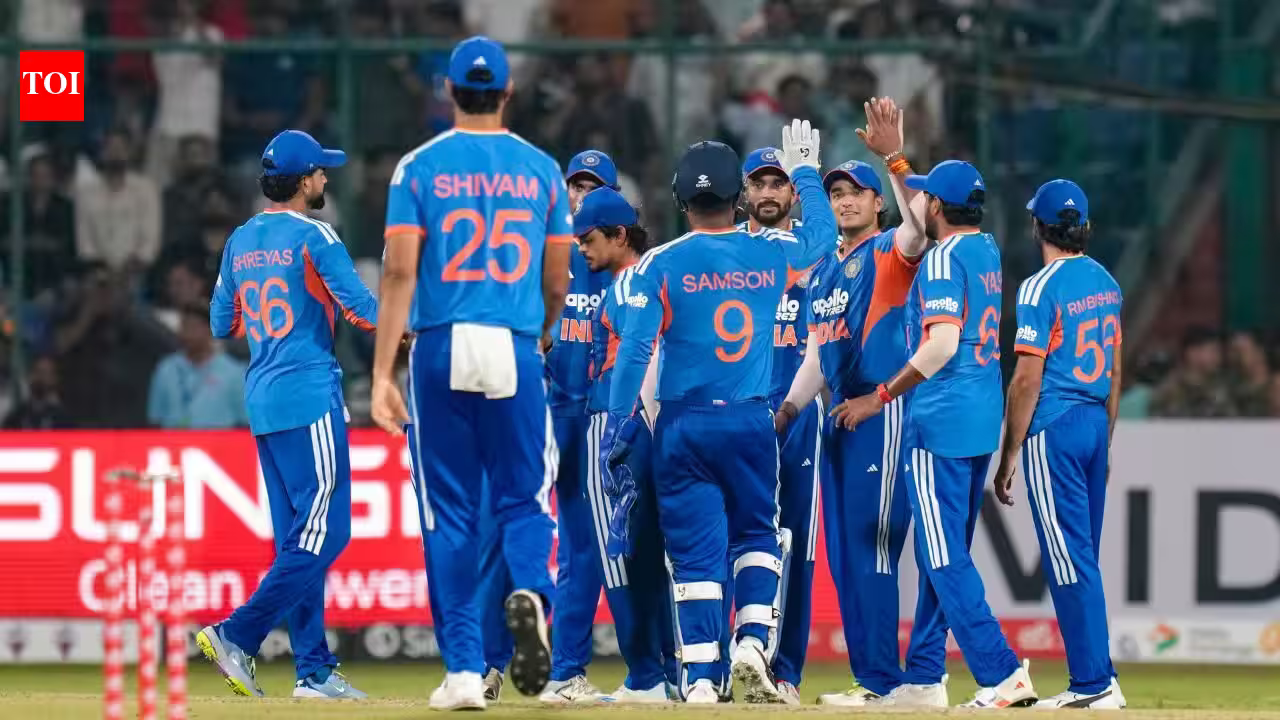






“Abki baar, sau paar”—”This time, beyond 100″—was once a lofty, ambitious rallying cry when the Indian contingent touched down in Hangzhou for the 2023 Asian Games. By the closing ceremony, the slogan had transcended rhetoric to become a historic reality. Finishing with 106 medals—28 gold, 38 silver, and 41 bronze—India shattered its previous records, with the women’s kabaddi team securing the historic 100th medal.
Yet, as the nation turns its gaze toward the Aichi-Nagoya 2026 Games, the narrative has shifted. The milestone of 100 is no longer viewed as a miraculous outlier; instead, it is being analyzed as the latest chapter in a broader, more consistent, and structurally evolving trajectory for Indian sports.
From occasional highs to a new Asian Games floor
To understand the shift in Indian sports, one must look at the cold, hard data of the last five Asian Games: 53 (Doha 2006), 65 (Guangzhou 2010), 57 (Incheon 2014), 70 (Jakarta 2018), and 106 (Hangzhou 2022). Prior to this twenty-year stretch, India had crossed the 50-medal mark only twice in 14 editions—both times as the host nation (1951 and 1982).
The current streak of five consecutive 50-plus medal campaigns is unprecedented. It suggests that while a 106-medal haul may be a difficult peak to replicate, the “floor” of Indian expectations has fundamentally moved. At Aichi-Nagoya, the debate will likely shift from whether India can hit 50 to whether anything less than that benchmark would constitute a failure. India has reached a point where consistency is replacing the era of sporadic, tournament-specific spikes.
Hangzhou did not just breach 100 — it moved the ceiling
The leap from Jakarta to Hangzhou was not merely incremental; it was transformative. A 75% surge in gold medals—jumping from 16 to 28—highlights an increased ability to convert podium opportunities into top-tier finishes. This rapid acceleration confirms that the “ceiling” for Indian athletics has been elevated.
While the athlete contingent for Aichi-Nagoya is set to be smaller (499 compared to the 661 who traveled to Hangzhou), the objective remains the same: proving that the 70-plus medal mark is the new baseline. By aiming for three consecutive editions above 70, India is looking to cement a reputation as a continental powerhouse that no longer relies on favorable winds to achieve success.
The medal base is becoming broader
Historically, Indian hopes were pinned almost exclusively on athletics, which remains the leader with 283 total medals, followed by shooting, wrestling, and boxing. However, Hangzhou signaled a structural diversification. While athletics remained dominant with 29 medals, shooting followed with a massive 22, and archery contributed nine.
Crucially, shooting outperformed athletics in the gold medal count—seven to six. This redistribution of medal-winning prowess proves that India is no longer a one-discipline nation. With archery, squash, and tennis emerging as reliable medal pillars, and boxing showing newfound strength at global events like the 2026 Glasgow Commonwealth Games, the ecosystem is proving far more resilient than it was in previous decades.
The Olympics: A quieter story of progress
While the Asian Games provide the dramatic peaks, the Olympic stage offers a quieter, yet arguably more significant, testament to India’s evolution. With 41 total medals in its history, India remains an under-achiever by global standards, but the timing of these wins is telling.
Since Beijing 2008, India has secured 58.5% of its entire Olympic medal haul. Before this run, multiple-medal campaigns were a rarity. Now, India has delivered multiple medals in five consecutive Olympic Games. While Paris 2024 finished with six medals—a slight dip that felt disappointing due to heightened expectations—it underscored a critical development: the rise of the “near-miss.”
With seven separate fourth-place finishes or high-stakes disqualifications, India demonstrated that it is no longer just participating; it is contending. The shift from “Can we get a medal?” to “How many can we convert?” is the hallmark of a maturing sports culture.
The real evolution: The floor is rising
The dual narratives of the Asian Games and the Olympics coalesce into a singular, undeniable truth: India’s sporting identity is shifting from sporadic success to sustained presence.
Aichi-Nagoya 2026 will be the next litmus test. The challenge will not be to break the 106-medal record, but to maintain the structural integrity that makes such a performance possible. Can 50-plus remain the floor? Can the nation continue to broaden its medal base?
India remains a country with immense untapped potential and plenty of room to improve its conversion rates at the highest level. However, the evidence is now impossible to ignore. The peaks are becoming higher, and more importantly, the floor beneath them is rising, signaling an end to the era of sporting uncertainty and the beginning of a more consistent, professional chapter for Indian athletes on the world stage.
Disclaimer: This content is auto-generated for informational purposes only.
Source: Read Original News