







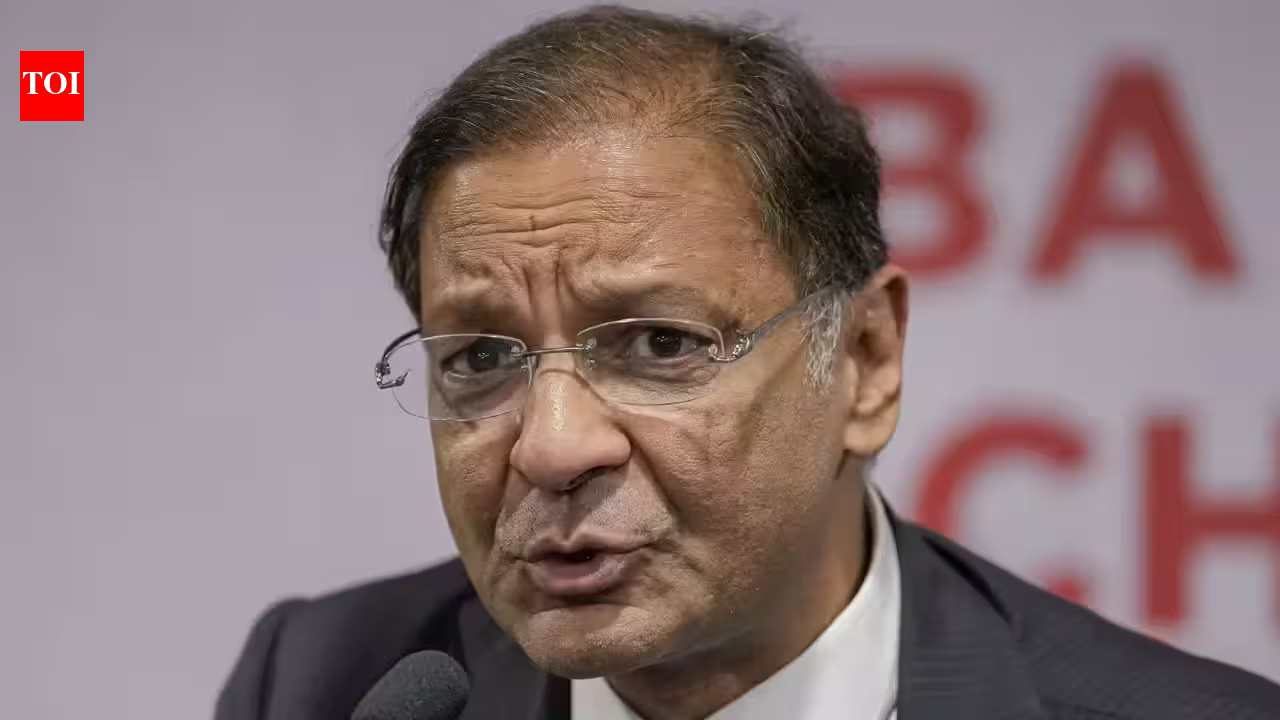
TURMOIL at the highest levels of Indian amateur boxing reached a boiling point this week as the Boxing Federation of India (BFI) plunged into an existential crisis. In a dramatic escalation of an ongoing internal power struggle, BFI Secretary General Pramod Kumar has officially convened a Special General Meeting (SGM) for October 24, setting the stage for a high-stakes vote of no-confidence against long-time president Ajay Singh.
The move, which threatens to paralyze the sport’s governing body, comes on the heels of a massive show of force from state units. According to documentation obtained by this publication, an overwhelming 28 of the federation’s 35 state-affiliated members have signed on to the motion, signaling a deep-seated fracture within the organization’s foundation.
A Litany of Allegations
The notice issued by Pramod Kumar is scathing, painting a picture of an organization suffering from chronic administrative mismanagement. The primary grounds for the no-confidence motion are extensive, ranging from allegations of unilateral decision-making that bypassed elected office-bearers to unauthorized constitutional amendments.
State units have also raised grave concerns regarding financial irregularities and a culture of intimidation, where member associations allege they have been sidelined or coerced. The motion further cites “administrative overreach” and persistent conflicts between the president’s office and other elected officials, suggesting that the day-to-day operations of the BFI have been marred by internal friction for some time.
The internal strife has now crossed into legal territory. In a pointed escalation, Secretary General Kumar has issued a formal cease-and-desist notice to BFI Executive Director Col. Arun Malik. Kumar’s directive warns Malik to desist from acting on behalf of or under the specific authority of Ajay Singh in matters that constitutionally fall under the purview of the Secretary General. Perhaps most damaging are the allegations concerning digital security; the notice expressly warns Malik to cease accessing or utilizing the Secretary General’s official email account without explicit authorization, threatening “legal action” should the alleged unauthorized conduct continue.
President Singh’s Defensive Pivot
Amidst the growing calls for his ouster, Ajay Singh has maintained a defiant stance, attempting to steer the narrative back toward the athletes. With the horizon of the Los Angeles Olympics looming, Singh argues that the current political maneuvering serves only to jeopardize the hard work of India’s pugilists.
“Our focus must remain on our boxers and their preparation for the Olympics,” Singh said in a statement. “BFI will do everything within its power to give them the support and conditions they need to succeed. We will take the strongest possible action against any attempt to disrupt their preparation or hinder the progress of Indian boxing.”
Singh’s camp suggests that this rebellion is a distraction from the progress made under his tenure and that the timing—right in the middle of a vital Olympic cycle—is calculated to cause maximum disruption. By framing the dissidents as a threat to the country’s Olympic dreams, Singh is attempting to seize the moral high ground in a battle that is clearly turning into a clash of constitutional interpretations.
The Constitutional Crossfire
At the heart of the standoff is a bizarre and complicating factor: the existence of two conflicting versions of the BFI constitution. The validity of the October 24 meeting hinges entirely on which governing document is deemed “operative.”
The version currently hosted on the official BFI website dictates that an SGM can only be called by the president or by a request from two-thirds of the Executive Committee, with a 30-day window for convening. Under this framework, Singh’s camp maintains that the SGM called by Kumar is invalid and lacks proper authorization.
However, the rival faction led by Kumar is pointing to a different version of the constitution, which they claim is the government-approved document. This version stipulates that the Secretary General has the power to convene an SGM upon receiving a requisition from 15 members—a threshold that the current 28 signatories have comfortably exceeded.
The Singh camp has dismissed this second version as an “old” or “defunct” document, asserting that the version available on their website is the only one recognized by World Boxing. The friction between these two constitutional interpretations will likely become the primary battleground when the parties eventually face off in court or before government oversight bodies.
What Lies Ahead?
For the athletes currently training in high-performance camps across the country, the uncertainty is palpable. While the administrative heads argue over email access and constitutional clauses, the risk remains that funding, international clearances, and training logistics could be caught in the crossfire of the factional warfare.
As the clock ticks toward October 24, the Indian boxing community finds itself at a crossroads. Should the no-confidence motion proceed, the BFI could face a complete leadership vacuum or a protracted legal battle that freezes operations during the most critical period of the Olympic cycle. Conversely, if the Singh camp succeeds in blocking the meeting, the internal dissent will likely continue to simmer, potentially leading to further resignations or even deeper fragmentation of the sport’s governing structure.
For now, all eyes are on the BFI headquarters. As the factions sharpen their arguments, it is clear that the ring for this particular battle will not be found in a boxing arena, but in the courtrooms and committee rooms of New Delhi. The question remains whether Indian boxing can find a path to stability before the political fallout impacts the nation’s medal prospects in Los Angeles.
Disclaimer: This content is auto-generated for informational purposes only.
Source: Read Original News