








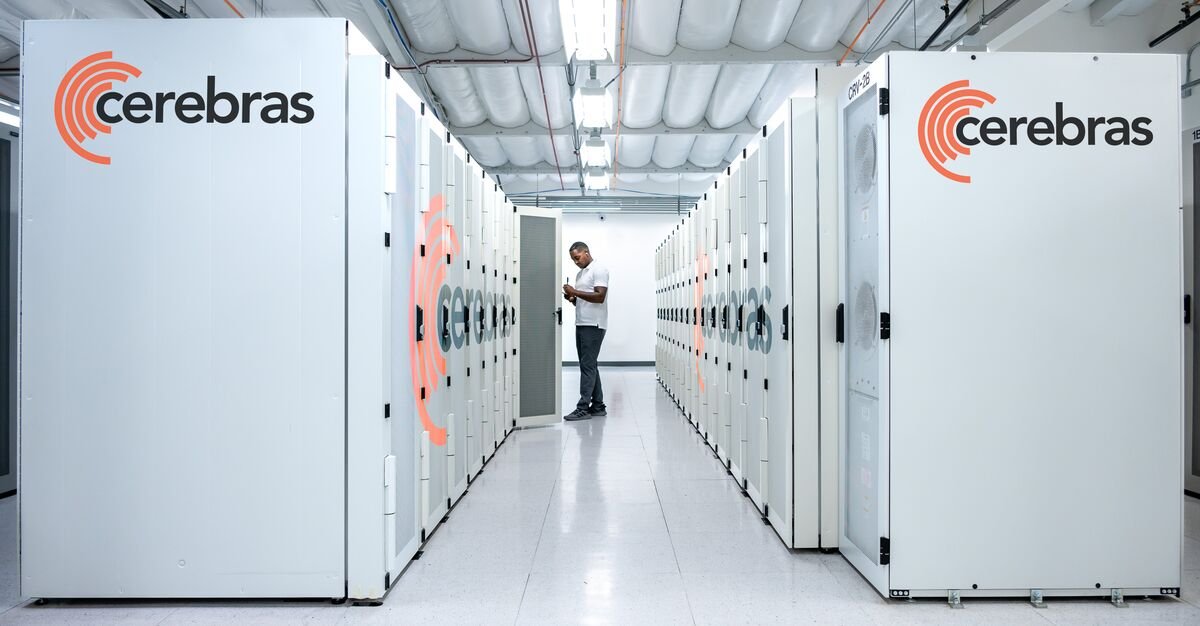
Cerebras Systems’ Wafer-Scale Engine, a cornerstone of its novel chip design. (Source: Bloomberg)
Cerebras Systems Stumbles in Post-IPO Debut: Hardware Revenue Decline Raises Concerns
SAN FRANCISCO – Cerebras Systems Inc., a company heralded for its groundbreaking advancements in artificial intelligence hardware, experienced a significant downturn in late trading following its recent financial disclosure. The newly public entity reported a notable decline in hardware revenue, signaling what many analysts perceive as slow progress in commercializing its unique chip design.
The news sent tremors through the market, raising questions about the immediate trajectory of a company that has, until now, largely operated under the halo of its technological innovation. While Cerebras has successfully carved out a niche with its WSE – the world’s largest chip – the transition from engineering marvel to consistent commercial success appears to be navigating choppier waters than initially anticipated.
The Promise and the Challenge of Novel Architecture
Cerebras Systems burst onto the scene with a bold proposition: an entirely new approach to AI compute, eschewing traditional chip architectures for a monolithic, wafer-scale processor. This design aims to eliminate communication bottlenecks inherent in multi-chip systems, promising unprecedented speed and efficiency for large-scale AI models. Investors and industry observers have keenly watched Cerebras as a potential disruptor in a market increasingly dominated by established players like Nvidia and AMD.
However, the latest financial report underscores the inherent challenges in bringing such radical innovation to market. A decline in hardware revenue suggests that despite the performance advantages, Cerebras is facing hurdles in convincing customers to adopt its specialized and often more expensive solutions. This could stem from several factors, including:
- Integration Complexities: Implementing novel hardware often requires significant changes to existing infrastructure and software stacks, a substantial commitment for potential clients.
- Cost-Benefit Analysis: While the WSE offers performance benefits, the capital expenditure associated with it may deter organizations with more conservative budgets or those already invested in traditional GPU clusters.
- Market Education: Explaining the unique value proposition of a fundamentally different architecture requires extensive education and a longer sales cycle compared to established technologies.
- Competition: The AI hardware market is fiercely competitive, with continuous innovation from both incumbents and other startups, each vying for a share of the burgeoning AI spending.
Impact of Public Scrutiny
Cerebras’ transition to a publicly traded company places it under a new level of scrutiny. Private funding rounds often allow for longer development cycles and a greater tolerance for initial commercialization delays. As a public entity, however, quarterly results and revenue trends become critical indicators of health and future potential. The market’s immediate reaction, reflected in the late trading slide, illustrates this heightened sensitivity.
Analysts are now closely watching how Cerebras plans to accelerate its sales efforts and demonstrate a clearer path to sustainable revenue growth. The company’s unique technology may be a strong differentiator, but converting that into consistent sales is the ultimate test. It will be crucial for Cerebras to articulate its strategy for widening its customer base beyond early adopters and proving the long-term economic viability of its cutting-edge hardware.
Looking Ahead: Software and Services as Growth Drivers?
While hardware revenue is a direct measure of its core product adoption, Cerebras may also need to emphasize the growth of its software stack and associated services. Often, the value of specialized hardware is amplified by optimized software, development tools, and support. A robust ecosystem could lower adoption barriers and increase the overall stickiness of its solutions.
The road ahead for Cerebras Systems will undoubtedly be a telling one. Its ability to navigate the complexities of market penetration with a revolutionary product, while simultaneously meeting public market expectations, will define its success. The initial stumble in hardware revenue serves as a potent reminder that even the most innovative technologies require a well-executed commercial strategy to thrive.