






Delhi Air Quality Plummets to ‘Very Poor’ as Stubble Burning Spikes
Delhi’s air quality underwent a drastic deterioration over the weekend, with pollution levels surging into the “very poor” category by Monday. Data from the Central Pollution Control Board (CPCB) recorded the Air Quality Index (AQI) at 324 by late afternoon—the first time this season the index has breached the 300-point threshold. This decline marks a significant shift from the relatively clearer skies observed in late October.
Dissecting the Source: Beyond Local Weather
While meteorologists often point to calm winds and thermal inversions as the primary culprits for Delhi’s winter smog, an analysis of atmospheric conditions suggests these factors alone do not explain the recent spike. Although similar weather patterns—characterized by stagnant air and a “lid” of warm air trapping pollutants—occurred on October 18 and 28, air quality remained significantly better on those dates compared to the conditions seen on November 1.
The most telling evidence lies in the behavior of PM2.5 particles. During the night of November 1, concentrations of these fine, lung-penetrating particles averaged 194 micrograms per cubic metre—more than three times the national safety limit. Furthermore, the composition of the haze indicated a high density of fine particles characteristic of smoke, as opposed to the coarser dust typically kicked up by local traffic and construction activities.
The Shift to Nocturnal Burning
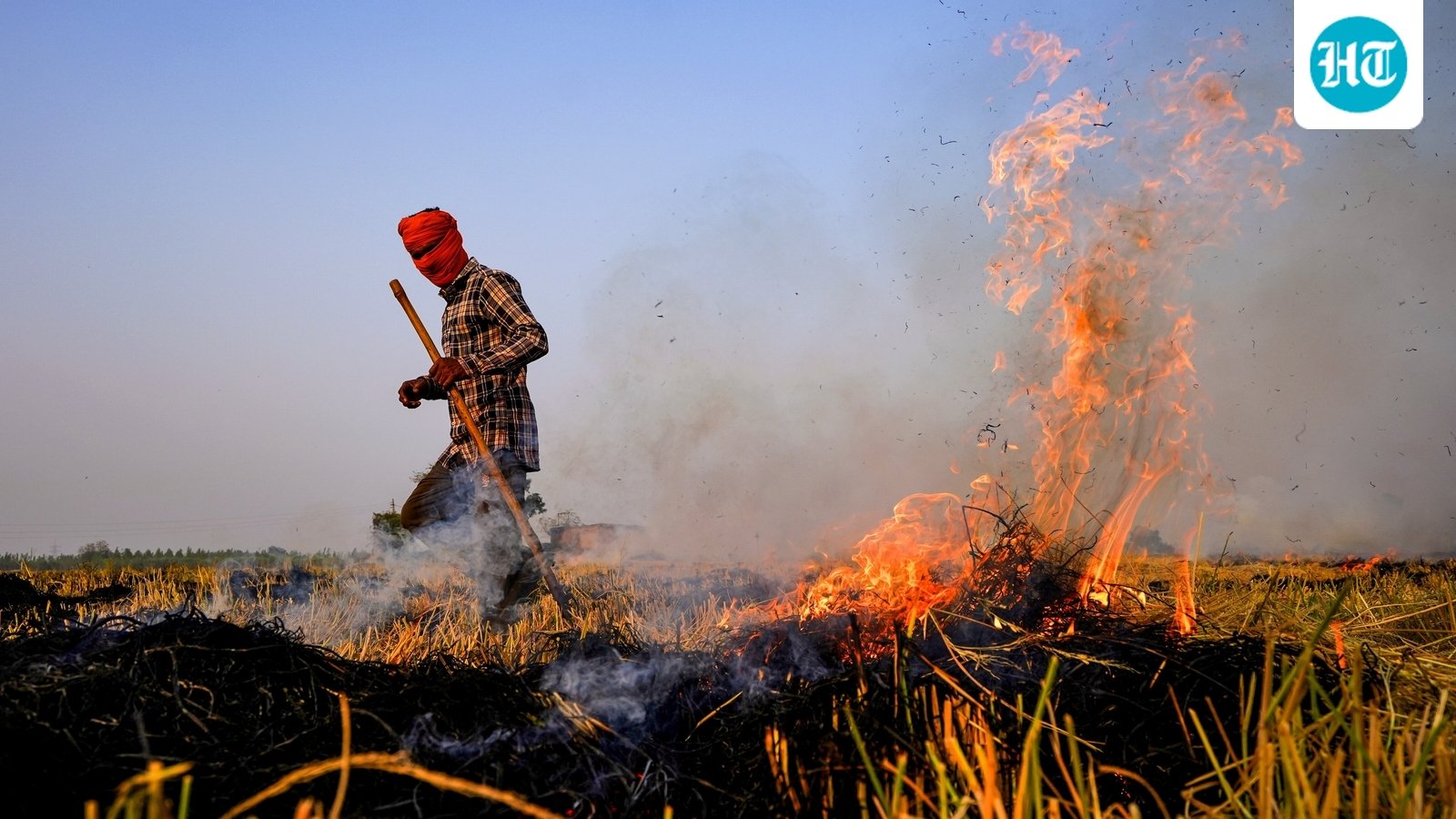
A major challenge in tracking the impact of stubble burning is that the primary surveillance tool—the NASA satellite—conducts its flyover around 1:30 pm. However, agricultural practices have shifted significantly. Modern farmers in Punjab and Haryana have increasingly moved their burning operations to the late afternoon and evening hours to avoid detection.
Research from iFOREST and data from the geostationary satellite INSAT-3DS confirm that over 90% of large-scale fires now occur after 3:00 pm. Because NASA’s satellite passes overhead before these fires are ignited, official counts frequently underestimate the true scale of the emissions. While INSAT-3DS recorded a sharp, steady increase in evening fires leading into November, these events were effectively invisible to the standard metrics used by policymakers.
Wind Patterns and Transport
The surge in pollution was further exacerbated by the direction of transport-level winds. Meteorological readings from the Safdarjung observatory revealed that on October 31 and November 1, air masses arriving in the capital originated from the northwest—directly traversing the fire-heavy belts of Punjab and Haryana.
In contrast, earlier in October, when Delhi experienced similar weather conditions, the wind was blowing from the east, bypassing the fire zones entirely. The combination of increased nocturnal burning and favorable wind trajectories effectively funneled smoke into the National Capital Region, negating the air-clearing effects of the rain that fell in late October.
Implications for Policy
The inability of current monitoring systems to capture evening fires highlights a critical gap in environmental governance. As the season progresses, the trend of burning under the cover of darkness continues to rise. While the Commission for Air Quality Management (CAQM) has already implemented Stage-II of the Graded Response Action Plan (GRAP) to mitigate the impact, the data suggests that without more precise, real-time tracking of post-midday fires, local mitigation efforts may struggle to counteract the influx of pollutants arriving from neighboring states.
Disclaimer: This content is auto-generated for informational purposes only.
Source: Read Original News