







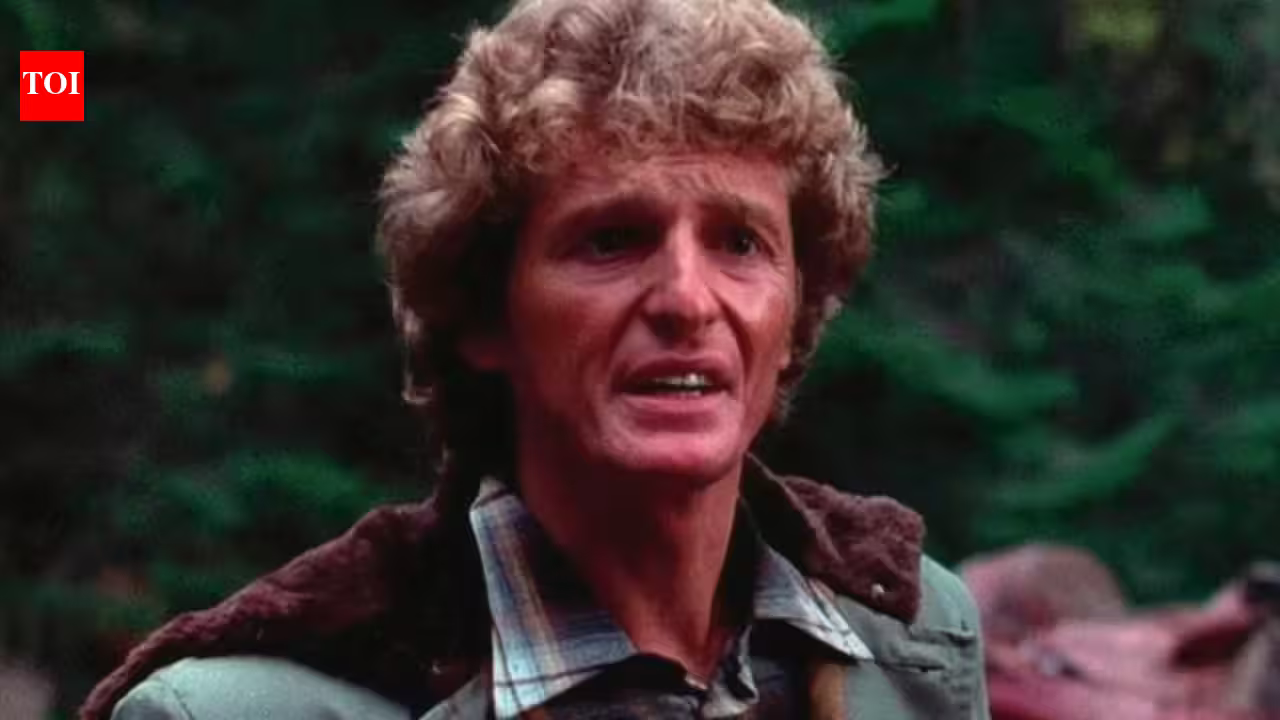
The story of Marjoe Gortner is not merely a biography; it is a cinematic odyssey that spans the neon-lit stages of the revival circuit to the glitzy hills of Hollywood. When news broke this week that Gortner had passed away at the age of 82 in Santa Fe, New Mexico, it marked the end of a life so profoundly unconventional that it serves as a stark reminder of the thin line between performance and faith. His wife, Susan Magestro, confirmed his passing, noting that Gortner had lived an “extraordinary life, shaped by his imagination and rare gift for bringing people together.”
To those who grew up in the 1970s and 80s, Gortner was a familiar, charismatic face in the grindhouse cinema circuit. To film historians, he was the subject of one of the most blistering documentaries ever committed to celluloid. To a generation of celebrities and donors, he was a tireless engine for philanthropy. But to understand the man, one must first look at the boy who was never allowed a childhood.
From ‘Miracle Child’ to Reluctant Prophet
Born in 1944, Marjoe Gortner was thrust into the spotlight before he could even read a storybook. Ordained at the tender age of four, he became a national curiosity, dubbed the “miracle child.” His parents, capitalizing on the post-war evangelical fervor, hauled the toddler across the United States. He was a prodigy of the pulpit, mimicking the cadence and fire-and-brimstone theatrics of seasoned preachers. He didn’t just give sermons; he performed faith healings, a psychological burden that would eventually form the bedrock of his disillusionment.
For his parents, the endeavor was wildly lucrative. By the time Gortner reached his teenage years, the coffers were full, but the family dynamic was fracturing under the weight of the charade. The saga reached a breaking point when his father vanished, reportedly taking roughly $3 million in donations with him—a betrayal that effectively ended Gortner’s career as a boy preacher and left him to reckon with the moral ambiguity of his upbringing.
The Documentary That Blew the Lid Off
The turning point for Gortner came in 1971. At 27, he had spent two decades as an actor playing the role of a holy man. He decided to leave the life behind, but not before providing an unprecedented look behind the curtain. He allowed filmmakers Howard Smith and Sarah Kernochan to shadow him on his final revival tour.
The resulting 1972 documentary, Marjoe, remains a landmark piece of filmmaking. It wasn’t just a portrait of a man; it was a confession. On camera, Gortner was brutally candid, explaining the mechanics of his act, showing how he manipulated audiences, and deconstructing the art of the revival tent. The film was a cultural earthquake, winning the Academy Award for Best Documentary Feature in 1973. It transformed Gortner from a disgraced preacher into a truth-teller, effectively launching his second act in the entertainment industry.
The Hollywood Second Act
Having successfully shed the robes of the evangelist, Gortner pivoted toward the screen. He possessed the natural charisma of a born performer—which, in hindsight, was exactly what he had been training for his entire life. Throughout the 70s and 80s, he became a reliable fixture in genre cinema.
He brought an undeniable energy to films like the 1974 disaster epic Earthquake and the gritty Bobbie Jo and the Outlaw, where he starred opposite Lynda Carter. He leaned into the campy charm of science fiction with Starcrash (1978) and took on roles in cult favorites like Mausoleum (1983). While critics rarely heralded these films as high art, they cemented Gortner as an actor who was always fully committed, always entertaining, and always unmistakably present. His television resume was equally robust, featuring appearances in staples like Kojak, The A-Team, and Fantasy Island, proving his versatility in an industry that often struggled to pigeonhole him.
A Legacy of Philanthropy
Perhaps the most surprising chapter of Gortner’s life was his pivot toward philanthropy. While many former stars fade into obscurity, Gortner channeled his natural ability to command a crowd into producing star-studded celebrity sports charity events. It was a role that utilized his unique skill set—his ease with high-profile names, his ability to manage large-scale logistics, and his knack for persuasion.
Ian Ziering, who shared a heartfelt tribute following the news of Gortner’s death, highlighted this often-overlooked aspect of his career. “He brought celebrities all over the world to raise money for different charities… This man raised millions and millions of dollars,” Ziering noted. It was a poignant evolution; the man who once solicited money for a religion he didn’t believe in spent his later years successfully soliciting money for causes he genuinely supported.
Remembering the Man Behind the Myth
Social media has been flooded with tributes that reflect the complexity of Gortner’s legacy. Fans of his filmography remember him with affection, often citing the “cheesy” charm of his B-movie appearances. Others express genuine awe at the sheer trajectory of his life—from the tent revival circuit to the red carpet.
Jennifer Tilly’s tribute summarized the sentiment shared by many in the industry: “He was a very nice man.” In an era where authenticity is a currency, Gortner’s life remains a fascinating case study. He spent the first half of his life as a manufactured product, a puppet for his parents’ ambition, and the second half of his life reclaiming his own agency.
Marjoe Gortner died at 82, leaving behind a story that feels almost too scripted to be true. He was a survivor of the cult of celebrity, a man who saw the mechanisms of deception from the inside and chose to walk away and create his own path. Whether as the “miracle child” or the B-movie leading man, he lived a life that was never dull, always challenging, and ultimately, profoundly human. He survived the glare of the spotlight by learning, eventually, how to turn it off.
Disclaimer: This content is auto-generated for informational purposes only.
Source: Read Original News