





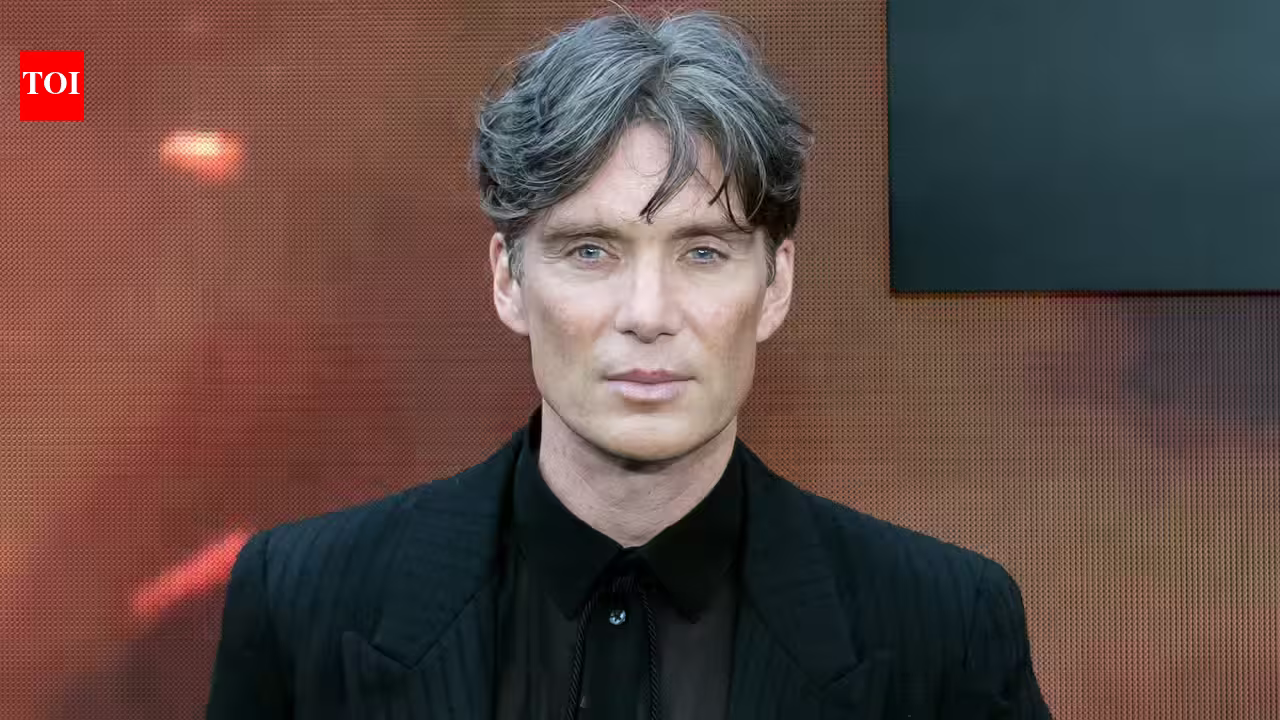

Cillian Murphy has long been the antithesis of the modern Hollywood star. While his contemporaries often leverage their massive platforms to trend on social media or navigate the dizzying maze of tabloid headlines, Murphy remains a cinematic specter—mesmerizing on screen, yet intensely private off it. When he does speak, however, his words carry the weight of a man who observes the world with a clinical, almost poetic, precision.
Recently, a 2018 sentiment from the Oppenheimer actor has resurfaced, reminding us that his brilliance isn’t confined to the silver screen. In a conversation that feels as prescient today as it did half a decade ago, Murphy cut through the noise of political polarization with a simple, grounded truth: “Men and women are custodians of this society, and we both decide what’s going to happen for our future.”
The Weight of the “Custodian” Mentality
To call someone a “custodian” is a deliberate choice of language. It implies stewardship, care, and, most importantly, accountability. A custodian does not merely occupy a space; they maintain it, clean it, and ensure it remains functional for those who come after. When Murphy made this remark during an appearance on the Blindboy Boatclub podcast, he wasn’t discussing the morality of his fictional characters like Tommy Shelby or J. Robert Oppenheimer; he was speaking as an Irish citizen grappling with the weight of civic duty during a pivotal moment in his nation’s history.
At the time, Ireland was deep in the trenches of the referendum regarding the Eighth Amendment. It was a period of intense public discourse, where the personal collided with the political. By framing citizens as joint custodians, Murphy dismantled the common excuse of apathy. He was arguing against the “bystander effect,” suggesting that the future is not something that happens to us, but something we are actively architecting through our collective choices and our willingness to engage.
Beyond the Ballot Box
While the original catalyst for Murphy’s comments was a specific political referendum, the philosophy extends far beyond the voting booth. In an era defined by hyper-connectivity and the relentless churn of digital outrage, we often mistake “taking a stance” for “taking action.” Murphy’s philosophy suggests a more localized, perhaps more difficult, version of responsibility.
If we are custodians of society, then our daily interactions—the way we treat our neighbors, how we address conflict, and the integrity we bring to our professional lives—are the building blocks of that future. It is a philosophy that rejects the “pass-the-buck” mentality. In a world where it is increasingly easy to retreat into digital silos, Murphy’s words serve as a quiet, urgent call to remain present. He reminds us that true societal influence isn’t just about shouting the loudest on a timeline; it is about the quiet, consistent act of participating in the human project.
From Cork to Global Acclaim
Understanding why Cillian Murphy speaks with such gravity requires looking at the foundation of the man himself. Born in 1976 in Douglas, County Cork, Murphy’s journey to the stratosphere of global fame was not linear. Before he was the terrifying Scarecrow or the haunted physicist, he was a musician. He played in a band called The Sons of Mr. Green Genes, a pursuit that demanded a different kind of creative vulnerability.
That musical background provided a rhythm to his acting that is unmistakable. Even in his early days in Irish theatre, Murphy possessed a stillness that could command a room. His breakout, Danny Boyle’s 2002 masterpiece 28 Days Later, was the moment the world sat up and took notice. Playing Jim, a man navigating a post-apocalyptic wasteland, Murphy captured the disorientation and raw humanity of a world in collapse. It was a role that, in hindsight, mirrored his real-life approach to his career: a focus on character, atmosphere, and the fundamental question of what it means to be human in extreme circumstances.
A Career Built on Complexity
Murphy’s trajectory—from the gritty realism of 28 Days Later to the blockbuster sophistication of Christopher Nolan’s Dark Knight trilogy and the visceral intensity of Peaky Blinders—has been defined by an avoidance of the easy path. He isn’t interested in playing “likeable” characters; he is interested in playing real ones. His Oscar-winning turn in Oppenheimer was the culmination of two decades of sharpening his ability to portray internal conflict.
But despite the accolades and the inevitable pressures of being an A-list icon, Murphy has anchored himself in his Irish roots. He is famously protective of his family and his privacy, a decision that feels inextricably linked to his view of himself as a “custodian.” By keeping his personal life out of the public eye, he prevents the commodification of his own narrative, ensuring that his influence remains rooted in his work and his principles rather than his ability to sell an image.
Why Murphy’s Voice Still Resonates
We live in a time of profound cynicism. Trust in institutions is at an all-time low, and the digital landscape often feels like a race to the bottom of the empathy barrel. In this climate, an actor—a profession often dismissed as ephemeral—speaking about the long-term, multi-generational duty of care feels jarringly refreshing.
Murphy’s perspective is inherently democratic; it doesn’t separate the star from the viewer. When he says that “we both decide” the future, he is placing the power back into the hands of the individual. He isn’t asking us to save the world in a single, heroic act, but rather to recognize our roles as caretakers of the society we share. It’s a message that transcends his filmography. Whether you are a fan of his high-stakes dramas or simply an observer of his quiet, deliberate life, the takeaway remains the same: the future is a fragile, collective inheritance, and we are all responsible for what we decide to pass on.
Disclaimer: This content is auto-generated for informational purposes only.
Source: Read Original News