








A Technical Legacy Reimagined for Modern Hardware
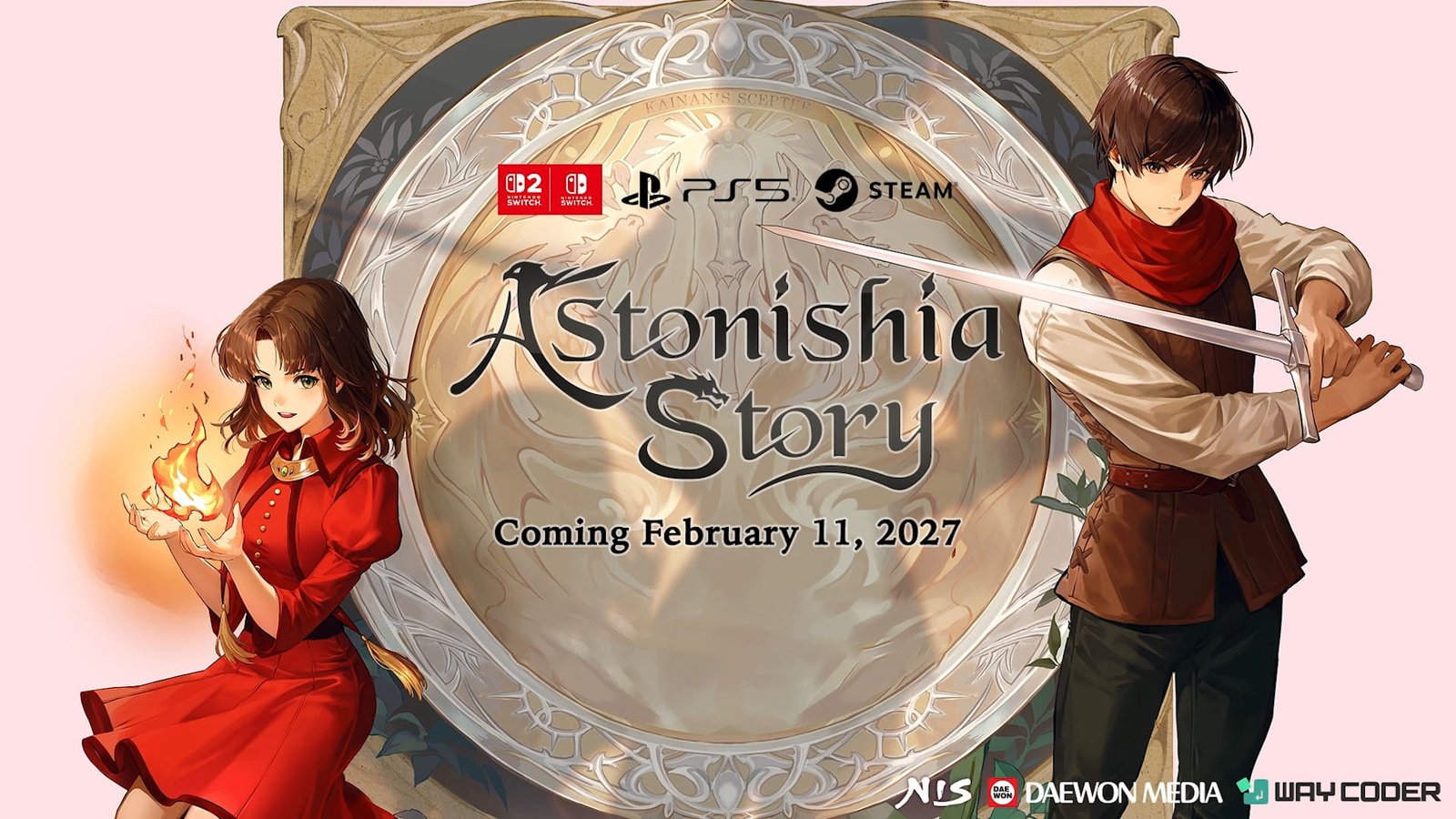
The landscape of classic gaming preservation often relies on the delicate balance between maintaining the core integrity of the original source material and integrating contemporary graphical standards. NIS America has officially announced the Western release of the Astonishia Story remake, a project that serves as a bridge between the 1994 MS-DOS architecture and the current generation of console hardware. Slated for a global launch on February 11, 2027, the title will arrive on PlayStation 5, Nintendo Switch, the upcoming successor to the Switch, and PC via Steam.
This remake represents more than a simple port; it is an extensive overhaul of a cult classic that initially gained traction in the South Korean market following its release in late 2025. By moving the project from its original 16-bit constraints to high-definition rendering, developers have utilized modern compute capabilities to sharpen the visual fidelity while preserving the fundamental mechanics that defined the original RPG experience. This transition ensures that the technical specifications of the title meet the expectations of modern display resolutions while retaining the deliberate, tactical pace of its predecessors.
Grid-Based Systems and Strategic Implementation
At the center of Astonishia Story is its grid-based combat system. Unlike traditional turn-based RPGs that often rely on static positioning, this title demands that players treat the battlefield as a functional environment. The remake elevates this by providing clearer visual feedback and more responsive UI elements, allowing players to manage unit movement and ability range with greater precision.
The engine requires players to calculate distances and account for the positioning of both allies and adversaries. This tactical requirement turns every encounter into a logic puzzle where resource management—specifically the positioning of units—is just as vital as the character stats themselves. By leveraging the increased processing power of the PlayStation 5 and PC hardware, the game manages more complex sprite interactions and particle effects, ensuring that the visual representation of these grid-based maneuvers is both fluid and legible, even during high-intensity engagements.
Asset Overhaul and Engine Modernization
The transition from an MS-DOS environment to modern platforms necessitated a complete rebuilding of the game’s visual assets. Experience, the developers behind this iteration, focused on updating the graphics to support high-resolution displays. This process involved upscaling character sprites and environmental textures while ensuring the color palette and lighting remained faithful to the original art direction.
Technical refinements also extend to the game’s performance stability. By optimizing the code for the modern X86 architecture found in current consoles, the developers have eliminated the frame rate inconsistencies often associated with emulated versions of legacy software. This stability is critical for a strategy-heavy game where input delay or stuttering could lead to unintended tactical errors. The result is an experience that feels native to modern systems, utilizing modern memory management to handle larger asset files and more complex menu structures without sacrificing the speed of navigation.
Strategic Mercenary Recruitment and Party Composition
A significant component of the gameplay loop involves the recruitment system. Players must interact with various non-player characters to bolster their ranks, and the remake enhances this by providing deeper integration of character-specific skill sets. Each mercenary brings a unique mechanical contribution to the party, which forces the player to constantly reassess their composition based on the requirements of the current mission.
This system encourages players to engage with the world beyond the primary quest line, as hidden characters often provide the necessary utility to overcome specific difficulty spikes. The technical implementation of this system allows for dynamic party swapping, where players can adjust their unit configuration in anticipation of specific enemy types. This level of customization is supported by a robust internal database that tracks character loyalty, skill trees, and equipment compatibility, all of which are managed through a redesigned, high-resolution interface that simplifies the process of comparing stats and optimizing loadouts.
Regional Localization and Platform Accessibility
Global reach is a primary focus for this release, with NIS America implementing a comprehensive localization strategy. While console players in the West will receive English text support, the PC version on Steam boasts a significantly broader linguistic reach, offering text support in English, Japanese, Korean, Traditional Chinese, and Simplified Chinese. This multi-language support reflects the developer’s commitment to accommodating the diverse demographics of the RPG community.
Furthermore, the release on Steam via the PURPLE ecosystem, which handled the initial Korean launch, highlights the effort to unify the player base across different digital storefronts. By ensuring that the core gameplay remains consistent across all platforms—from the Switch to the PlayStation 5—the publishers have prioritized cross-platform parity. This ensures that the user experience is identical regardless of the hardware, preventing performance disparities that can occur when a single title is distributed across vastly different computing ecosystems. As the industry moves toward a model of platform-agnostic distribution, the release of Astonishia Story stands as a case study in how heritage software can be effectively transitioned into the modern era of gaming.
Disclaimer: This content is auto-generated for informational purposes only.
Source: Read Original News