







Student Suicides and Protests Rock India’s Education System
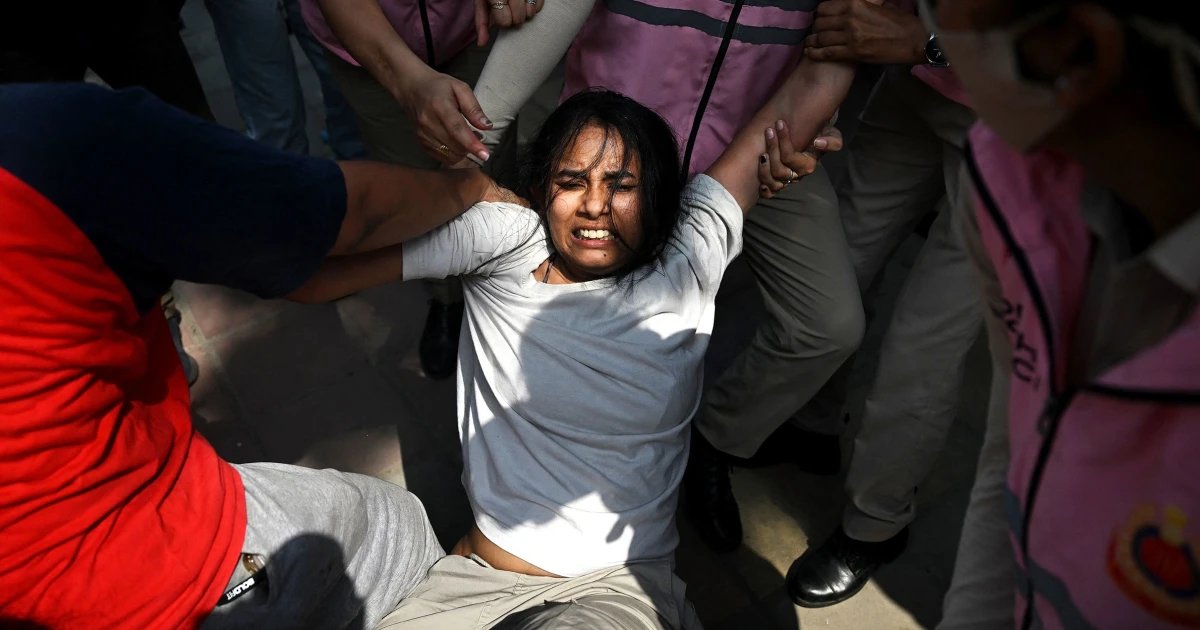
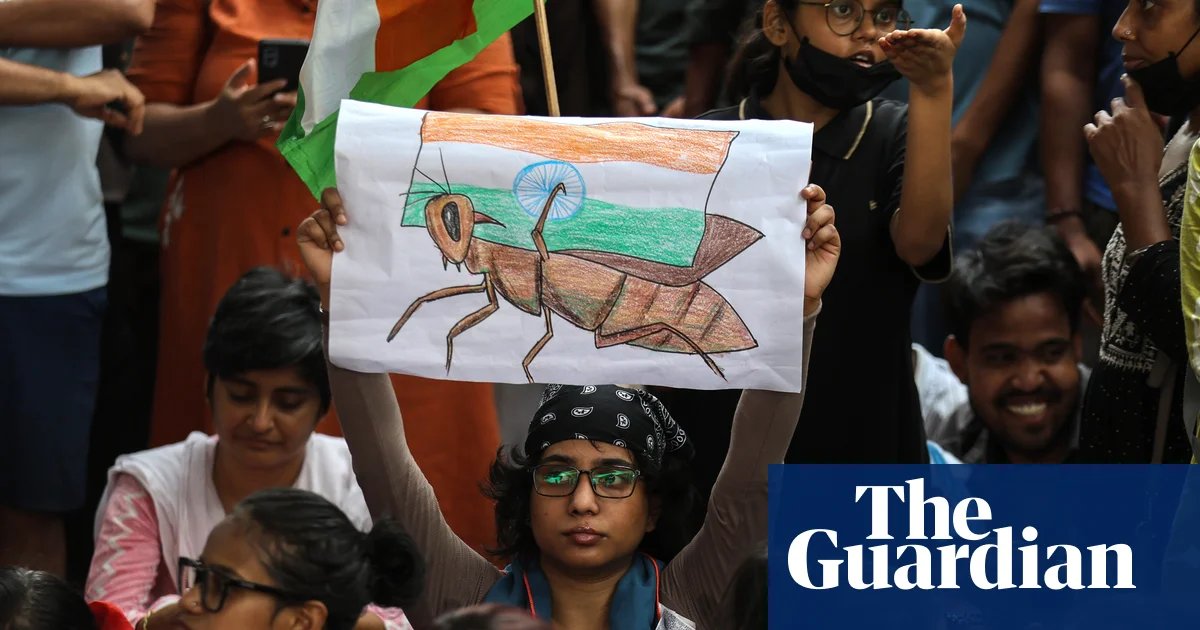
NEW DELHI – The recent resignation of India’s education minister in late July, following weeks of intense protests spearheaded by the Cockroach Janta party, has brought a wave of mixed emotions across the country. While many celebrated the minister’s departure as a victory against widespread examination cancellations and question paper leaks, the underlying sentiment among families who have lost children to the pressures of the education system is one of profound sorrow and lingering questions.
The escalating pressure of examinations in India has been directly linked to a disturbing rise in student suicides. According to the National Crime Records Bureau’s "Accidental Deaths and Suicides in India" report, student suicides surged by approximately 80% from 8,068 in 2014 to 14,488 in 2024. After family problems, examination failure is cited as the leading cause of these tragic deaths among students.
The Guardian spoke with four families, whose lives have been irrevocably altered by these systemic failures, offering a poignant look into their experiences and their reactions to the current political upheaval.
Anshika Pandey, 20, Delhi
Anshika Pandey, the eldest of four siblings, was described by her father as the calmest, quietest, and most responsible member of their family. Her ambition was to become a doctor, driven by a desire to help the "poor people in need of medical care" in her community. Anshika dedicated over 12 hours daily to her studies, worked part-time for six hours, and slept no more than five hours each night.
This year’s National Eligibility cum Entrance Test (NEET), her third attempt to gain medical school admission, initially filled her with hope after she sat the exam on May 3. However, on May 12, news broke that the exam had been leaked for the second consecutive year, necessitating a resit.
"Anshika was deeply hurt. She had been hoping to enter college this year and was happy with the exam she had taken," recalled her father, Indradhar Pandey, a Delhi cab driver. "Still, after cancellation, when I tried to console her, all she lamented was how could she hope to give another good exam." Two days later, on May 14, while her family was out, Anshika tragically took her own life.
Her younger sister, Pragati, now hopes to fulfill Anshika’s dream of moving their family out of the slum where they live. The motivational posters and sketches Anshika left behind serve as a poignant reminder of her aspirations.
Sufi Shaheen, 19, Delhi
On October 25, 2024, Sufi Shaheen, a spirited 19-year-old, left home for her Joint Entrance Examination (JEE) lesson after asking her mother for a mere 10 rupees. Twenty minutes later, she jumped from the seventh floor of her tutoring center.
Her mother, Sultana Khatoon, has been battling severe depression since Shaheen’s death. "She was my only daughter of the four children and more like a friend," Khatoon shared, looking through her daughter’s school photos. Shaheen, who dreamt of becoming a software engineer and excelling "even more than the boys in her community," was a quick learner who taught herself to draw, paint, and speak Japanese and Korean.
However, Shaheen had been under immense stress, particularly concerning her second attempt at the national engineering entrance exam in January 2025. Changes made by India’s National Testing Agency to the JEE exam syllabus further exacerbated her anxiety. She left a note for her parents, apologizing and asking her younger brother, Masoom, to fulfill their dreams. Masoom recently ranked 188th in India’s Common University Entrance Test (CUET), a bittersweet achievement for the family.
Pradeep Kumar Mahich, 22, Rajasthan
"Even God will not be able to stop me from becoming a doctor this year," Pradeep Mahich confidently told his father after his NEET exam on May 3. This was his fourth attempt, and he felt assured of success. The news of the exam paper leak and the mandatory resit shattered his confidence.
Pradeep’s father, Rajesh Kumar, a farmer from Rajasthan’s Sikar district, had sold a significant portion of his farmland and taken an 11 lakh (£8,600) loan to support Pradeep’s medical aspirations. Sikar is a major coaching hub for NEET, and Pradeep had been attending tutoring for four years. "I would send monthly expenses of £250 and Pradeep’s annual tutoring fees of £4,000, asking them not to worry about money and focus on his studies," Kumar explained.
On May 15, Pradeep collected the milk and curd his father sent, then returned home, telling his sister he would help prepare lunch. While she was showering, he hanged himself. His sister has since taken a break from her studies. Rajesh Kumar, though relieved by the education minister’s resignation, insists on a thorough investigation to prevent other families from enduring similar tragedies.
S. Anitha, 17, Tamil Nadu
S. Anitha, from a marginalized Dalit community in Tamil Nadu’s Ariyalur district, was raised by her grandparents after her mother’s death when she was seven. From a young age, she was determined to become a doctor. "She knew what she wanted and never distracted herself with anything else," her brother, Manirathinam, recounted. "She never asked for any clothes, jewellery or food – her focus was clear and she knew the circumstances."
Anitha excelled in school, scoring perfect marks in physics and chemistry. She was offered a place in aeronautical engineering at a state technological institute but found herself unable to meet the cut-off marks for NEET, realizing she had been studying a different syllabus. Tamil Nadu had historically criticized the central government for imposing the all-India NEET exam, arguing it disrupted the state’s distinct education system. While the state was exempted from NEET in 2016, this exemption was revoked in 2017, the year Anitha took the exam.
On August 22, 2017, the Supreme Court ruled that medical school admissions would be based solely on NEET scores, crushing Anitha’s hopes. On September 1, she hanged herself at her grandparents’ home. Her suicide ignited widespread protests across Tamil Nadu and Delhi, sparking a national debate on the fairness of the examination system.
Anitha’s brother participated in last month’s protests in the capital. While satisfied with the education minister’s resignation, he advocates for all examinations to be state-run rather than centrally controlled, citing the prohibitive cost of NEET tutoring that many cannot afford. He now runs a free library and education center in Anitha’s name, dedicated to her memory.
In the UK and Ireland, Samaritans can be contacted on freephone 116 123. In the US, you can call or text the National Suicide Prevention Lifeline on 988, chat on 988lifeline.org, or text HOME to 741741 to connect with a crisis counselor. In Australia, the crisis support service Lifeline is 13 11 14. Other international helplines can be found at befrienders.org.