






A Landscape Transformed: The Haunting Aftermath of a Record-Breaking Summer
The British countryside has emerged from a summer of relentless, rainless heat looking like a stranger to itself. Fields and hedgerows, once lush and verdant, have been bleached into the lurid yellow ochre palette of climate fiction—a grim aesthetic that feels disturbingly close to the apocalyptic landscapes depicted in the recent BBC drama The Rapture.
Across the region, the signs of environmental distress are profound. In Weaver’s Field, the parched earth has fractured, creating fissures so deep a farmer can bury his arm to the elbow. Life, where it persists, is stunted; wild bird’s-foot trefoil and sky-blue chicory cling to the landscape on unnaturally short, desperate stems.
While the ancient field oaks remain stoic, the damage to other species is evident. Shallow-rooted beech trees are shedding shrivelled leaves and producing a poor, premature mast, while field maples stand nearly skeletal. Even the typically hardy laurel in protected woodland has begun to wilt under the thermal assault.
A Horizon of Smoke
The crisis has been underscored by the persistent scent of smoke. For weeks, plumes of black debris have drifted from field fires in the New Forest and across Greenham Common. Further west, the horizon over Salisbury Plain has been veiled in white as fires crept toward the iconic Westbury White Horse. The site, a historic landmark carved into the chalk in the late 1600s, has become the focal point of an increasingly apocalyptic reality.
For some, the smell of smoke carries a heavy, personal weight. Reflecting on her father’s career as a fireman—a man who battled the historic 1976 New Forest conflagration—author Nicola Chester notes that the scent triggers a complex, involuntary response: a mixture of childhood alarm and a strange, deep-seated sense of safety associated with her father’s return from the front lines.
The Return of the Rain
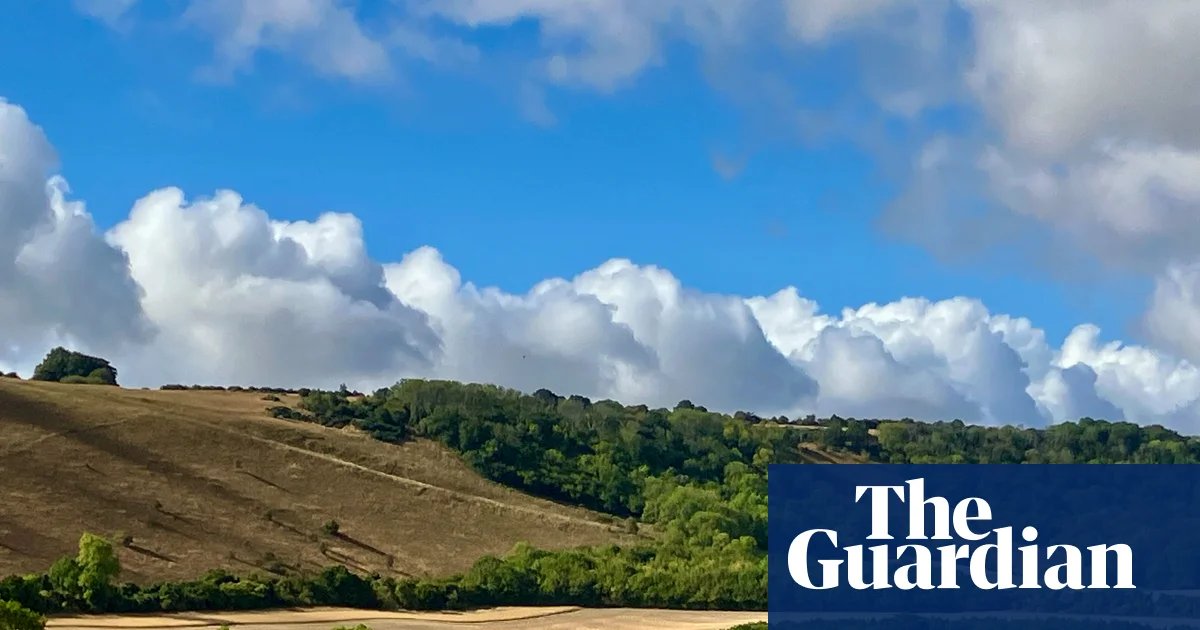
The drought eventually broke, though not without drama. Before the skies opened, towering cumulus clouds taunted the region for days, sailing north like silent galleons. When the rain finally arrived, it washed over the parched landscape, darkening the downs into an unfamiliar, sombre moorland brown.
Yet, the reprieve brought its own sensory shock. As the heat rose again, it liberated the concentrated, ammonia-heavy scent of undiluted sheep’s urine that had been baking on the surface all summer. Mingled with the damp dust and scorched grass, it created a heady, jarring olfactory marker of a season pushed to its ecological limits.
As we adjust to these shifts in our environment, we are reminded that our relationship with the land is evolving. The changing nature of our seasons is perhaps nowhere better documented than in Under the Changing Skies, a collection highlighting the best of the Guardian’s Country Diary from 2018 to 2024, available now.