







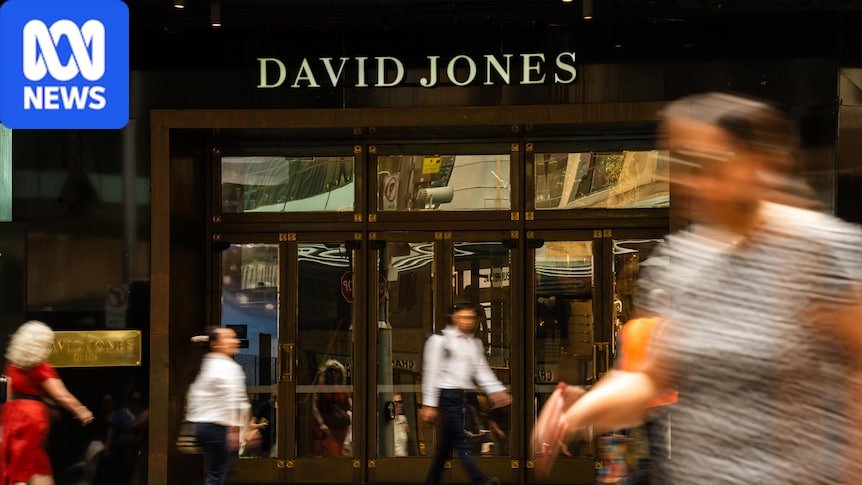
The future of Australian retail icon David Jones hangs in the balance as the historic department store scrambles to secure its financial standing. Facing a cooling consumer environment and mounting pressure from digital competitors, the retailer has confirmed it missed a critical deadline to file its annual financial reports with the Australian Securities and Investments Commission (ASIC).
This regulatory lapse has intensified speculation regarding the company’s solvency. While management remains tight-lipped about specific figures, the situation has prompted a rare intervention from its primary lender, Hilco Capital, which recently injected approximately $10 million into the business to ensure store shelves are stocked for the high-stakes festive shopping season.
The Digital Shift and Retail Volatility
The challenges facing David Jones reflect a broader, global shift in how consumers interact with brands. Traditional department stores, once the cornerstones of physical commerce, are struggling to compete with the sheer agility of e-commerce platforms and AI-driven marketplaces.
In an era where younger shoppers prioritize personalized recommendations from algorithmic engines and the circular economy—championed by apps like Depop—the traditional, high-overhead model of the department store is under immense scrutiny. Major global retailers are increasingly leaning on advanced data analytics and AI inventory management to predict shifting consumer trends; for an legacy player like David Jones, adapting its brick-and-mortar footprint to meet these modern digital expectations has proven to be a costly uphill battle.
As the retailer reviews its current network of 38 stores, industry analysts suggest that a significant rationalization of its property portfolio may be inevitable to offset the rise of online shopping alternatives.
Supply Chain Tensions and Operational Strain
The cracks in the retailer’s foundation are also becoming visible to its partners. Recent reports indicate that at least one high-profile fashion brand has pulled its inventory from David Jones stores, signaling a loss of confidence in the retailer’s ability to manage its accounts payable. Furthermore, the company has reportedly been forced to place many of its suppliers on extended payment terms, a clear indicator of liquidity constraints.
The Shop, Distributive and Allied Employees Association (SDA) has publicly expressed “alarm” regarding the retailer’s predicament. The union has begun preparing workers for the possibility of insolvency, proactively informing staff of their rights should the private-equity-backed company face a total collapse.
Anchorage Capital Partners, the firm that owns David Jones, has declined to comment on rumors of widespread store closures, stating only that they are in ongoing discussions with stakeholders to ensure the retailer reaches a “viable financial footing.”
A Changing Landscape for Legacy Retail
The struggles of David Jones provide a stark contrast to the aggressive maneuvers of its chief rival, Myer. In a bid to stay relevant in a landscape dominated by tech-savvy competitors and changing consumer habits, Myer recently moved to consolidate its position by merging with a suite of established apparel brands.
This consolidation is emblematic of the “adapt or die” ethos currently sweeping the sector. As artificial intelligence continues to disrupt the retail supply chain—optimizing everything from warehousing logistics to real-time pricing—legacy giants are finding that size is no longer a shield against obsolescence. For David Jones, the challenge now is to prove it can survive in a world where physical prestige is secondary to digital efficiency and operational resilience. Whether the current $10 million cash injection provides enough breathing room for a successful pivot remains an open question for shareholders and employees alike.
Disclaimer: This content is auto-generated for informational purposes only.
Source: Read Original News