








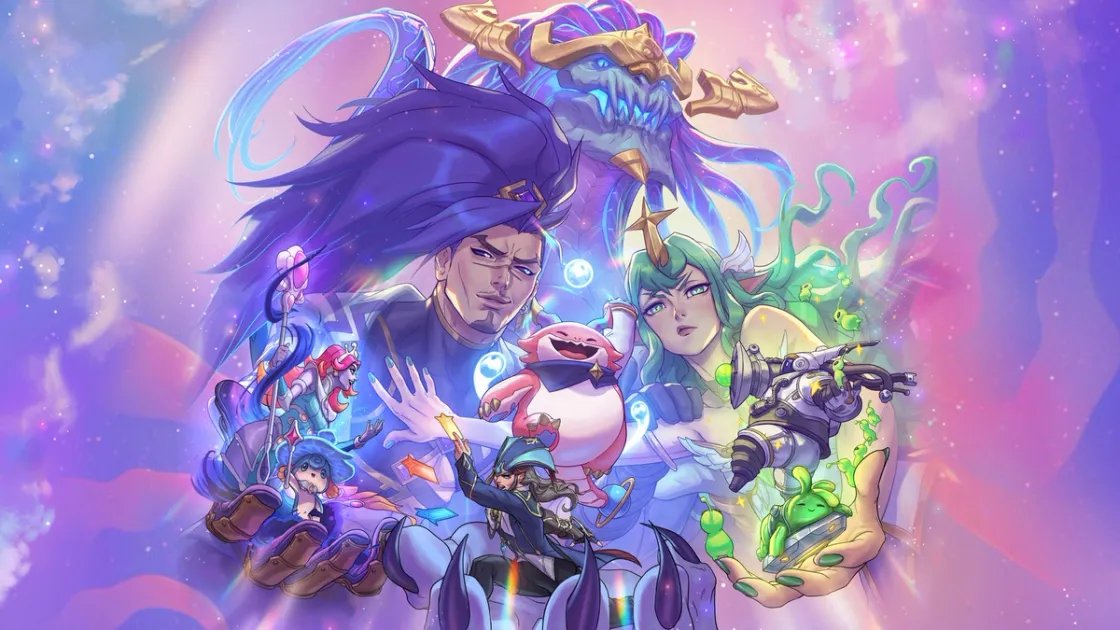
Reflecting on Space Gods: TFT Dev Team Breaks Down Lessons Learned
As the Teamfight Tactics (TFT) community prepares to venture into the Enchanted Wilds, the development team is taking a moment to look in the rearview mirror. In a recent retrospective, the leads behind the game’s 17th set—Alex “BlueVelvet” Cole, Tim “Truexy” Jiang, and Noemi “Bluecove” Coute—offered a candid look at the successes, challenges, and hard-earned lessons from Space Gods.
The development of Space Gods was defined by an accelerated timeline, necessitated by the team’s migration to the Unreal engine for future sets. This time constraint forced the team to pivot from a highly ambitious, chaotic mechanical vision to a safer, more predictable "Offering and Boon" system.
Mechanical Growing Pains
One of the most significant talking points was the removal of the Carousel. While its absence was intended to facilitate the new mechanics, the developers realized that the Carousel serves a critical social purpose. Beyond just being a catch-up mechanic, it functions as a central hub for player interaction and tension. The team acknowledged that losing this social space—coupled with the upcoming deprecation of the in-game minimap—has highlighted the need for a more robust, non-minimap-bound communication system, which is currently in the workshop.
"The Realm of the Gods was one of our most ambitious mechanics since Magic n’ Mayhem’s Charms. Largely, it didn’t pay off how we would have liked for several reasons," the team noted in their Space Gods breakdown.
The Challenge of Roster and Flexibility
Transitioning from the massive roster of Lore & Legends (Set 16) back to a standard size proved difficult. The team struggled to balance "vertical" trait structures with the flexibility players have come to expect. They noted that their attempt to flatten traits often left new players feeling lost, while veteran players felt restricted by "conditional" comps—traits that required specific items or units to function, effectively "closing doors" on strategic pivots rather than opening them.
The team also addressed the "tank drought" experienced during the set’s early patches. Attempts to pivot specific units, such as rebalancing Morgana mid-set, provided valuable insights but underscored the difficulty of changing champion costs once a set is live.
Looking Ahead: Augments and Future Sets
The retrospective also touched on Augments, which the team admitted were hindered by the shortened development timeline. Moving forward, the goal is to have a comprehensive suite of set-specific, trait-linked, and champion-specific Augments available on day one to help players onboard more effectively.
As the team pivots toward Enchanted Wilds, they are asking the community for feedback on a core design philosophy: Should Champion Augments for 1- and 2-cost units be powerful enough to enable a first-place finish?
For a full deep dive into the team’s internal metrics and design theories, you can read the complete official developer update. With the lessons of Space Gods now integrated into their development pipeline, the team is optimistic about the future of TFT as they move into the Unreal engine era.